

494
K. Anirudh and S. N. Yeole
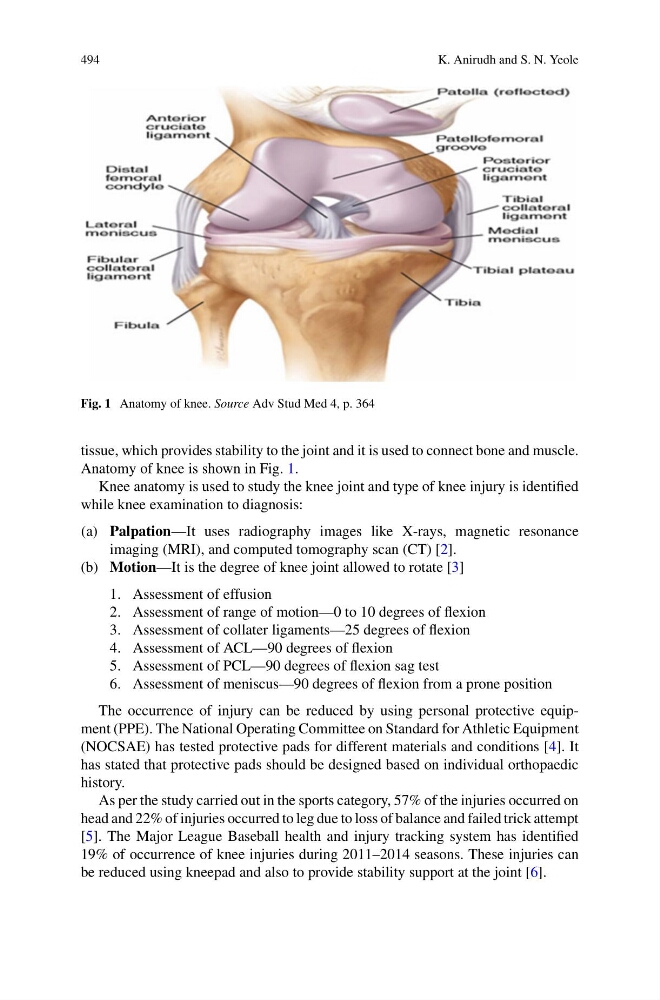
Fig. 1 Anatomy of knee. Source Adv Stud Med 4, p. 364
tissue, which provides stability to the joint and it is used to connect bone and muscle.
Anatomy of knee is shown in Fig. 1.
Knee anatomy is used to study the knee joint and type of knee injury is identified
while knee examination to diagnosis:
(a) Palpation—It uses radiography images like X-rays, magnetic resonance
imaging (MRI), and computed tomography scan (CT) [2].
(b) Motion—It is the degree of knee joint allowed to rotate [3]
1. Assessment of effusion
2. Assessment of range of motion—0 to 10 degrees of flexion
3. Assessment of collater ligaments—25 degrees of flexion
4. Assessment of ACL—90 degrees of flexion
5. Assessment of PCL—90 degrees of flexion sag test
6. Assessment of meniscus—90 degrees of flexion from a prone position
The occurrence of injury can be reduced by using personal protective equipment (PPE). The National Operating Committee on Standard for Athletic Equipment
(NOCSAE) has tested protective pads for different materials and conditions [4]. It
has stated that protective pads should be designed based on individual orthopaedic
history.
As per the study carried out in the sports category, 57% of the injuries occurred on
head and 22% of injuries occurred to leg due to loss of balance and failed trick attempt
[5]. The Major League Baseball health and injury tracking system has identified
19% of occurrence of knee injuries during 2011–2014 seasons. These injuries can
be reduced using kneepad and also to provide stability support at the joint [6].
K. Anirudh and S. N. Yeole
Fig. 1 Anatomy of knee. Source Adv Stud Med 4, p. 364
tissue, which provides stability to the joint and it is used to connect bone and muscle.
Anatomy of knee is shown in Fig. 1.
Knee anatomy is used to study the knee joint and type of knee injury is identified
while knee examination to diagnosis:
(a) Palpation—It uses radiography images like X-rays, magnetic resonance
imaging (MRI), and computed tomography scan (CT) [2].
(b) Motion—It is the degree of knee joint allowed to rotate [3]
1. Assessment of effusion
2. Assessment of range of motion—0 to 10 degrees of flexion
3. Assessment of collater ligaments—25 degrees of flexion
4. Assessment of ACL—90 degrees of flexion
5. Assessment of PCL—90 degrees of flexion sag test
6. Assessment of meniscus—90 degrees of flexion from a prone position
The occurrence of injury can be reduced by using personal protective equipment (PPE). The National Operating Committee on Standard for Athletic Equipment
(NOCSAE) has tested protective pads for different materials and conditions [4]. It
has stated that protective pads should be designed based on individual orthopaedic
history.
As per the study carried out in the sports category, 57% of the injuries occurred on
head and 22% of injuries occurred to leg due to loss of balance and failed trick attempt
[5]. The Major League Baseball health and injury tracking system has identified
19% of occurrence of knee injuries during 2011–2014 seasons. These injuries can
be reduced using kneepad and also to provide stability support at the joint [6].