

Review of Polydimethylsiloxane (PDMS) …
271
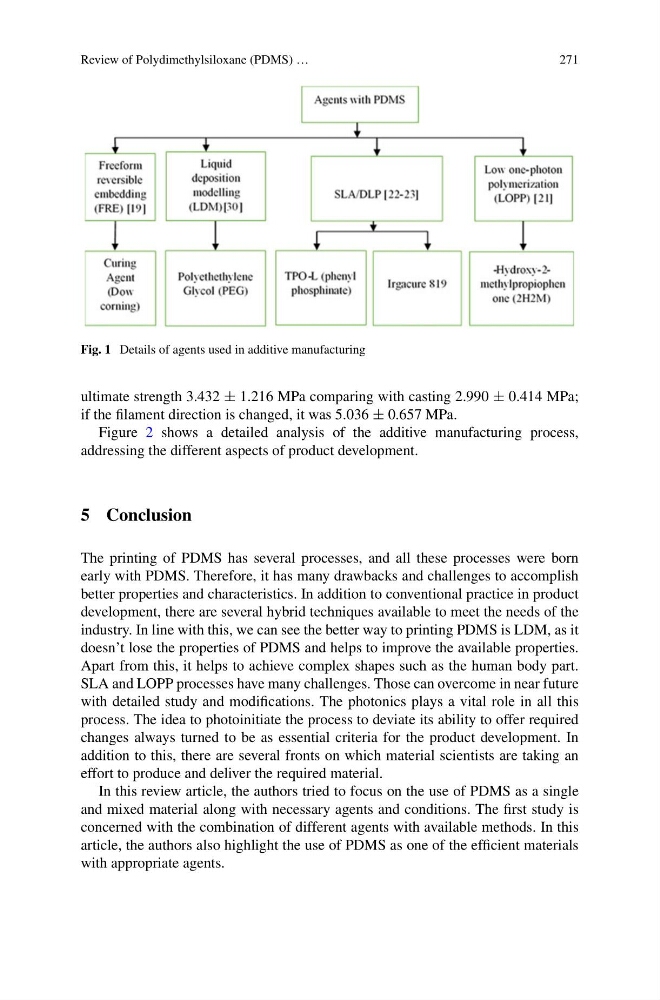
Fig. 1 Details of agents used in additive manufacturing
ultimate strength 3.432 ± 1.216 MPa comparing with casting 2.990 ± 0.414 MPa;
if the filament direction is changed, it was 5.036 ± 0.657 MPa.
Figure 2 shows a detailed analysis of the additive manufacturing process,
addressing the different aspects of product development.
5 Conclusion
The printing of PDMS has several processes, and all these processes were born
early with PDMS. Therefore, it has many drawbacks and challenges to accomplish
better properties and characteristics. In addition to conventional practice in product
development, there are several hybrid techniques available to meet the needs of the
industry. In line with this, we can see the better way to printing PDMS is LDM, as it
doesn’t lose the properties of PDMS and helps to improve the available properties.
Apart from this, it helps to achieve complex shapes such as the human body part.
SLA and LOPP processes have many challenges. Those can overcome in near future
with detailed study and modifications. The photonics plays a vital role in all this
process. The idea to photoinitiate the process to deviate its ability to offer required
changes always turned to be as essential criteria for the product development. In
addition to this, there are several fronts on which material scientists are taking an
effort to produce and deliver the required material.
In this review article, the authors tried to focus on the use of PDMS as a single
and mixed material along with necessary agents and conditions. The first study is
concerned with the combination of different agents with available methods. In this
article, the authors also highlight the use of PDMS as one of the efficient materials
with appropriate agents.
271
Fig. 1 Details of agents used in additive manufacturing
ultimate strength 3.432 ± 1.216 MPa comparing with casting 2.990 ± 0.414 MPa;
if the filament direction is changed, it was 5.036 ± 0.657 MPa.
Figure 2 shows a detailed analysis of the additive manufacturing process,
addressing the different aspects of product development.
5 Conclusion
The printing of PDMS has several processes, and all these processes were born
early with PDMS. Therefore, it has many drawbacks and challenges to accomplish
better properties and characteristics. In addition to conventional practice in product
development, there are several hybrid techniques available to meet the needs of the
industry. In line with this, we can see the better way to printing PDMS is LDM, as it
doesn’t lose the properties of PDMS and helps to improve the available properties.
Apart from this, it helps to achieve complex shapes such as the human body part.
SLA and LOPP processes have many challenges. Those can overcome in near future
with detailed study and modifications. The photonics plays a vital role in all this
process. The idea to photoinitiate the process to deviate its ability to offer required
changes always turned to be as essential criteria for the product development. In
addition to this, there are several fronts on which material scientists are taking an
effort to produce and deliver the required material.
In this review article, the authors tried to focus on the use of PDMS as a single
and mixed material along with necessary agents and conditions. The first study is
concerned with the combination of different agents with available methods. In this
article, the authors also highlight the use of PDMS as one of the efficient materials
with appropriate agents.