

4.1 Closed Innovation
A common innovation style, except in some advanced organizations, until the 1990s
was closed innovation. Closed innovation creates value through the use of internal
business resources and technical information consistently from research and development to product development. Certainly, simple execution of closed innovation
made management more efficient. Closed innovation had been effective in industries
where there is little change in market and technology, accumulation of information
and know-how in research and development, and requirement of integral integration.
The Japanese manufacturing industry, which flourished with a standard mass
production method based on mass consumption until about the 1980s, adopted a
human resource management method, such as seniority and lifetime employment,
and closed innovation. The closed innovation-oriented organizations are linear,
functional, and inward oriented.
During 1980s, hospitals were in charge of healthcare, not health. Similar to
hospitals in other developed countries, Japanese hospitals were still limited in
computerization. Nevertheless, ICT solutions such as the computerized physician’s
order entry system were introduced to increase the work efficiency of doctors, the
source of revenue, and to centrally manage medical information mainly by doctors.
The hospital agenda was to increase divisional efficiency rather than innovation,
exhibiting closed incremental improvement.
4.2 Open Innovation
From 1990s, it had become difficult to respond to intensifying competition in the
global market and diversifying consumer needs only with product development and
service provision by adopting closed innovation. An increasing number of companies were aiming for open innovation that incorporates superior technologies,
information, and ideas of external companies from outside without being stuck
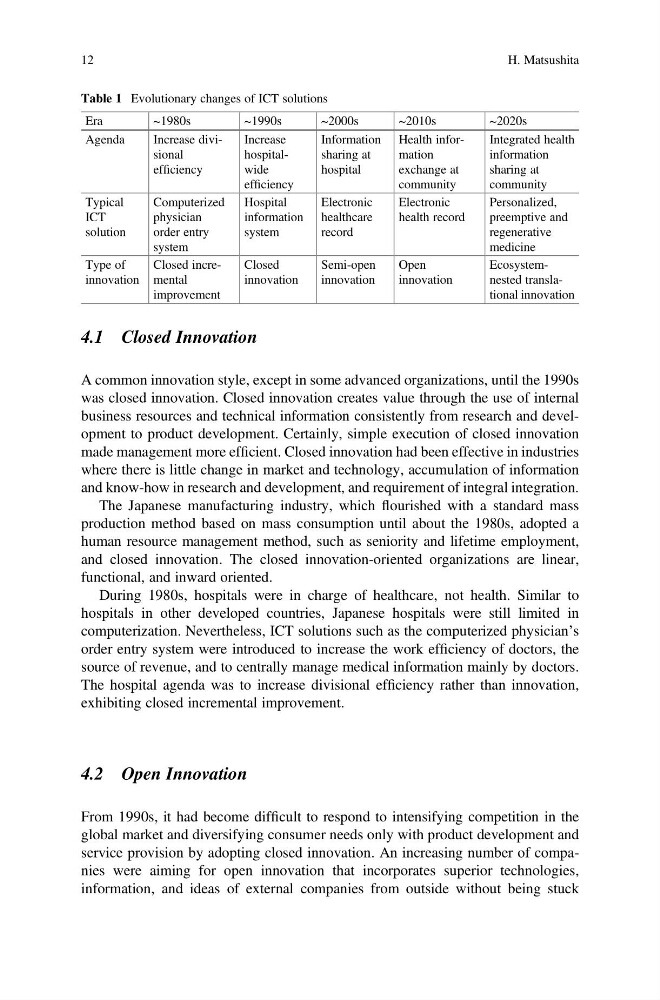
Table 1 Evolutionary changes of ICT solutions
Era
~1980s
~1990s
~2000s
~2010s
~2020s
Agenda
Increase divisional
efficiency
Increase
hospitalwide
efficiency
Information
sharing at
hospital
Health information
exchange at
community
Integrated health
information
sharing at
community
Typical
ICT
solution
Computerized
physician
order entry
system
Hospital
information
system
Electronic
healthcare
record
Electronic
health record
Personalized,
preemptive and
regenerative
medicine
Type of
innovation
Closed incremental
improvement
Closed
innovation
Semi-open
innovation
Open
innovation
Ecosystemnested translational innovation
12
H. Matsushita
A common innovation style, except in some advanced organizations, until the 1990s
was closed innovation. Closed innovation creates value through the use of internal
business resources and technical information consistently from research and development to product development. Certainly, simple execution of closed innovation
made management more efficient. Closed innovation had been effective in industries
where there is little change in market and technology, accumulation of information
and know-how in research and development, and requirement of integral integration.
The Japanese manufacturing industry, which flourished with a standard mass
production method based on mass consumption until about the 1980s, adopted a
human resource management method, such as seniority and lifetime employment,
and closed innovation. The closed innovation-oriented organizations are linear,
functional, and inward oriented.
During 1980s, hospitals were in charge of healthcare, not health. Similar to
hospitals in other developed countries, Japanese hospitals were still limited in
computerization. Nevertheless, ICT solutions such as the computerized physician’s
order entry system were introduced to increase the work efficiency of doctors, the
source of revenue, and to centrally manage medical information mainly by doctors.
The hospital agenda was to increase divisional efficiency rather than innovation,
exhibiting closed incremental improvement.
4.2 Open Innovation
From 1990s, it had become difficult to respond to intensifying competition in the
global market and diversifying consumer needs only with product development and
service provision by adopting closed innovation. An increasing number of companies were aiming for open innovation that incorporates superior technologies,
information, and ideas of external companies from outside without being stuck
Table 1 Evolutionary changes of ICT solutions
Era
~1980s
~1990s
~2000s
~2010s
~2020s
Agenda
Increase divisional
efficiency
Increase
hospitalwide
efficiency
Information
sharing at
hospital
Health information
exchange at
community
Integrated health
information
sharing at
community
Typical
ICT
solution
Computerized
physician
order entry
system
Hospital
information
system
Electronic
healthcare
record
Electronic
health record
Personalized,
preemptive and
regenerative
medicine
Type of
innovation
Closed incremental
improvement
Closed
innovation
Semi-open
innovation
Open
innovation
Ecosystemnested translational innovation
12
H. Matsushita