

3.1 Thermochemical Conversion Technologies
61
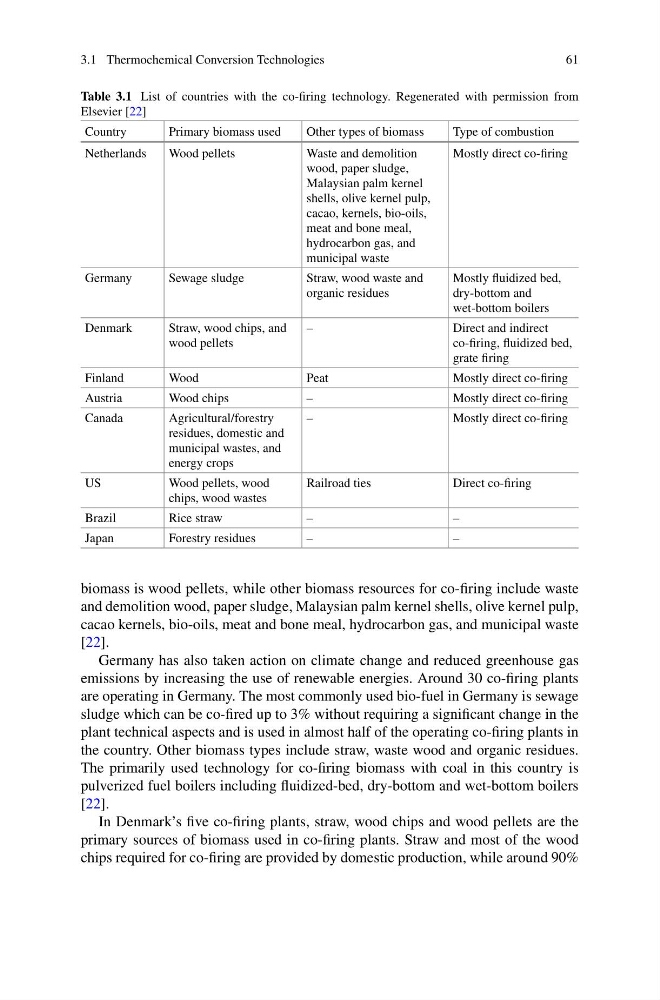
Table 3.1 List of countries with the co-firing technology. Regenerated with permission from
Elsevier [22]
Country
Primary biomass used
Other types of biomass
Type of combustion
Netherlands
Wood pellets
Waste and demolition
wood, paper sludge,
Malaysian palm kernel
shells, olive kernel pulp,
cacao, kernels, bio-oils,
meat and bone meal,
hydrocarbon gas, and
municipal waste
Mostly direct co-firing
Germany
Sewage sludge
Straw, wood waste and
organic residues
Mostly fluidized bed,
dry-bottom and
wet-bottom boilers
Denmark
Straw, wood chips, and
wood pellets
–
Direct and indirect
co-firing, fluidized bed,
grate firing
Finland
Wood
Peat
Mostly direct co-firing
Austria
Wood chips
–
Mostly direct co-firing
Canada
Agricultural/forestry
residues, domestic and
municipal wastes, and
energy crops
–
Mostly direct co-firing
US
Wood pellets, wood
chips, wood wastes
Railroad ties
Direct co-firing
Brazil
Rice straw
–
–
Japan
Forestry residues
–
–
biomass is wood pellets, while other biomass resources for co-firing include waste
and demolition wood, paper sludge, Malaysian palm kernel shells, olive kernel pulp,
cacao kernels, bio-oils, meat and bone meal, hydrocarbon gas, and municipal waste
[22].
Germany has also taken action on climate change and reduced greenhouse gas
emissions by increasing the use of renewable energies. Around 30 co-firing plants
are operating in Germany. The most commonly used bio-fuel in Germany is sewage
sludge which can be co-fired up to 3% without requiring a significant change in the
plant technical aspects and is used in almost half of the operating co-firing plants in
the country. Other biomass types include straw, waste wood and organic residues.
The primarily used technology for co-firing biomass with coal in this country is
pulverized fuel boilers including fluidized-bed, dry-bottom and wet-bottom boilers
[22].
In Denmark’s five co-firing plants, straw, wood chips and wood pellets are the
primary sources of biomass used in co-firing plants. Straw and most of the wood
chips required for co-firing are provided by domestic production, while around 90%
61
Table 3.1 List of countries with the co-firing technology. Regenerated with permission from
Elsevier [22]
Country
Primary biomass used
Other types of biomass
Type of combustion
Netherlands
Wood pellets
Waste and demolition
wood, paper sludge,
Malaysian palm kernel
shells, olive kernel pulp,
cacao, kernels, bio-oils,
meat and bone meal,
hydrocarbon gas, and
municipal waste
Mostly direct co-firing
Germany
Sewage sludge
Straw, wood waste and
organic residues
Mostly fluidized bed,
dry-bottom and
wet-bottom boilers
Denmark
Straw, wood chips, and
wood pellets
–
Direct and indirect
co-firing, fluidized bed,
grate firing
Finland
Wood
Peat
Mostly direct co-firing
Austria
Wood chips
–
Mostly direct co-firing
Canada
Agricultural/forestry
residues, domestic and
municipal wastes, and
energy crops
–
Mostly direct co-firing
US
Wood pellets, wood
chips, wood wastes
Railroad ties
Direct co-firing
Brazil
Rice straw
–
–
Japan
Forestry residues
–
–
biomass is wood pellets, while other biomass resources for co-firing include waste
and demolition wood, paper sludge, Malaysian palm kernel shells, olive kernel pulp,
cacao kernels, bio-oils, meat and bone meal, hydrocarbon gas, and municipal waste
[22].
Germany has also taken action on climate change and reduced greenhouse gas
emissions by increasing the use of renewable energies. Around 30 co-firing plants
are operating in Germany. The most commonly used bio-fuel in Germany is sewage
sludge which can be co-fired up to 3% without requiring a significant change in the
plant technical aspects and is used in almost half of the operating co-firing plants in
the country. Other biomass types include straw, waste wood and organic residues.
The primarily used technology for co-firing biomass with coal in this country is
pulverized fuel boilers including fluidized-bed, dry-bottom and wet-bottom boilers
[22].
In Denmark’s five co-firing plants, straw, wood chips and wood pellets are the
primary sources of biomass used in co-firing plants. Straw and most of the wood
chips required for co-firing are provided by domestic production, while around 90%