

3 Advanced Technologies (Biological and Thermochemical) …
57
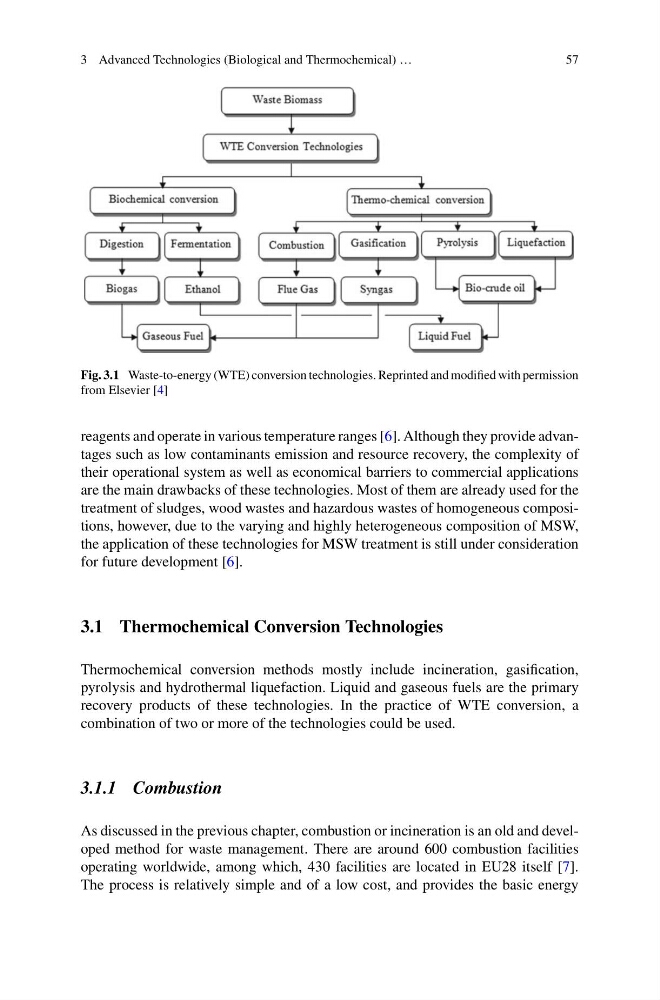
Fig. 3.1 Waste-to-energy (WTE) conversion technologies. Reprinted and modified with permission
from Elsevier [4]
reagents and operate in various temperature ranges [6]. Although they provide advantages such as low contaminants emission and resource recovery, the complexity of
their operational system as well as economical barriers to commercial applications
are the main drawbacks of these technologies. Most of them are already used for the
treatment of sludges, wood wastes and hazardous wastes of homogeneous compositions, however, due to the varying and highly heterogeneous composition of MSW,
the application of these technologies for MSW treatment is still under consideration
for future development [6].
3.1 Thermochemical Conversion Technologies
Thermochemical conversion methods mostly include incineration, gasification,
pyrolysis and hydrothermal liquefaction. Liquid and gaseous fuels are the primary
recovery products of these technologies. In the practice of WTE conversion, a
combination of two or more of the technologies could be used.
3.1.1 Combustion
As discussed in the previous chapter, combustion or incineration is an old and developed method for waste management. There are around 600 combustion facilities
operating worldwide, among which, 430 facilities are located in EU28 itself [7].
The process is relatively simple and of a low cost, and provides the basic energy
57
Fig. 3.1 Waste-to-energy (WTE) conversion technologies. Reprinted and modified with permission
from Elsevier [4]
reagents and operate in various temperature ranges [6]. Although they provide advantages such as low contaminants emission and resource recovery, the complexity of
their operational system as well as economical barriers to commercial applications
are the main drawbacks of these technologies. Most of them are already used for the
treatment of sludges, wood wastes and hazardous wastes of homogeneous compositions, however, due to the varying and highly heterogeneous composition of MSW,
the application of these technologies for MSW treatment is still under consideration
for future development [6].
3.1 Thermochemical Conversion Technologies
Thermochemical conversion methods mostly include incineration, gasification,
pyrolysis and hydrothermal liquefaction. Liquid and gaseous fuels are the primary
recovery products of these technologies. In the practice of WTE conversion, a
combination of two or more of the technologies could be used.
3.1.1 Combustion
As discussed in the previous chapter, combustion or incineration is an old and developed method for waste management. There are around 600 combustion facilities
operating worldwide, among which, 430 facilities are located in EU28 itself [7].
The process is relatively simple and of a low cost, and provides the basic energy