

50
2 Conventional Approaches for Waste Management …
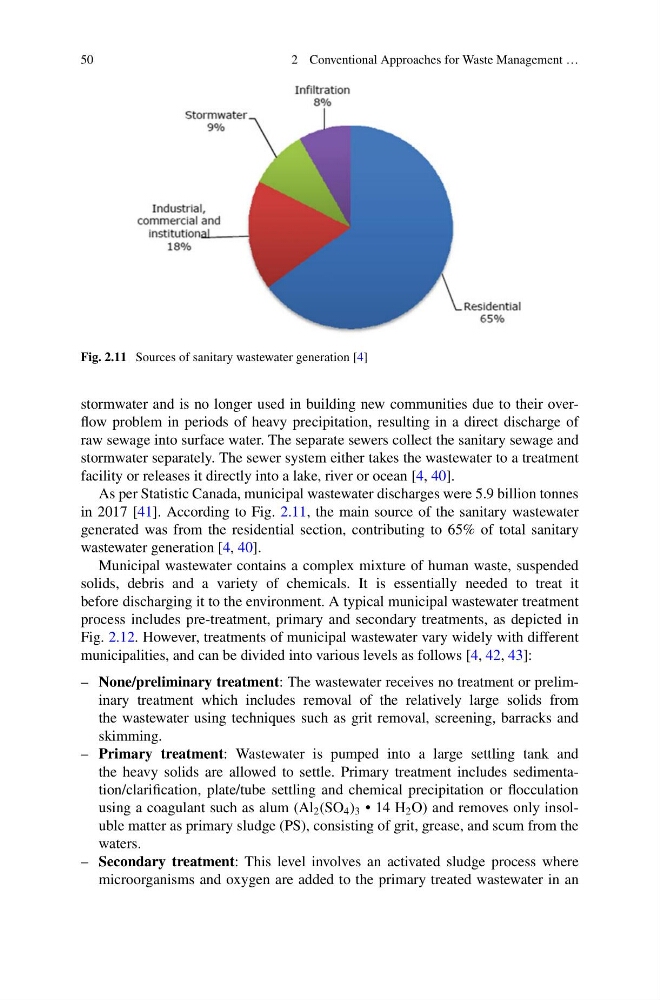
Fig. 2.11 Sources of sanitary wastewater generation [4]
stormwater and is no longer used in building new communities due to their overflow problem in periods of heavy precipitation, resulting in a direct discharge of
raw sewage into surface water. The separate sewers collect the sanitary sewage and
stormwater separately. The sewer system either takes the wastewater to a treatment
facility or releases it directly into a lake, river or ocean [4, 40].
As per Statistic Canada, municipal wastewater discharges were 5.9 billion tonnes
in 2017 [41]. According to Fig. 2.11, the main source of the sanitary wastewater
generated was from the residential section, contributing to 65% of total sanitary
wastewater generation [4, 40].
Municipal wastewater contains a complex mixture of human waste, suspended
solids, debris and a variety of chemicals. It is essentially needed to treat it
before discharging it to the environment. A typical municipal wastewater treatment
process includes pre-treatment, primary and secondary treatments, as depicted in
Fig. 2.12. However, treatments of municipal wastewater vary widely with different
municipalities, and can be divided into various levels as follows [4, 42, 43]:
– None/preliminary treatment: The wastewater receives no treatment or preliminary treatment which includes removal of the relatively large solids from
the wastewater using techniques such as grit removal, screening, barracks and
skimming.
– Primary treatment: Wastewater is pumped into a large settling tank and
the heavy solids are allowed to settle. Primary treatment includes sedimentation/clarification, plate/tube settling and chemical precipitation or flocculation
using a coagulant such as alum (Al 2 (SO 4 ) 3 • 14 H 2 O) and removes only insoluble matter as primary sludge (PS), consisting of grit, grease, and scum from the
waters.
– Secondary treatment: This level involves an activated sludge process where
microorganisms and oxygen are added to the primary treated wastewater in an
2 Conventional Approaches for Waste Management …
Fig. 2.11 Sources of sanitary wastewater generation [4]
stormwater and is no longer used in building new communities due to their overflow problem in periods of heavy precipitation, resulting in a direct discharge of
raw sewage into surface water. The separate sewers collect the sanitary sewage and
stormwater separately. The sewer system either takes the wastewater to a treatment
facility or releases it directly into a lake, river or ocean [4, 40].
As per Statistic Canada, municipal wastewater discharges were 5.9 billion tonnes
in 2017 [41]. According to Fig. 2.11, the main source of the sanitary wastewater
generated was from the residential section, contributing to 65% of total sanitary
wastewater generation [4, 40].
Municipal wastewater contains a complex mixture of human waste, suspended
solids, debris and a variety of chemicals. It is essentially needed to treat it
before discharging it to the environment. A typical municipal wastewater treatment
process includes pre-treatment, primary and secondary treatments, as depicted in
Fig. 2.12. However, treatments of municipal wastewater vary widely with different
municipalities, and can be divided into various levels as follows [4, 42, 43]:
– None/preliminary treatment: The wastewater receives no treatment or preliminary treatment which includes removal of the relatively large solids from
the wastewater using techniques such as grit removal, screening, barracks and
skimming.
– Primary treatment: Wastewater is pumped into a large settling tank and
the heavy solids are allowed to settle. Primary treatment includes sedimentation/clarification, plate/tube settling and chemical precipitation or flocculation
using a coagulant such as alum (Al 2 (SO 4 ) 3 • 14 H 2 O) and removes only insoluble matter as primary sludge (PS), consisting of grit, grease, and scum from the
waters.
– Secondary treatment: This level involves an activated sludge process where
microorganisms and oxygen are added to the primary treated wastewater in an