

5.8 Metallurgical Methods for Metals Recovery
137
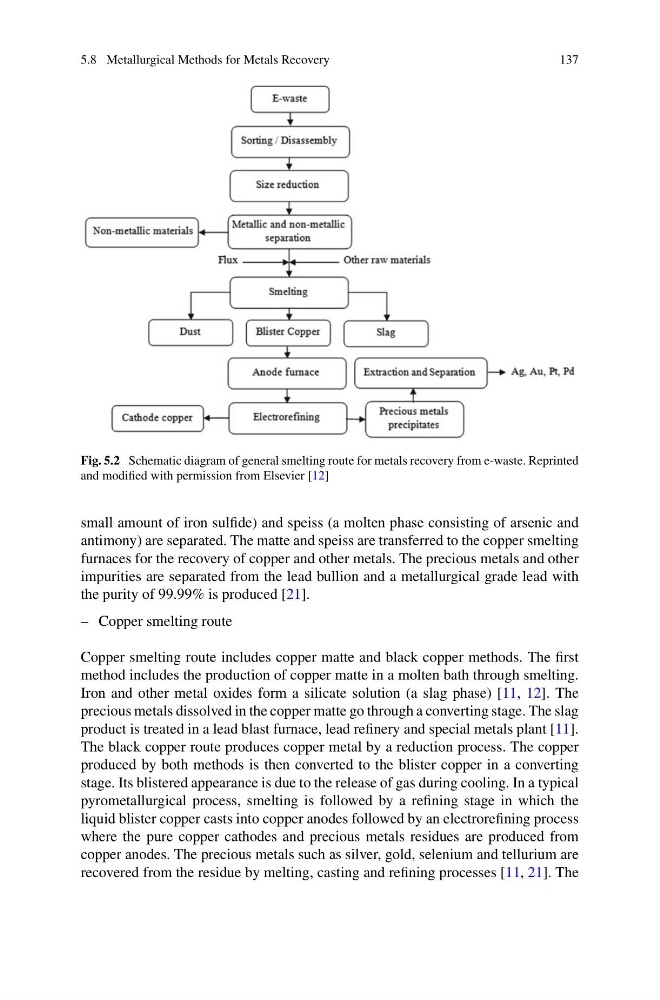
Fig. 5.2 Schematic diagram of general smelting route for metals recovery from e-waste. Reprinted
and modified with permission from Elsevier [12]
small amount of iron sulfide) and speiss (a molten phase consisting of arsenic and
antimony) are separated. The matte and speiss are transferred to the copper smelting
furnaces for the recovery of copper and other metals. The precious metals and other
impurities are separated from the lead bullion and a metallurgical grade lead with
the purity of 99.99% is produced [21].
– Copper smelting route
Copper smelting route includes copper matte and black copper methods. The first
method includes the production of copper matte in a molten bath through smelting.
Iron and other metal oxides form a silicate solution (a slag phase) [11, 12]. The
precious metals dissolved in the copper matte go through a converting stage. The slag
product is treated in a lead blast furnace, lead refinery and special metals plant [11].
The black copper route produces copper metal by a reduction process. The copper
produced by both methods is then converted to the blister copper in a converting
stage. Its blistered appearance is due to the release of gas during cooling. In a typical
pyrometallurgical process, smelting is followed by a refining stage in which the
liquid blister copper casts into copper anodes followed by an electrorefining process
where the pure copper cathodes and precious metals residues are produced from
copper anodes. The precious metals such as silver, gold, selenium and tellurium are
recovered from the residue by melting, casting and refining processes [11, 21]. The
137
Fig. 5.2 Schematic diagram of general smelting route for metals recovery from e-waste. Reprinted
and modified with permission from Elsevier [12]
small amount of iron sulfide) and speiss (a molten phase consisting of arsenic and
antimony) are separated. The matte and speiss are transferred to the copper smelting
furnaces for the recovery of copper and other metals. The precious metals and other
impurities are separated from the lead bullion and a metallurgical grade lead with
the purity of 99.99% is produced [21].
– Copper smelting route
Copper smelting route includes copper matte and black copper methods. The first
method includes the production of copper matte in a molten bath through smelting.
Iron and other metal oxides form a silicate solution (a slag phase) [11, 12]. The
precious metals dissolved in the copper matte go through a converting stage. The slag
product is treated in a lead blast furnace, lead refinery and special metals plant [11].
The black copper route produces copper metal by a reduction process. The copper
produced by both methods is then converted to the blister copper in a converting
stage. Its blistered appearance is due to the release of gas during cooling. In a typical
pyrometallurgical process, smelting is followed by a refining stage in which the
liquid blister copper casts into copper anodes followed by an electrorefining process
where the pure copper cathodes and precious metals residues are produced from
copper anodes. The precious metals such as silver, gold, selenium and tellurium are
recovered from the residue by melting, casting and refining processes [11, 21]. The