

availability totally depend on environmental factors as well as soil pH (Zhao et al.
2009). When soil pH is low, it could significantly increase the heavy metal
concentrations in both the shoots and roots of plants.
4. Intercropping: Intercropping with legume tree shows higher efficiency for the
removal of heavy metal. However, precaution is essential in screening of suitable
legume neighbor plants because nitrogen fixing legume plants produced acid in
variable amount; hence, pH of soil is altered (Tang and Chen 1999).
5. Transportation: Combination of heavy metal and mycorrhiza is known to affect
acquisition and distribution of macronutrient in plants (Bati et al. 2014; Allen and
Shachar-Hill 2009). Heavy metal concentration blocks ion absorption at the cell
membrane and struggle for ion binding legends on the cell wall (Małkowski et al.
2005; Godbold and Kettner 1991), which show negative effect on plant nutrient
uptake from soil. Uptake of phosphorus by non-mycorrhizal plants is by the direct
pathway via Pi transporters in the epidermis, while AMF-associated plants can
acquire phosphorus through root epidermal cells as well as phosphorus transporters in hyphae of mycorrhizal fungi (Smith et al. 2011; Tang and Chen 1999).
Subramanian and Charest (1999) reported that the hyphae of VAM fungi were
capable to consume and transfer inorganic nitrogen efficiently from soil to plant
roots.
6. Legume plant: Legume plants show root–root interactions or root–AMF–root
interactions (Teste et al. 2014). Association of legume plants, neighbors plant,
and AM fungi increase the uptake of nitrogen and phosphorus as well as enhance
plant heavy metal resistance, because the excess phosphorus simply create metastable compounds with toxic heavy metals (Andrade et al. 2004) and drastically
reduce the bioavailability of heavy metals.
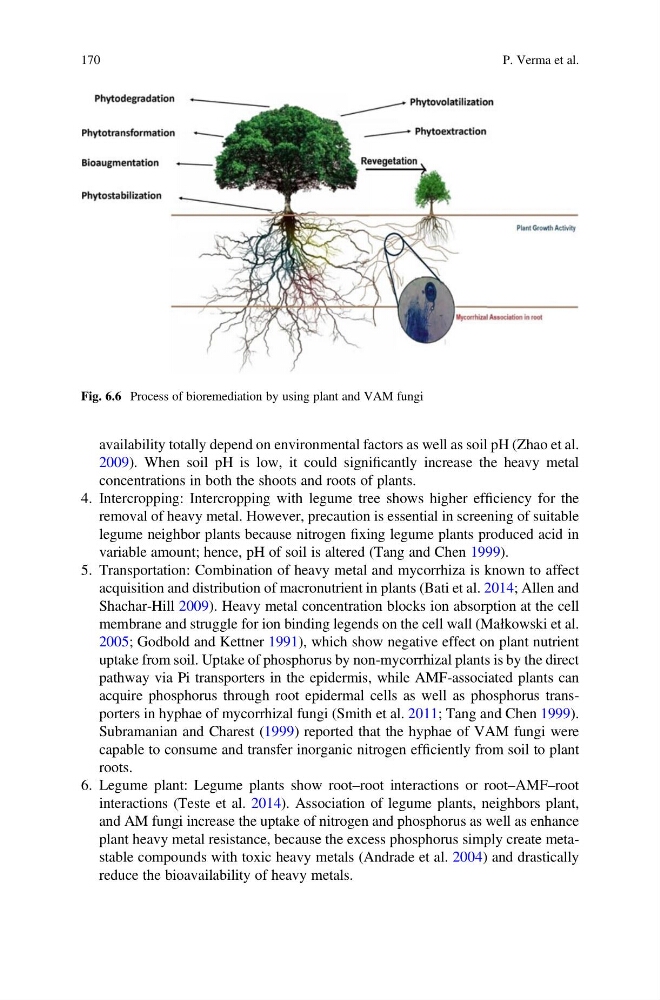
Fig. 6.6 Process of bioremediation by using plant and VAM fungi
170
P. Verma et al.
2009). When soil pH is low, it could significantly increase the heavy metal
concentrations in both the shoots and roots of plants.
4. Intercropping: Intercropping with legume tree shows higher efficiency for the
removal of heavy metal. However, precaution is essential in screening of suitable
legume neighbor plants because nitrogen fixing legume plants produced acid in
variable amount; hence, pH of soil is altered (Tang and Chen 1999).
5. Transportation: Combination of heavy metal and mycorrhiza is known to affect
acquisition and distribution of macronutrient in plants (Bati et al. 2014; Allen and
Shachar-Hill 2009). Heavy metal concentration blocks ion absorption at the cell
membrane and struggle for ion binding legends on the cell wall (Małkowski et al.
2005; Godbold and Kettner 1991), which show negative effect on plant nutrient
uptake from soil. Uptake of phosphorus by non-mycorrhizal plants is by the direct
pathway via Pi transporters in the epidermis, while AMF-associated plants can
acquire phosphorus through root epidermal cells as well as phosphorus transporters in hyphae of mycorrhizal fungi (Smith et al. 2011; Tang and Chen 1999).
Subramanian and Charest (1999) reported that the hyphae of VAM fungi were
capable to consume and transfer inorganic nitrogen efficiently from soil to plant
roots.
6. Legume plant: Legume plants show root–root interactions or root–AMF–root
interactions (Teste et al. 2014). Association of legume plants, neighbors plant,
and AM fungi increase the uptake of nitrogen and phosphorus as well as enhance
plant heavy metal resistance, because the excess phosphorus simply create metastable compounds with toxic heavy metals (Andrade et al. 2004) and drastically
reduce the bioavailability of heavy metals.
Fig. 6.6 Process of bioremediation by using plant and VAM fungi
170
P. Verma et al.