

9.2 A Model System to Represent a Dilute Gas
391
v z
kv z
iv x
0
iv x 1 jv y
v 5 iv x 1 jv y 1 kv z
kv z jv z
v y
v x
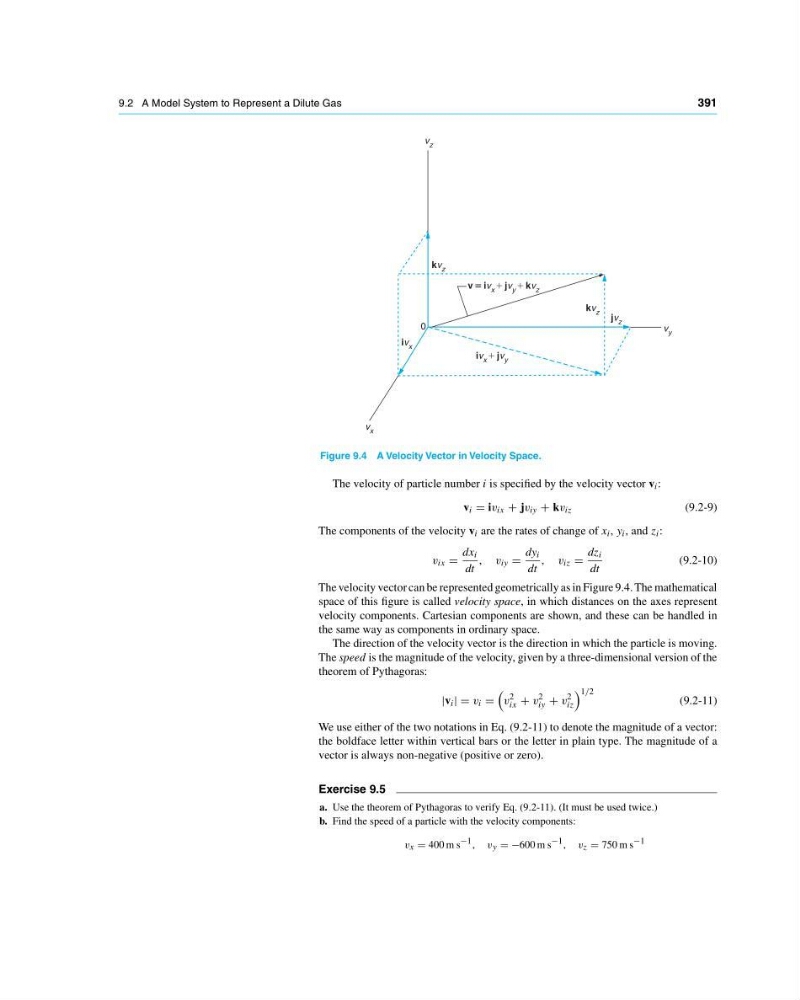
Figure 9.4 A Velocity Vector in Velocity Space.
The velocity of particle number i is specified by the velocity vector v i :
v i iv ix + jv iy + kv iz
(9.2-9)
The components of the velocity v i are the rates of change of x i , y i , and z i :
v ix
dx i
dt
, v iy
dy i
dt
, v iz
dz i
dt
(9.2-10)
The velocity vector can be represented geometrically as in Figure 9.4. The mathematical
space of this figure is called velocity space, in which distances on the axes represent
velocity components. Cartesian components are shown, and these can be handled in
the same way as components in ordinary space.
The direction of the velocity vector is the direction in which the particle is moving.
The speed is the magnitude of the velocity, given by a three-dimensional version of the
theorem of Pythagoras:
|v i | v i
v
2
ix + v
2
iy + v
2
iz
1/2
(9.2-11)
We use either of the two notations in Eq. (9.2-11) to denote the magnitude of a vector:
the boldface letter within vertical bars or the letter in plain type. The magnitude of a
vector is always non-negative (positive or zero).
Exercise 9.5
a. Use the theorem of Pythagoras to verify Eq. (9.2-11). (It must be used twice.)
b. Find the speed of a particle with the velocity components:
v x 400 m s −1 , v y −600 m s −1 , v z 750 m s −1
391
v z
kv z
iv x
0
iv x 1 jv y
v 5 iv x 1 jv y 1 kv z
kv z jv z
v y
v x
Figure 9.4 A Velocity Vector in Velocity Space.
The velocity of particle number i is specified by the velocity vector v i :
v i iv ix + jv iy + kv iz
(9.2-9)
The components of the velocity v i are the rates of change of x i , y i , and z i :
v ix
dx i
dt
, v iy
dy i
dt
, v iz
dz i
dt
(9.2-10)
The velocity vector can be represented geometrically as in Figure 9.4. The mathematical
space of this figure is called velocity space, in which distances on the axes represent
velocity components. Cartesian components are shown, and these can be handled in
the same way as components in ordinary space.
The direction of the velocity vector is the direction in which the particle is moving.
The speed is the magnitude of the velocity, given by a three-dimensional version of the
theorem of Pythagoras:
|v i | v i
v
2
ix + v
2
iy + v
2
iz
1/2
(9.2-11)
We use either of the two notations in Eq. (9.2-11) to denote the magnitude of a vector:
the boldface letter within vertical bars or the letter in plain type. The magnitude of a
vector is always non-negative (positive or zero).
Exercise 9.5
a. Use the theorem of Pythagoras to verify Eq. (9.2-11). (It must be used twice.)
b. Find the speed of a particle with the velocity components:
v x 400 m s −1 , v y −600 m s −1 , v z 750 m s −1