

8.1 The Chemical Potential and the Electric Potential
353
Equation (8.1-5) can be written
µ i µ i,chem + z i F ϕ
(8.1-7)
We call µ i,chem the chemical part of the chemical potential. It is assumed to be independent of the electric potential and depends only on temperature, pressure, and the
composition of the system. The chemical potential including the electric potential term
is the true chemical potential that obeys the fundamental fact of phase equilibrium.
Some electrochemists use the term electrochemical potential for the chemical potential
in Eq. (8.1-7) and refer to the chemical part of the chemical potential as the “chemical
potential.” We will use the term “chemical potential” for the true chemical potential
and the term “chemical part of the chemical potential” for µ i,chem .
The chemical potential of a single charged species cannot be measured, since charged
particles cannot easily be added to a system without adding ions of the opposite charge
at the same time. Consider an electrolyte solute with the formula M ν + X ν − and with ion
valences z + and z − . The cation is represented by M z + and the anion is represented by
X z − . We use a subscript + to indicate the cation, a subscript − to indicate the anion,
and a subscript i to denote the neutral compound. We use the analogue of Eq. (7.4-3)
to write the chemical potential of the neutral electrolyte solute:
µ i ν + µ + + ν − µ − ν + µ +,chem + ν − µ −,chem + (ν + z + + ν − z − )F ϕ
(8.1-8)
For example, Eq. (8.1-8) for Na 2 SO 4 is
µ(Na 2 SO 4 ) 2µ chem (Na
+ ) + µ chem (SO
2−
4 ) + (2)(+1) + (1)(−2)F ϕ
2µ chem (Na
+ ) + µ chem (SO
2−
4 )
Electrical neutrality implies that ν + z + + ν − z − 0 for any neutral electrolyte, so the
term proportional to ϕ in Eq. (8.1-8) cancels, as it does for any neutral electrolyte
solute.
µ i ν + µ +,chem + ν − µ −,chem µ i,chem
(8.1-9)
Position
i,chem
z i F
i
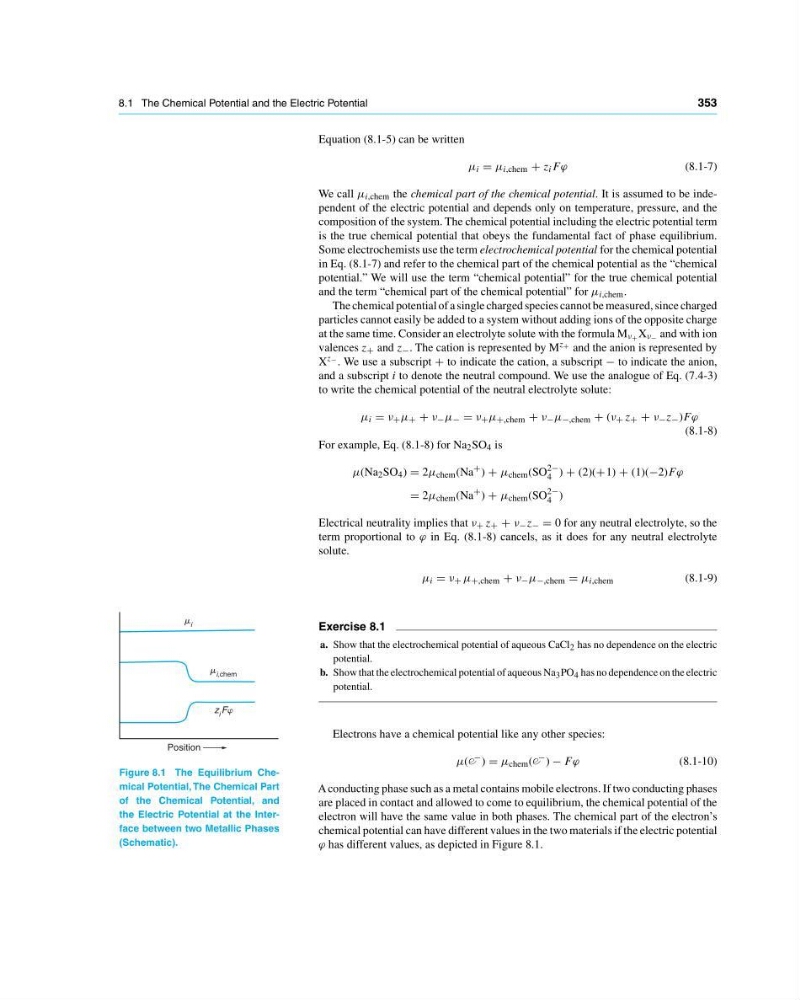
Figure 8.1 The Equilibrium Chemical Potential, The Chemical Part
of the Chemical Potential, and
the Electric Potential at the Interface between two Metallic Phases
(Schematic).
Exercise 8.1
a. Show that the electrochemical potential of aqueous CaCl 2 has no dependence on the electric
potential.
b. Show that the electrochemical potential of aqueous Na 3 PO 4 has no dependence on the electric
potential.
Electrons have a chemical potential like any other species:
µ(e
− ) µ chem (e
− ) − F ϕ
(8.1-10)
A conducting phase such as a metal contains mobile electrons. If two conducting phases
are placed in contact and allowed to come to equilibrium, the chemical potential of the
electron will have the same value in both phases. The chemical part of the electron’s
chemical potential can have different values in the two materials if the electric potential
ϕ has different values, as depicted in Figure 8.1.
353
Equation (8.1-5) can be written
µ i µ i,chem + z i F ϕ
(8.1-7)
We call µ i,chem the chemical part of the chemical potential. It is assumed to be independent of the electric potential and depends only on temperature, pressure, and the
composition of the system. The chemical potential including the electric potential term
is the true chemical potential that obeys the fundamental fact of phase equilibrium.
Some electrochemists use the term electrochemical potential for the chemical potential
in Eq. (8.1-7) and refer to the chemical part of the chemical potential as the “chemical
potential.” We will use the term “chemical potential” for the true chemical potential
and the term “chemical part of the chemical potential” for µ i,chem .
The chemical potential of a single charged species cannot be measured, since charged
particles cannot easily be added to a system without adding ions of the opposite charge
at the same time. Consider an electrolyte solute with the formula M ν + X ν − and with ion
valences z + and z − . The cation is represented by M z + and the anion is represented by
X z − . We use a subscript + to indicate the cation, a subscript − to indicate the anion,
and a subscript i to denote the neutral compound. We use the analogue of Eq. (7.4-3)
to write the chemical potential of the neutral electrolyte solute:
µ i ν + µ + + ν − µ − ν + µ +,chem + ν − µ −,chem + (ν + z + + ν − z − )F ϕ
(8.1-8)
For example, Eq. (8.1-8) for Na 2 SO 4 is
µ(Na 2 SO 4 ) 2µ chem (Na
+ ) + µ chem (SO
2−
4 ) + (2)(+1) + (1)(−2)F ϕ
2µ chem (Na
+ ) + µ chem (SO
2−
4 )
Electrical neutrality implies that ν + z + + ν − z − 0 for any neutral electrolyte, so the
term proportional to ϕ in Eq. (8.1-8) cancels, as it does for any neutral electrolyte
solute.
µ i ν + µ +,chem + ν − µ −,chem µ i,chem
(8.1-9)
Position
i,chem
z i F
i
Figure 8.1 The Equilibrium Chemical Potential, The Chemical Part
of the Chemical Potential, and
the Electric Potential at the Interface between two Metallic Phases
(Schematic).
Exercise 8.1
a. Show that the electrochemical potential of aqueous CaCl 2 has no dependence on the electric
potential.
b. Show that the electrochemical potential of aqueous Na 3 PO 4 has no dependence on the electric
potential.
Electrons have a chemical potential like any other species:
µ(e
− ) µ chem (e
− ) − F ϕ
(8.1-10)
A conducting phase such as a metal contains mobile electrons. If two conducting phases
are placed in contact and allowed to come to equilibrium, the chemical potential of the
electron will have the same value in both phases. The chemical part of the electron’s
chemical potential can have different values in the two materials if the electric potential
ϕ has different values, as depicted in Figure 8.1.