

6.6 Phase Diagrams of Nonideal Mixtures
289
AP does not exist in the liquid state. When it melts an equimolar liquid solution of
aniline and phenol results. This is called congruent melting.
The phase diagram resembles two phase diagrams set side by side. The right half of
the diagram is the phase diagram for the two substances AP and A. The left half of the
diagram is the phase diagram for the two substances P and AP. The tie-line area at the
lower right represents the coexistence of nearly pure A with nearly pure AP, and the
corresponding area on the left represents the coexistence of nearly pure P with nearly
pure AP. Solid aniline and phenol cannot coexist with each other at equilibrium because
of the occurrence of the compound.
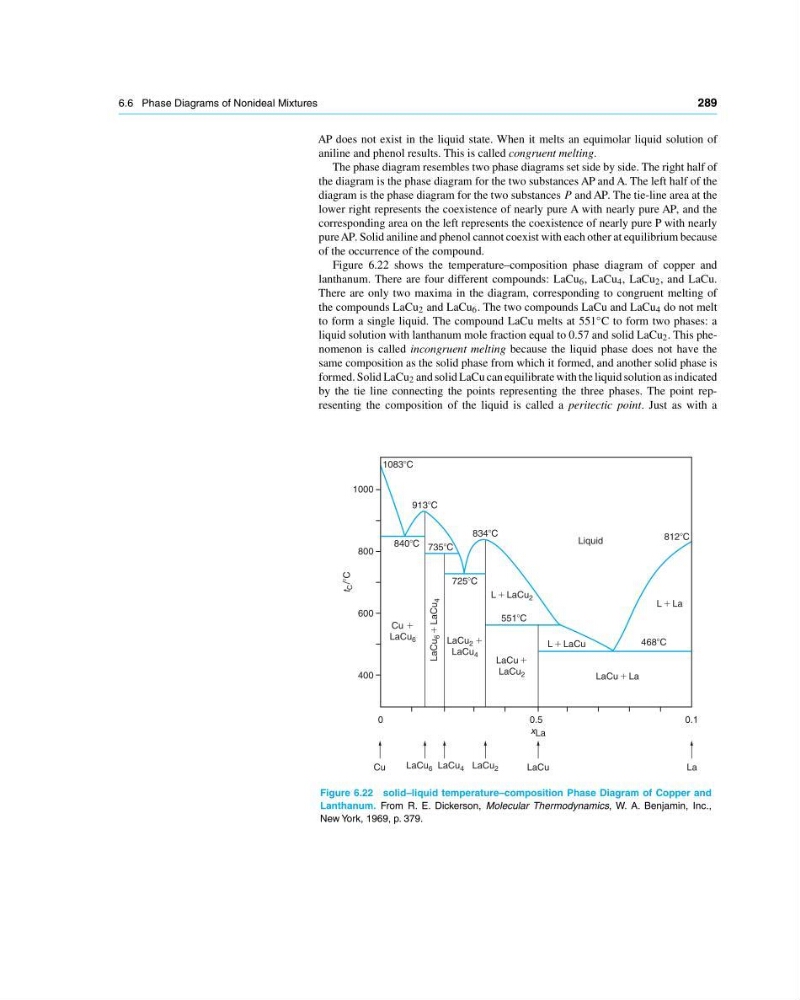
Figure 6.22 shows the temperature–composition phase diagram of copper and
lanthanum. There are four different compounds: LaCu 6 , LaCu 4 , LaCu 2 , and LaCu.
There are only two maxima in the diagram, corresponding to congruent melting of
the compounds LaCu 2 and LaCu 6 . The two compounds LaCu and LaCu 4 do not melt
to form a single liquid. The compound LaCu melts at 551 ◦ C to form two phases: a
liquid solution with lanthanum mole fraction equal to 0.57 and solid LaCu 2 . This phenomenon is called incongruent melting because the liquid phase does not have the
same composition as the solid phase from which it formed, and another solid phase is
formed. Solid LaCu 2 and solid LaCu can equilibrate with the liquid solution as indicated
by the tie line connecting the points representing the three phases. The point representing the composition of the liquid is called a peritectic point. Just as with a
10838C
9138C
8408C 7358C
7258C
5518C
4688C
8348C
8128C
Liquid
L 1 La
L 1 LaCu
LaCu 1 La
LaCu 1
LaCu 2
Cu 1
LaCu 6
600
800
1000
400
0
0.5
0.1
L 1 LaCu 2
LaCu 6 LaCu 4 LaCu 2
LaCu
La
LaCu
6 1 LaCu
4
LaCu 2 1
LaCu 4
Cu
x La
t
C /8C
Figure 6.22 solid–liquid temperature–composition Phase Diagram of Copper and
Lanthanum. From R. E. Dickerson, Molecular Thermodynamics, W. A. Benjamin, Inc.,
New York, 1969, p. 379.
289
AP does not exist in the liquid state. When it melts an equimolar liquid solution of
aniline and phenol results. This is called congruent melting.
The phase diagram resembles two phase diagrams set side by side. The right half of
the diagram is the phase diagram for the two substances AP and A. The left half of the
diagram is the phase diagram for the two substances P and AP. The tie-line area at the
lower right represents the coexistence of nearly pure A with nearly pure AP, and the
corresponding area on the left represents the coexistence of nearly pure P with nearly
pure AP. Solid aniline and phenol cannot coexist with each other at equilibrium because
of the occurrence of the compound.
Figure 6.22 shows the temperature–composition phase diagram of copper and
lanthanum. There are four different compounds: LaCu 6 , LaCu 4 , LaCu 2 , and LaCu.
There are only two maxima in the diagram, corresponding to congruent melting of
the compounds LaCu 2 and LaCu 6 . The two compounds LaCu and LaCu 4 do not melt
to form a single liquid. The compound LaCu melts at 551 ◦ C to form two phases: a
liquid solution with lanthanum mole fraction equal to 0.57 and solid LaCu 2 . This phenomenon is called incongruent melting because the liquid phase does not have the
same composition as the solid phase from which it formed, and another solid phase is
formed. Solid LaCu 2 and solid LaCu can equilibrate with the liquid solution as indicated
by the tie line connecting the points representing the three phases. The point representing the composition of the liquid is called a peritectic point. Just as with a
10838C
9138C
8408C 7358C
7258C
5518C
4688C
8348C
8128C
Liquid
L 1 La
L 1 LaCu
LaCu 1 La
LaCu 1
LaCu 2
Cu 1
LaCu 6
600
800
1000
400
0
0.5
0.1
L 1 LaCu 2
LaCu 6 LaCu 4 LaCu 2
LaCu
La
LaCu
6 1 LaCu
4
LaCu 2 1
LaCu 4
Cu
x La
t
C /8C
Figure 6.22 solid–liquid temperature–composition Phase Diagram of Copper and
Lanthanum. From R. E. Dickerson, Molecular Thermodynamics, W. A. Benjamin, Inc.,
New York, 1969, p. 379.