

Basidiomycota fungi, as the hyphae become
constricted in size as they penetrate the wood
cell wall. The penetration of the hyphae may be
in part via mechanical action as opposed to
enzymatic/catalytic degradation of the wall to
produce the bore hole. The formation of
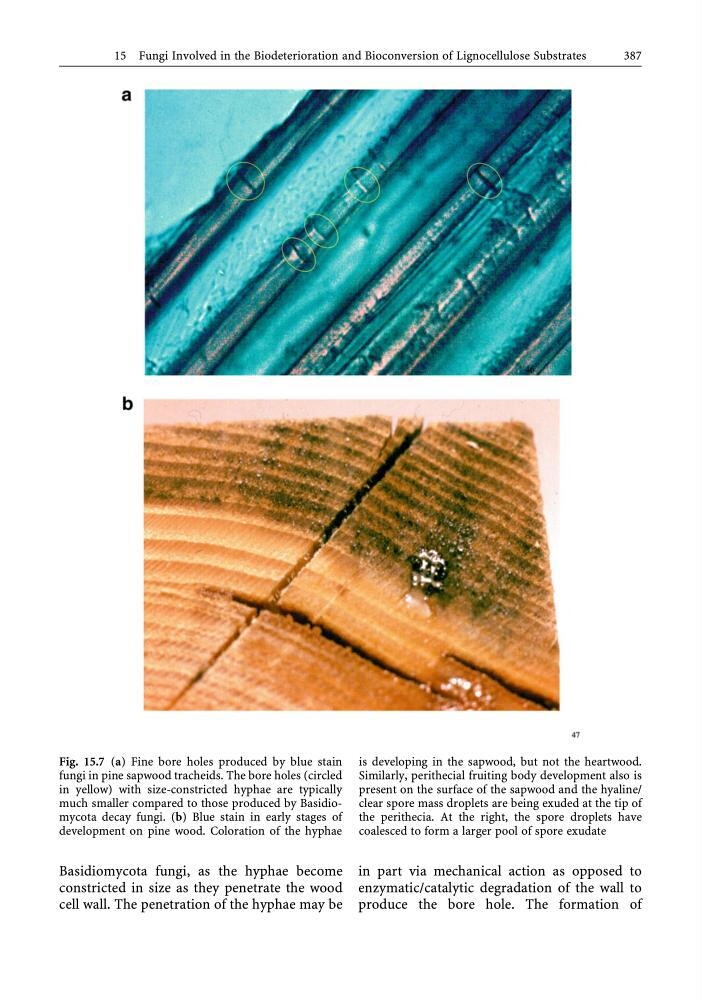
Fig. 15.7 (a) Fine bore holes produced by blue stain
fungi in pine sapwood tracheids. The bore holes (circled
in yellow) with size-constricted hyphae are typically
much smaller compared to those produced by Basidiomycota decay fungi. (b) Blue stain in early stages of
development on pine wood. Coloration of the hyphae
is developing in the sapwood, but not the heartwood.
Similarly, perithecial fruiting body development also is
present on the surface of the sapwood and the hyaline/
clear spore mass droplets are being exuded at the tip of
the perithecia. At the right, the spore droplets have
coalesced to form a larger pool of spore exudate
15 Fungi Involved in the Biodeterioration and Bioconversion of Lignocellulose Substrates
387
constricted in size as they penetrate the wood
cell wall. The penetration of the hyphae may be
in part via mechanical action as opposed to
enzymatic/catalytic degradation of the wall to
produce the bore hole. The formation of
Fig. 15.7 (a) Fine bore holes produced by blue stain
fungi in pine sapwood tracheids. The bore holes (circled
in yellow) with size-constricted hyphae are typically
much smaller compared to those produced by Basidiomycota decay fungi. (b) Blue stain in early stages of
development on pine wood. Coloration of the hyphae
is developing in the sapwood, but not the heartwood.
Similarly, perithecial fruiting body development also is
present on the surface of the sapwood and the hyaline/
clear spore mass droplets are being exuded at the tip of
the perithecia. At the right, the spore droplets have
coalesced to form a larger pool of spore exudate
15 Fungi Involved in the Biodeterioration and Bioconversion of Lignocellulose Substrates
387