

research findings on LMW compound penetration of wood cell walls in advance of celluloseand lignin-degrading enzymes in white rot
fungi, research on any deep-diffusing LMW
oxidizing compounds in the white rot fungi is
still quite limited, as reviewed below for specific
lignin-degrading enzymatic systems. A better
understanding of the nature of LMW compounds, and which particular enzyme systems
they are associated with, would enhance understanding of fungal mechanisms and would also
aid future research on utilization of fungal systems in biorefineries and in other bioprocessing efforts.
Lignin Peroxidases Lignin peroxidase (LiP) is
able to oxidize both phenolic and non-phenolic
lignin groups, with the latter composing 70–
90% of the wood lignin fraction. Lignin peroxidase will oxidize only the exposed components
of the wood cell wall at the lumen surface, and
therefore it is proposed to oxidize smaller intermediates (mediators) such as veratryl alcohol.
Given the size of the veratryl alcohol radical, it
would have the capacity to penetrate into the
wood cell wall from the lumen surface and may
be involved in the gradual erosion of the wood
cell from the S 3 layer outward. It follows that
the affinity of the radical for non-polar substrates such as lignin could potentially provide
a role for such a radical (assuming it is capable
of diffusing away from the enzyme) for the
selective attack on lignin in selective white rot
degradation. Lignin peroxidase’s ability to oxidize non-phenolic lignin has made it an attractive candidate for use in biopulping, dye
decolorization, and biorefinery applications,
but it has been more limited in these applications than desired. Several research groups
(Ma ¨kela ¨ et al. 2015; Pe ´rez-Boada et al. 2005;
Fernandez-Fueyo et al. 2012) discussing the
use of LiP have proposed that veratryl alcohol
may function as a cation radical that can oxidize lignin substrates indirectly, whereas versatile peroxidase (below) is able to oxidize Mn
2+
directly allowing direct enzymatic action on
substrates. Although these researchers have
speculated that the cation radical was closely
associated with the enzyme, it is possible that
lignin monomers functioning as cation radicals
could function as LMW agents diffusing ahead
of LiP.
Manganese Peroxidases Manganese peroxidases (MnP) are Class II fungal peroxidases
capable of oxidizing Mn
2+ to Mn
3+
. Low redox
potential phenolic compounds are able to be
oxidized directly through this action. However,
mediators such as unsaturated fatty acids or
glutathione are required for the degradation of
high redox potential non-phenolic compounds.
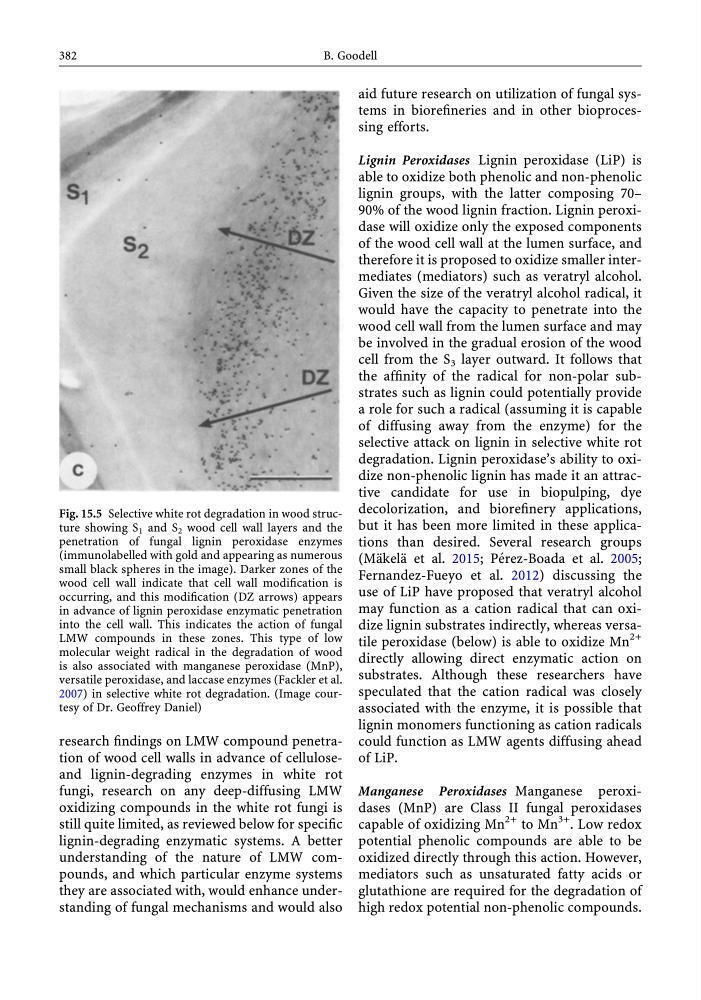
Fig. 15.5 Selective white rot degradation in wood structure showing S 1 and S 2 wood cell wall layers and the
penetration of fungal lignin peroxidase enzymes
(immunolabelled with gold and appearing as numerous
small black spheres in the image). Darker zones of the
wood cell wall indicate that cell wall modification is
occurring, and this modification (DZ arrows) appears
in advance of lignin peroxidase enzymatic penetration
into the cell wall. This indicates the action of fungal
LMW compounds in these zones. This type of low
molecular weight radical in the degradation of wood
is also associated with manganese peroxidase (MnP),
versatile peroxidase, and laccase enzymes (Fackler et al.
2007) in selective white rot degradation. (Image courtesy of Dr. Geoffrey Daniel)
382
B. Goodell
fungi, research on any deep-diffusing LMW
oxidizing compounds in the white rot fungi is
still quite limited, as reviewed below for specific
lignin-degrading enzymatic systems. A better
understanding of the nature of LMW compounds, and which particular enzyme systems
they are associated with, would enhance understanding of fungal mechanisms and would also
aid future research on utilization of fungal systems in biorefineries and in other bioprocessing efforts.
Lignin Peroxidases Lignin peroxidase (LiP) is
able to oxidize both phenolic and non-phenolic
lignin groups, with the latter composing 70–
90% of the wood lignin fraction. Lignin peroxidase will oxidize only the exposed components
of the wood cell wall at the lumen surface, and
therefore it is proposed to oxidize smaller intermediates (mediators) such as veratryl alcohol.
Given the size of the veratryl alcohol radical, it
would have the capacity to penetrate into the
wood cell wall from the lumen surface and may
be involved in the gradual erosion of the wood
cell from the S 3 layer outward. It follows that
the affinity of the radical for non-polar substrates such as lignin could potentially provide
a role for such a radical (assuming it is capable
of diffusing away from the enzyme) for the
selective attack on lignin in selective white rot
degradation. Lignin peroxidase’s ability to oxidize non-phenolic lignin has made it an attractive candidate for use in biopulping, dye
decolorization, and biorefinery applications,
but it has been more limited in these applications than desired. Several research groups
(Ma ¨kela ¨ et al. 2015; Pe ´rez-Boada et al. 2005;
Fernandez-Fueyo et al. 2012) discussing the
use of LiP have proposed that veratryl alcohol
may function as a cation radical that can oxidize lignin substrates indirectly, whereas versatile peroxidase (below) is able to oxidize Mn
2+
directly allowing direct enzymatic action on
substrates. Although these researchers have
speculated that the cation radical was closely
associated with the enzyme, it is possible that
lignin monomers functioning as cation radicals
could function as LMW agents diffusing ahead
of LiP.
Manganese Peroxidases Manganese peroxidases (MnP) are Class II fungal peroxidases
capable of oxidizing Mn
2+ to Mn
3+
. Low redox
potential phenolic compounds are able to be
oxidized directly through this action. However,
mediators such as unsaturated fatty acids or
glutathione are required for the degradation of
high redox potential non-phenolic compounds.
Fig. 15.5 Selective white rot degradation in wood structure showing S 1 and S 2 wood cell wall layers and the
penetration of fungal lignin peroxidase enzymes
(immunolabelled with gold and appearing as numerous
small black spheres in the image). Darker zones of the
wood cell wall indicate that cell wall modification is
occurring, and this modification (DZ arrows) appears
in advance of lignin peroxidase enzymatic penetration
into the cell wall. This indicates the action of fungal
LMW compounds in these zones. This type of low
molecular weight radical in the degradation of wood
is also associated with manganese peroxidase (MnP),
versatile peroxidase, and laccase enzymes (Fackler et al.
2007) in selective white rot degradation. (Image courtesy of Dr. Geoffrey Daniel)
382
B. Goodell