

traditional methods like mutagenesis and
screening as well as bioprocess engineering
have been major approaches to increase productivity. The question if accumulation of
astaxanthin is growth related or not was highly
debated in the literature and still seems not
really easy and straightforward to answer. It
turns out, however, that the optimal production
process is divided into two phases—a cell
growth phase with low carbon-to-nitrogen
ratio, allowing for rapid growth and moderate
astaxanthin production, followed by a maturation phase with a high carbon-to-nitrogen ratio,
limiting growth, but leading to the accumulation of high amounts of the desired compound
(Schmidt et al. 2011).
The enzymatic steps of the carotenoid biosynthetic pathway have been elucidated long
time ago. The products are commercially valuable and they are colorful—making engineering fun and success easy to recognize—so it is
no wonder that the carotenoid biosynthesis has
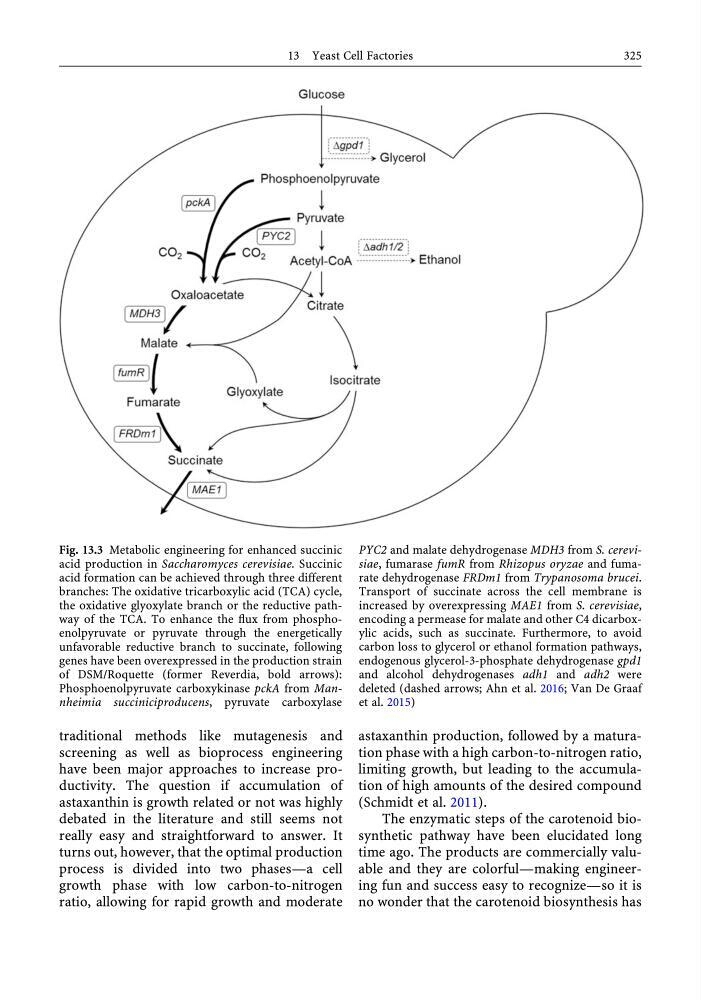
Fig. 13.3 Metabolic engineering for enhanced succinic
acid production in Saccharomyces cerevisiae. Succinic
acid formation can be achieved through three different
branches: The oxidative tricarboxylic acid (TCA) cycle,
the oxidative glyoxylate branch or the reductive pathway of the TCA. To enhance the flux from phosphoenolpyruvate or pyruvate through the energetically
unfavorable reductive branch to succinate, following
genes have been overexpressed in the production strain
of DSM/Roquette (former Reverdia, bold arrows):
Phosphoenolpyruvate carboxykinase pckA from Mannheimia succiniciproducens, pyruvate carboxylase
PYC2 and malate dehydrogenase MDH3 from S. cerevisiae, fumarase fumR from Rhizopus oryzae and fumarate dehydrogenase FRDm1 from Trypanosoma brucei.
Transport of succinate across the cell membrane is
increased by overexpressing MAE1 from S. cerevisiae,
encoding a permease for malate and other C4 dicarboxylic acids, such as succinate. Furthermore, to avoid
carbon loss to glycerol or ethanol formation pathways,
endogenous glycerol-3-phosphate dehydrogenase gpd1
and alcohol dehydrogenases adh1 and adh2 were
deleted (dashed arrows; Ahn et al. 2016; Van De Graaf
et al. 2015)
13 Yeast Cell Factories
325
screening as well as bioprocess engineering
have been major approaches to increase productivity. The question if accumulation of
astaxanthin is growth related or not was highly
debated in the literature and still seems not
really easy and straightforward to answer. It
turns out, however, that the optimal production
process is divided into two phases—a cell
growth phase with low carbon-to-nitrogen
ratio, allowing for rapid growth and moderate
astaxanthin production, followed by a maturation phase with a high carbon-to-nitrogen ratio,
limiting growth, but leading to the accumulation of high amounts of the desired compound
(Schmidt et al. 2011).
The enzymatic steps of the carotenoid biosynthetic pathway have been elucidated long
time ago. The products are commercially valuable and they are colorful—making engineering fun and success easy to recognize—so it is
no wonder that the carotenoid biosynthesis has
Fig. 13.3 Metabolic engineering for enhanced succinic
acid production in Saccharomyces cerevisiae. Succinic
acid formation can be achieved through three different
branches: The oxidative tricarboxylic acid (TCA) cycle,
the oxidative glyoxylate branch or the reductive pathway of the TCA. To enhance the flux from phosphoenolpyruvate or pyruvate through the energetically
unfavorable reductive branch to succinate, following
genes have been overexpressed in the production strain
of DSM/Roquette (former Reverdia, bold arrows):
Phosphoenolpyruvate carboxykinase pckA from Mannheimia succiniciproducens, pyruvate carboxylase
PYC2 and malate dehydrogenase MDH3 from S. cerevisiae, fumarase fumR from Rhizopus oryzae and fumarate dehydrogenase FRDm1 from Trypanosoma brucei.
Transport of succinate across the cell membrane is
increased by overexpressing MAE1 from S. cerevisiae,
encoding a permease for malate and other C4 dicarboxylic acids, such as succinate. Furthermore, to avoid
carbon loss to glycerol or ethanol formation pathways,
endogenous glycerol-3-phosphate dehydrogenase gpd1
and alcohol dehydrogenases adh1 and adh2 were
deleted (dashed arrows; Ahn et al. 2016; Van De Graaf
et al. 2015)
13 Yeast Cell Factories
325