

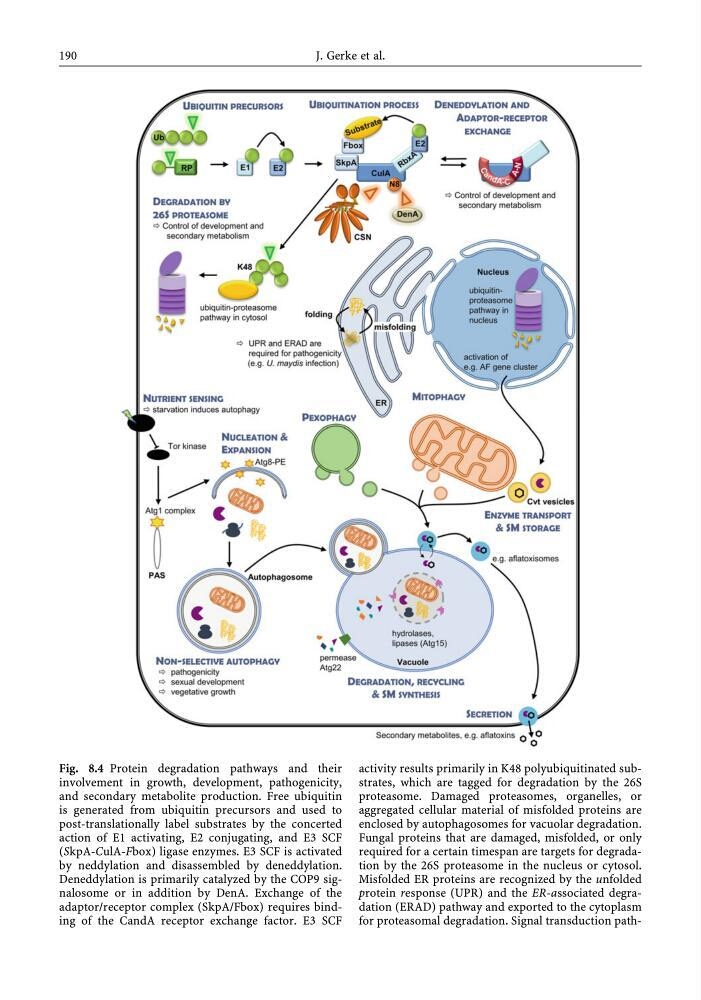
Fig. 8.4 Protein degradation pathways and their
involvement in growth, development, pathogenicity,
and secondary metabolite production. Free ubiquitin
is generated from ubiquitin precursors and used to
post-translationally label substrates by the concerted
action of E1 activating, E2 conjugating, and E3 SCF
(SkpA-CulA-Fbox) ligase enzymes. E3 SCF is activated
by neddylation and disassembled by deneddylation.
Deneddylation is primarily catalyzed by the COP9 signalosome or in addition by DenA. Exchange of the
adaptor/receptor complex (SkpA/Fbox) requires binding of the CandA receptor exchange factor. E3 SCF
activity results primarily in K48 polyubiquitinated substrates, which are tagged for degradation by the 26S
proteasome. Damaged proteasomes, organelles, or
aggregated cellular material of misfolded proteins are
enclosed by autophagosomes for vacuolar degradation.
Fungal proteins that are damaged, misfolded, or only
required for a certain timespan are targets for degradation by the 26S proteasome in the nucleus or cytosol.
Misfolded ER proteins are recognized by the unfolded
protein response (UPR) and the ER-associated degradation (ERAD) pathway and exported to the cytoplasm
for proteasomal degradation. Signal transduction path190
J. Gerke et al.
involvement in growth, development, pathogenicity,
and secondary metabolite production. Free ubiquitin
is generated from ubiquitin precursors and used to
post-translationally label substrates by the concerted
action of E1 activating, E2 conjugating, and E3 SCF
(SkpA-CulA-Fbox) ligase enzymes. E3 SCF is activated
by neddylation and disassembled by deneddylation.
Deneddylation is primarily catalyzed by the COP9 signalosome or in addition by DenA. Exchange of the
adaptor/receptor complex (SkpA/Fbox) requires binding of the CandA receptor exchange factor. E3 SCF
activity results primarily in K48 polyubiquitinated substrates, which are tagged for degradation by the 26S
proteasome. Damaged proteasomes, organelles, or
aggregated cellular material of misfolded proteins are
enclosed by autophagosomes for vacuolar degradation.
Fungal proteins that are damaged, misfolded, or only
required for a certain timespan are targets for degradation by the 26S proteasome in the nucleus or cytosol.
Misfolded ER proteins are recognized by the unfolded
protein response (UPR) and the ER-associated degradation (ERAD) pathway and exported to the cytoplasm
for proteasomal degradation. Signal transduction path190
J. Gerke et al.