

110
H
N
Me
O
R
2
R 1
H
2.2 equiv CuCl 2
5 equiv t-BuONa
DMF, 110 °C
N
O
R 2
R 1
Me
up to 97% yield
N
O
Et
Ar
Me
92%
N
O
Me
78%
N
O
OMe
Ar
Me
38%
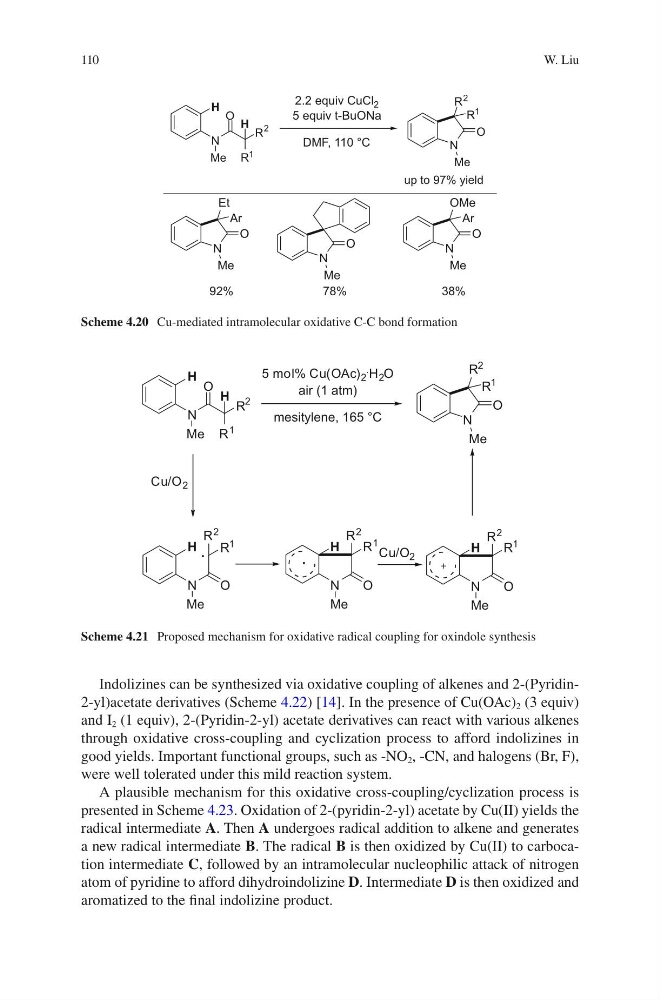
Scheme 4.20 Cu-mediated intramolecular oxidative C-C bond formation
H
N
Me
O
R
2
R
1
H
5 mol% Cu(OAc) 2
. H 2 O
air (1 atm)
mesitylene, 165 °C
N
O
R 2
R
1
Me
H
N
O
Me
R 1
R 2
Cu/O 2
H
N
O
Me
R 1
R 2
Cu/O 2
H
N
O
Me
R 1
R 2
Scheme 4.21 Proposed mechanism for oxidative radical coupling for oxindole synthesis
Indolizines can be synthesized via oxidative coupling of alkenes and 2-(Pyridin2- yl)acetate derivatives (Scheme 4.22) [14]. In the presence of Cu(OAc) 2 (3 equiv)
and I 2 (1 equiv), 2-(Pyridin-2-yl) acetate derivatives can react with various alkenes
through oxidative cross-coupling and cyclization process to afford indolizines in
good yields. Important functional groups, such as -NO 2 , -CN, and halogens (Br, F),
were well tolerated under this mild reaction system.
A plausible mechanism for this oxidative cross-coupling/cyclization process is
presented in Scheme 4.23. Oxidation of 2-(pyridin-2-yl) acetate by Cu(II) yields the
radical intermediate A. Then A undergoes radical addition to alkene and generates
a new radical intermediate B. The radical B is then oxidized by Cu(II) to carbocation intermediate C, followed by an intramolecular nucleophilic attack of nitrogen
atom of pyridine to afford dihydroindolizine D. Intermediate D is then oxidized and
aromatized to the final indolizine product.
W. Liu
H
N
Me
O
R
2
R 1
H
2.2 equiv CuCl 2
5 equiv t-BuONa
DMF, 110 °C
N
O
R 2
R 1
Me
up to 97% yield
N
O
Et
Ar
Me
92%
N
O
Me
78%
N
O
OMe
Ar
Me
38%
Scheme 4.20 Cu-mediated intramolecular oxidative C-C bond formation
H
N
Me
O
R
2
R
1
H
5 mol% Cu(OAc) 2
. H 2 O
air (1 atm)
mesitylene, 165 °C
N
O
R 2
R
1
Me
H
N
O
Me
R 1
R 2
Cu/O 2
H
N
O
Me
R 1
R 2
Cu/O 2
H
N
O
Me
R 1
R 2
Scheme 4.21 Proposed mechanism for oxidative radical coupling for oxindole synthesis
Indolizines can be synthesized via oxidative coupling of alkenes and 2-(Pyridin2- yl)acetate derivatives (Scheme 4.22) [14]. In the presence of Cu(OAc) 2 (3 equiv)
and I 2 (1 equiv), 2-(Pyridin-2-yl) acetate derivatives can react with various alkenes
through oxidative cross-coupling and cyclization process to afford indolizines in
good yields. Important functional groups, such as -NO 2 , -CN, and halogens (Br, F),
were well tolerated under this mild reaction system.
A plausible mechanism for this oxidative cross-coupling/cyclization process is
presented in Scheme 4.23. Oxidation of 2-(pyridin-2-yl) acetate by Cu(II) yields the
radical intermediate A. Then A undergoes radical addition to alkene and generates
a new radical intermediate B. The radical B is then oxidized by Cu(II) to carbocation intermediate C, followed by an intramolecular nucleophilic attack of nitrogen
atom of pyridine to afford dihydroindolizine D. Intermediate D is then oxidized and
aromatized to the final indolizine product.
W. Liu