

Applications of Computational Chemistry to Selected Problems …
471
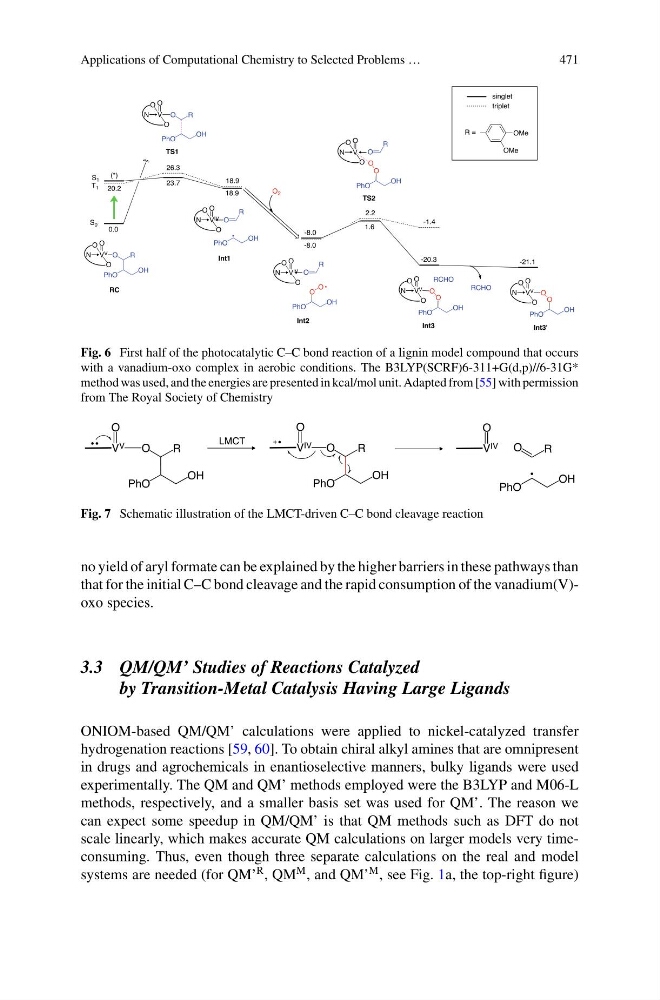
Fig. 6 First half of the photocatalytic C–C bond reaction of a lignin model compound that occurs
with a vanadium-oxo complex in aerobic conditions. The B3LYP(SCRF)6-311+G(d,p)//6-31G*
method was used, and the energies are presented in kcal/mol unit. Adapted from [55] with permission
from The Royal Society of Chemistry
Fig. 7 Schematic illustration of the LMCT-driven C–C bond cleavage reaction
no yield of aryl formate can be explained by the higher barriers in these pathways than
that for the initial C–C bond cleavage and the rapid consumption of the vanadium(V)oxo species.
3.3 QM/QM’ Studies of Reactions Catalyzed
by Transition-Metal Catalysis Having Large Ligands
ONIOM-based QM/QM’ calculations were applied to nickel-catalyzed transfer
hydrogenation reactions [59, 60]. To obtain chiral alkyl amines that are omnipresent
in drugs and agrochemicals in enantioselective manners, bulky ligands were used
experimentally. The QM and QM’ methods employed were the B3LYP and M06-L
methods, respectively, and a smaller basis set was used for QM’. The reason we
can expect some speedup in QM/QM’ is that QM methods such as DFT do not
scale linearly, which makes accurate QM calculations on larger models very timeconsuming. Thus, even though three separate calculations on the real and model
systems are needed (for QM’
R , QM
M , and QM’
M , see Fig. 1a, the top-right figure)
471
Fig. 6 First half of the photocatalytic C–C bond reaction of a lignin model compound that occurs
with a vanadium-oxo complex in aerobic conditions. The B3LYP(SCRF)6-311+G(d,p)//6-31G*
method was used, and the energies are presented in kcal/mol unit. Adapted from [55] with permission
from The Royal Society of Chemistry
Fig. 7 Schematic illustration of the LMCT-driven C–C bond cleavage reaction
no yield of aryl formate can be explained by the higher barriers in these pathways than
that for the initial C–C bond cleavage and the rapid consumption of the vanadium(V)oxo species.
3.3 QM/QM’ Studies of Reactions Catalyzed
by Transition-Metal Catalysis Having Large Ligands
ONIOM-based QM/QM’ calculations were applied to nickel-catalyzed transfer
hydrogenation reactions [59, 60]. To obtain chiral alkyl amines that are omnipresent
in drugs and agrochemicals in enantioselective manners, bulky ligands were used
experimentally. The QM and QM’ methods employed were the B3LYP and M06-L
methods, respectively, and a smaller basis set was used for QM’. The reason we
can expect some speedup in QM/QM’ is that QM methods such as DFT do not
scale linearly, which makes accurate QM calculations on larger models very timeconsuming. Thus, even though three separate calculations on the real and model
systems are needed (for QM’
R , QM
M , and QM’
M , see Fig. 1a, the top-right figure)