

5.3 Method of Standard Addition
59
y (signal)
C (concentration)
sample
sample+St 1
y = a
C
C sample
y (signal)
C (concentration)
sample
sample+St 1
sample+St 2
sample+St 3
y = a
C
C sample
Single standard addition
Multiple standard addition
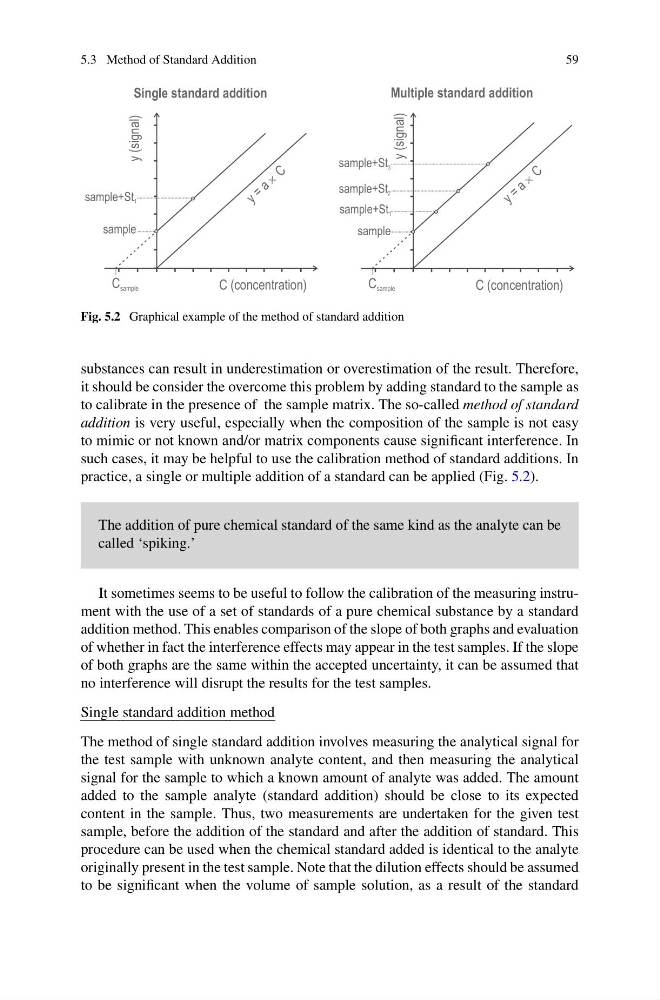
Fig. 5.2 Graphical example of the method of standard addition
substances can result in underestimation or overestimation of the result. Therefore,
it should be consider the overcome this problem by adding standard to the sample as
to calibrate in the presence of the sample matrix. The so-called method of standard
addition is very useful, especially when the composition of the sample is not easy
to mimic or not known and/or matrix components cause significant interference. In
such cases, it may be helpful to use the calibration method of standard additions. In
practice, a single or multiple addition of a standard can be applied (Fig. 5.2).
The addition of pure chemical standard of the same kind as the analyte can be
called ‘spiking.’
It sometimes seems to be useful to follow the calibration of the measuring instrument with the use of a set of standards of a pure chemical substance by a standard
addition method. This enables comparison of the slope of both graphs and evaluation
of whether in fact the interference effects may appear in the test samples. If the slope
of both graphs are the same within the accepted uncertainty, it can be assumed that
no interference will disrupt the results for the test samples.
Single standard addition method
The method of single standard addition involves measuring the analytical signal for
the test sample with unknown analyte content, and then measuring the analytical
signal for the sample to which a known amount of analyte was added. The amount
added to the sample analyte (standard addition) should be close to its expected
content in the sample. Thus, two measurements are undertaken for the given test
sample, before the addition of the standard and after the addition of standard. This
procedure can be used when the chemical standard added is identical to the analyte
originally present in the test sample. Note that the dilution effects should be assumed
to be significant when the volume of sample solution, as a result of the standard
59
y (signal)
C (concentration)
sample
sample+St 1
y = a
C
C sample
y (signal)
C (concentration)
sample
sample+St 1
sample+St 2
sample+St 3
y = a
C
C sample
Single standard addition
Multiple standard addition
Fig. 5.2 Graphical example of the method of standard addition
substances can result in underestimation or overestimation of the result. Therefore,
it should be consider the overcome this problem by adding standard to the sample as
to calibrate in the presence of the sample matrix. The so-called method of standard
addition is very useful, especially when the composition of the sample is not easy
to mimic or not known and/or matrix components cause significant interference. In
such cases, it may be helpful to use the calibration method of standard additions. In
practice, a single or multiple addition of a standard can be applied (Fig. 5.2).
The addition of pure chemical standard of the same kind as the analyte can be
called ‘spiking.’
It sometimes seems to be useful to follow the calibration of the measuring instrument with the use of a set of standards of a pure chemical substance by a standard
addition method. This enables comparison of the slope of both graphs and evaluation
of whether in fact the interference effects may appear in the test samples. If the slope
of both graphs are the same within the accepted uncertainty, it can be assumed that
no interference will disrupt the results for the test samples.
Single standard addition method
The method of single standard addition involves measuring the analytical signal for
the test sample with unknown analyte content, and then measuring the analytical
signal for the sample to which a known amount of analyte was added. The amount
added to the sample analyte (standard addition) should be close to its expected
content in the sample. Thus, two measurements are undertaken for the given test
sample, before the addition of the standard and after the addition of standard. This
procedure can be used when the chemical standard added is identical to the analyte
originally present in the test sample. Note that the dilution effects should be assumed
to be significant when the volume of sample solution, as a result of the standard