

26
3 System of Units
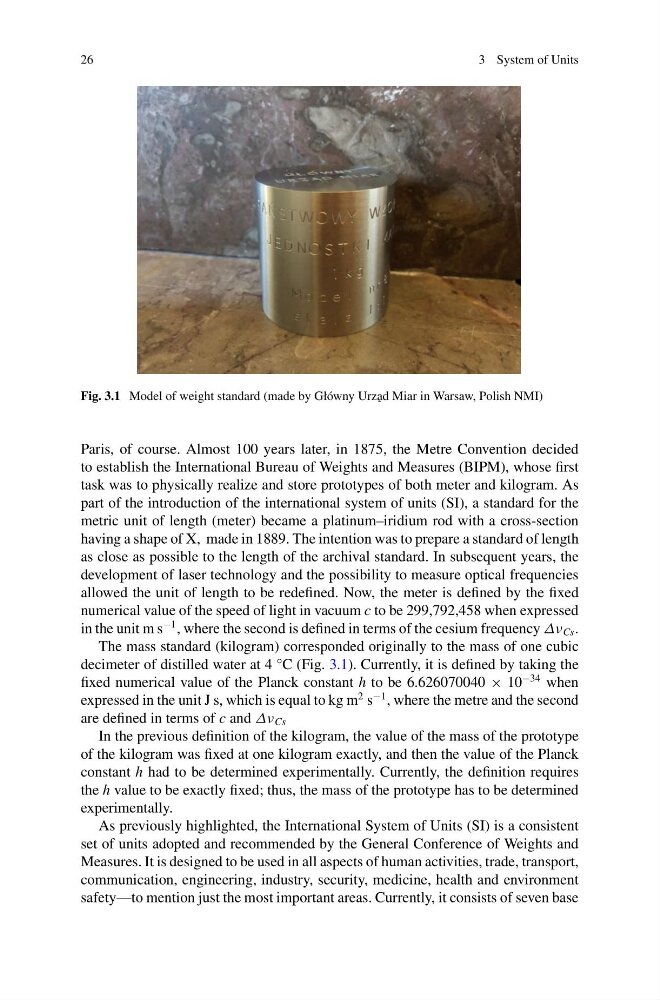
Fig. 3.1 Model of weight standard (made by Główny Urz˛ ad Miar in Warsaw, Polish NMI)
Paris, of course. Almost 100 years later, in 1875, the Metre Convention decided
to establish the International Bureau of Weights and Measures (BIPM), whose first
task was to physically realize and store prototypes of both meter and kilogram. As
part of the introduction of the international system of units (SI), a standard for the
metric unit of length (meter) became a platinum–iridium rod with a cross-section
having a shape of X, made in 1889. The intention was to prepare a standard of length
as close as possible to the length of the archival standard. In subsequent years, the
development of laser technology and the possibility to measure optical frequencies
allowed the unit of length to be redefined. Now, the meter is defined by the fixed
numerical value of the speed of light in vacuum c to be 299,792,458 when expressed
in the unit m s
−1 , where the second is defined in terms of the cesium frequency Δν Cs .
The mass standard (kilogram) corresponded originally to the mass of one cubic
decimeter of distilled water at 4 °C (Fig. 3.1). Currently, it is defined by taking the
fixed numerical value of the Planck constant h to be 6.626070040 × 10
−34 when
expressed in the unit J s, which is equal to kg m
2 s
−1 , where the metre and the second
are defined in terms of c and Δν Cs
In the previous definition of the kilogram, the value of the mass of the prototype
of the kilogram was fixed at one kilogram exactly, and then the value of the Planck
constant h had to be determined experimentally. Currently, the definition requires
the h value to be exactly fixed; thus, the mass of the prototype has to be determined
experimentally.
As previously highlighted, the International System of Units (SI) is a consistent
set of units adopted and recommended by the General Conference of Weights and
Measures. It is designed to be used in all aspects of human activities, trade, transport,
communication, engineering, industry, security, medicine, health and environment
safety—to mention just the most important areas. Currently, it consists of seven base
3 System of Units
Fig. 3.1 Model of weight standard (made by Główny Urz˛ ad Miar in Warsaw, Polish NMI)
Paris, of course. Almost 100 years later, in 1875, the Metre Convention decided
to establish the International Bureau of Weights and Measures (BIPM), whose first
task was to physically realize and store prototypes of both meter and kilogram. As
part of the introduction of the international system of units (SI), a standard for the
metric unit of length (meter) became a platinum–iridium rod with a cross-section
having a shape of X, made in 1889. The intention was to prepare a standard of length
as close as possible to the length of the archival standard. In subsequent years, the
development of laser technology and the possibility to measure optical frequencies
allowed the unit of length to be redefined. Now, the meter is defined by the fixed
numerical value of the speed of light in vacuum c to be 299,792,458 when expressed
in the unit m s
−1 , where the second is defined in terms of the cesium frequency Δν Cs .
The mass standard (kilogram) corresponded originally to the mass of one cubic
decimeter of distilled water at 4 °C (Fig. 3.1). Currently, it is defined by taking the
fixed numerical value of the Planck constant h to be 6.626070040 × 10
−34 when
expressed in the unit J s, which is equal to kg m
2 s
−1 , where the metre and the second
are defined in terms of c and Δν Cs
In the previous definition of the kilogram, the value of the mass of the prototype
of the kilogram was fixed at one kilogram exactly, and then the value of the Planck
constant h had to be determined experimentally. Currently, the definition requires
the h value to be exactly fixed; thus, the mass of the prototype has to be determined
experimentally.
As previously highlighted, the International System of Units (SI) is a consistent
set of units adopted and recommended by the General Conference of Weights and
Measures. It is designed to be used in all aspects of human activities, trade, transport,
communication, engineering, industry, security, medicine, health and environment
safety—to mention just the most important areas. Currently, it consists of seven base