

6
1 Introduction to Metrology
0
1
2
3
4
5
6
7
8
9
10
11
12
13
14
14
15
15
16
17
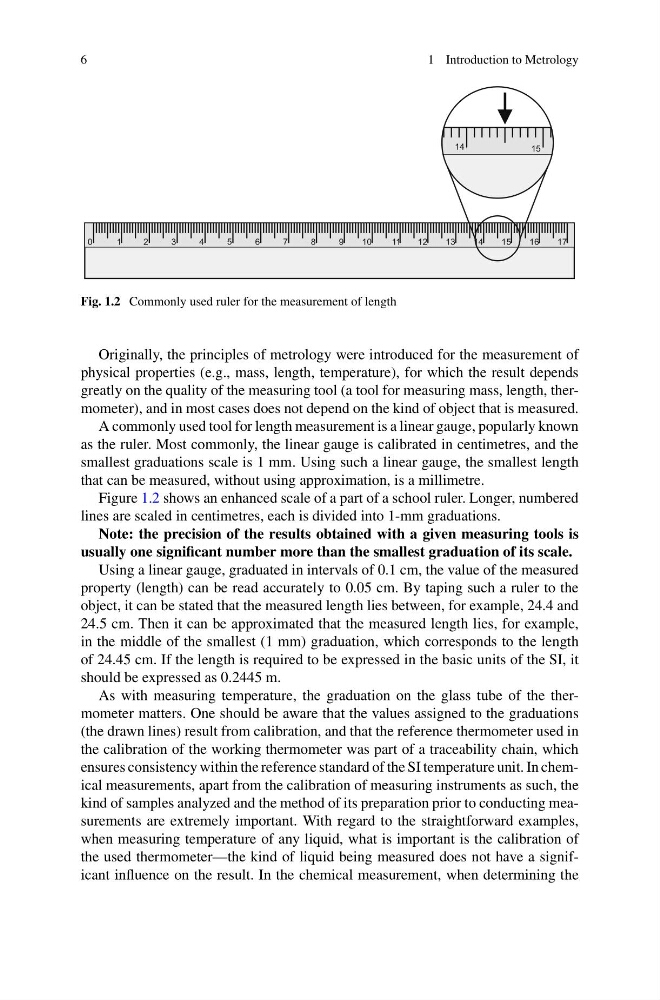
Fig. 1.2 Commonly used ruler for the measurement of length
Originally, the principles of metrology were introduced for the measurement of
physical properties (e.g., mass, length, temperature), for which the result depends
greatly on the quality of the measuring tool (a tool for measuring mass, length, thermometer), and in most cases does not depend on the kind of object that is measured.
A commonly used tool for length measurement is a linear gauge, popularly known
as the ruler. Most commonly, the linear gauge is calibrated in centimetres, and the
smallest graduations scale is 1 mm. Using such a linear gauge, the smallest length
that can be measured, without using approximation, is a millimetre.
Figure 1.2 shows an enhanced scale of a part of a school ruler. Longer, numbered
lines are scaled in centimetres, each is divided into 1-mm graduations.
Note: the precision of the results obtained with a given measuring tools is
usually one significant number more than the smallest graduation of its scale.
Using a linear gauge, graduated in intervals of 0.1 cm, the value of the measured
property (length) can be read accurately to 0.05 cm. By taping such a ruler to the
object, it can be stated that the measured length lies between, for example, 24.4 and
24.5 cm. Then it can be approximated that the measured length lies, for example,
in the middle of the smallest (1 mm) graduation, which corresponds to the length
of 24.45 cm. If the length is required to be expressed in the basic units of the SI, it
should be expressed as 0.2445 m.
As with measuring temperature, the graduation on the glass tube of the thermometer matters. One should be aware that the values assigned to the graduations
(the drawn lines) result from calibration, and that the reference thermometer used in
the calibration of the working thermometer was part of a traceability chain, which
ensures consistency within the reference standard of the SI temperature unit. In chemical measurements, apart from the calibration of measuring instruments as such, the
kind of samples analyzed and the method of its preparation prior to conducting measurements are extremely important. With regard to the straightforward examples,
when measuring temperature of any liquid, what is important is the calibration of
the used thermometer—the kind of liquid being measured does not have a significant influence on the result. In the chemical measurement, when determining the
1 Introduction to Metrology
0
1
2
3
4
5
6
7
8
9
10
11
12
13
14
14
15
15
16
17
Fig. 1.2 Commonly used ruler for the measurement of length
Originally, the principles of metrology were introduced for the measurement of
physical properties (e.g., mass, length, temperature), for which the result depends
greatly on the quality of the measuring tool (a tool for measuring mass, length, thermometer), and in most cases does not depend on the kind of object that is measured.
A commonly used tool for length measurement is a linear gauge, popularly known
as the ruler. Most commonly, the linear gauge is calibrated in centimetres, and the
smallest graduations scale is 1 mm. Using such a linear gauge, the smallest length
that can be measured, without using approximation, is a millimetre.
Figure 1.2 shows an enhanced scale of a part of a school ruler. Longer, numbered
lines are scaled in centimetres, each is divided into 1-mm graduations.
Note: the precision of the results obtained with a given measuring tools is
usually one significant number more than the smallest graduation of its scale.
Using a linear gauge, graduated in intervals of 0.1 cm, the value of the measured
property (length) can be read accurately to 0.05 cm. By taping such a ruler to the
object, it can be stated that the measured length lies between, for example, 24.4 and
24.5 cm. Then it can be approximated that the measured length lies, for example,
in the middle of the smallest (1 mm) graduation, which corresponds to the length
of 24.45 cm. If the length is required to be expressed in the basic units of the SI, it
should be expressed as 0.2445 m.
As with measuring temperature, the graduation on the glass tube of the thermometer matters. One should be aware that the values assigned to the graduations
(the drawn lines) result from calibration, and that the reference thermometer used in
the calibration of the working thermometer was part of a traceability chain, which
ensures consistency within the reference standard of the SI temperature unit. In chemical measurements, apart from the calibration of measuring instruments as such, the
kind of samples analyzed and the method of its preparation prior to conducting measurements are extremely important. With regard to the straightforward examples,
when measuring temperature of any liquid, what is important is the calibration of
the used thermometer—the kind of liquid being measured does not have a significant influence on the result. In the chemical measurement, when determining the