

2
1 Introduction to Metrology
150
150 FEET
1 foot
1 foot
≠
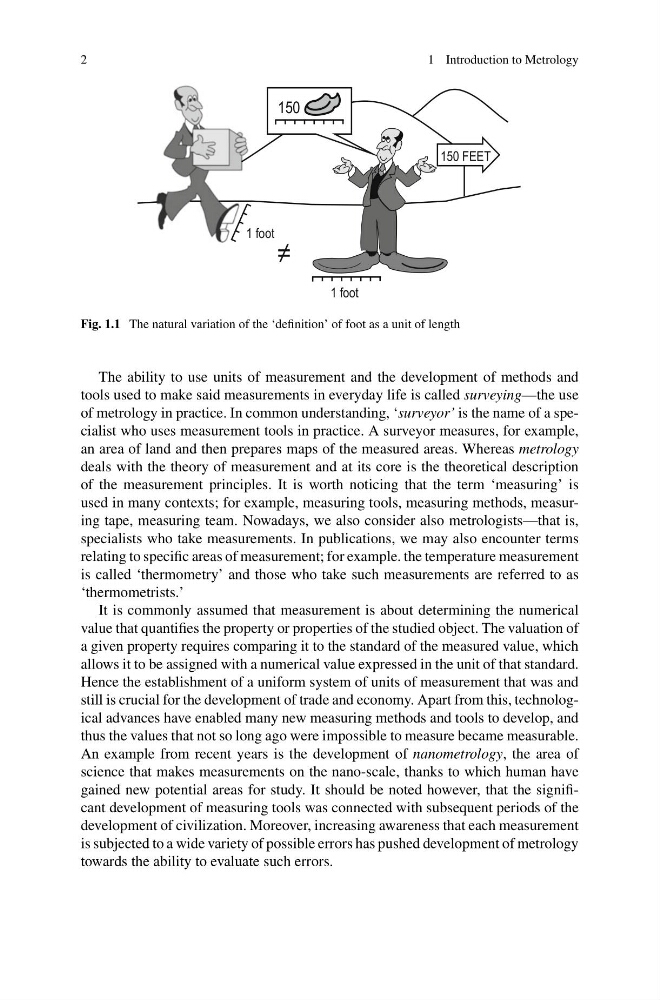
Fig. 1.1 The natural variation of the ‘definition’ of foot as a unit of length
The ability to use units of measurement and the development of methods and
tools used to make said measurements in everyday life is called surveying—the use
of metrology in practice. In common understanding, ‘surveyor’ is the name of a specialist who uses measurement tools in practice. A surveyor measures, for example,
an area of land and then prepares maps of the measured areas. Whereas metrology
deals with the theory of measurement and at its core is the theoretical description
of the measurement principles. It is worth noticing that the term ‘measuring’ is
used in many contexts; for example, measuring tools, measuring methods, measuring tape, measuring team. Nowadays, we also consider also metrologists—that is,
specialists who take measurements. In publications, we may also encounter terms
relating to specific areas of measurement; for example. the temperature measurement
is called ‘thermometry’ and those who take such measurements are referred to as
‘thermometrists.’
It is commonly assumed that measurement is about determining the numerical
value that quantifies the property or properties of the studied object. The valuation of
a given property requires comparing it to the standard of the measured value, which
allows it to be assigned with a numerical value expressed in the unit of that standard.
Hence the establishment of a uniform system of units of measurement that was and
still is crucial for the development of trade and economy. Apart from this, technological advances have enabled many new measuring methods and tools to develop, and
thus the values that not so long ago were impossible to measure became measurable.
An example from recent years is the development of nanometrology, the area of
science that makes measurements on the nano-scale, thanks to which human have
gained new potential areas for study. It should be noted however, that the significant development of measuring tools was connected with subsequent periods of the
development of civilization. Moreover, increasing awareness that each measurement
is subjected to a wide variety of possible errors has pushed development of metrology
towards the ability to evaluate such errors.
1 Introduction to Metrology
150
150 FEET
1 foot
1 foot
≠
Fig. 1.1 The natural variation of the ‘definition’ of foot as a unit of length
The ability to use units of measurement and the development of methods and
tools used to make said measurements in everyday life is called surveying—the use
of metrology in practice. In common understanding, ‘surveyor’ is the name of a specialist who uses measurement tools in practice. A surveyor measures, for example,
an area of land and then prepares maps of the measured areas. Whereas metrology
deals with the theory of measurement and at its core is the theoretical description
of the measurement principles. It is worth noticing that the term ‘measuring’ is
used in many contexts; for example, measuring tools, measuring methods, measuring tape, measuring team. Nowadays, we also consider also metrologists—that is,
specialists who take measurements. In publications, we may also encounter terms
relating to specific areas of measurement; for example. the temperature measurement
is called ‘thermometry’ and those who take such measurements are referred to as
‘thermometrists.’
It is commonly assumed that measurement is about determining the numerical
value that quantifies the property or properties of the studied object. The valuation of
a given property requires comparing it to the standard of the measured value, which
allows it to be assigned with a numerical value expressed in the unit of that standard.
Hence the establishment of a uniform system of units of measurement that was and
still is crucial for the development of trade and economy. Apart from this, technological advances have enabled many new measuring methods and tools to develop, and
thus the values that not so long ago were impossible to measure became measurable.
An example from recent years is the development of nanometrology, the area of
science that makes measurements on the nano-scale, thanks to which human have
gained new potential areas for study. It should be noted however, that the significant development of measuring tools was connected with subsequent periods of the
development of civilization. Moreover, increasing awareness that each measurement
is subjected to a wide variety of possible errors has pushed development of metrology
towards the ability to evaluate such errors.