

threw the stone? What stone was it? What was the weather like? Does that not
remind us of the need to describe the conditions in which the measurement was
carried out—that is, a measuring procedure?
By tracking the formation of units of measurement with time, we can see, that
apart from anthropological units or those derived from the observation of nature,
humans also began to use technological achievements for that purpose. Mastering
the production of glass resulted in the introduction of the unit ‘slab,’ which corresponded to the size of the commonly used rolling mill table in the glass factory.
The commonly used term in technology, ‘horsepower,’ corresponded to the power
of a steam machine that carried out work replacing one live horse.
Primarily used units of measurement were set up locally and accepted within a
given community. In those times, the separateness of metrics used in different
countries/territory or even in various districts was considered as proof of power and
a testament to freedom. However, as the cooperation between communities
developed, such separateness became a hindrance. As the free trade, communication and industry grew internationally, the variety of units of measurement became
more and more of a problem, and their unification and creating uniform units by
interested parties became a pressing issue. As a result of the efforts of the French
Academy of Science, units of length and mass were unified and introduced in
France: the units of meter and kilogram, respectively. Those actions and the benefits
resulting from them were appreciated by other governments, which soon resulted in
the adoption of a consistent system of units, named the International System of
Units (abbreviated as SI from the French, Le Système Internationale—d’unités).
Nowadays days, SI is recognized as the modern and most widely used system of
measurements.
FOOT
STEP
TIME
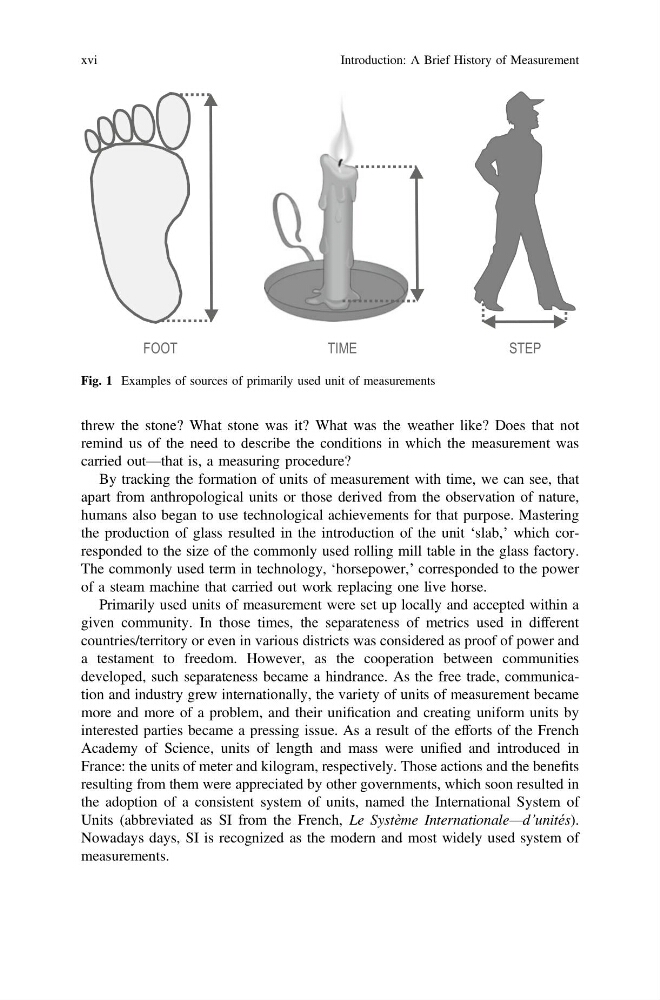
Fig. 1 Examples of sources of primarily used unit of measurements
xvi
Introduction: A Brief History of Measurement
remind us of the need to describe the conditions in which the measurement was
carried out—that is, a measuring procedure?
By tracking the formation of units of measurement with time, we can see, that
apart from anthropological units or those derived from the observation of nature,
humans also began to use technological achievements for that purpose. Mastering
the production of glass resulted in the introduction of the unit ‘slab,’ which corresponded to the size of the commonly used rolling mill table in the glass factory.
The commonly used term in technology, ‘horsepower,’ corresponded to the power
of a steam machine that carried out work replacing one live horse.
Primarily used units of measurement were set up locally and accepted within a
given community. In those times, the separateness of metrics used in different
countries/territory or even in various districts was considered as proof of power and
a testament to freedom. However, as the cooperation between communities
developed, such separateness became a hindrance. As the free trade, communication and industry grew internationally, the variety of units of measurement became
more and more of a problem, and their unification and creating uniform units by
interested parties became a pressing issue. As a result of the efforts of the French
Academy of Science, units of length and mass were unified and introduced in
France: the units of meter and kilogram, respectively. Those actions and the benefits
resulting from them were appreciated by other governments, which soon resulted in
the adoption of a consistent system of units, named the International System of
Units (abbreviated as SI from the French, Le Système Internationale—d’unités).
Nowadays days, SI is recognized as the modern and most widely used system of
measurements.
FOOT
STEP
TIME
Fig. 1 Examples of sources of primarily used unit of measurements
xvi
Introduction: A Brief History of Measurement