

7.11 Validation Parameters
101
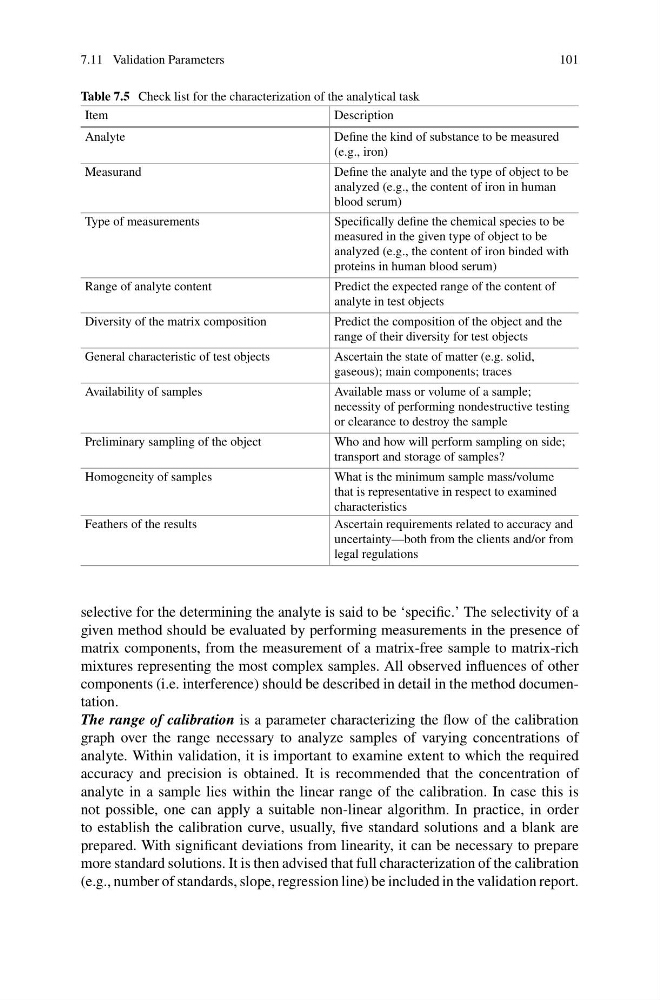
Table 7.5 Check list for the characterization of the analytical task
Item
Description
Analyte
Define the kind of substance to be measured
(e.g., iron)
Measurand
Define the analyte and the type of object to be
analyzed (e.g., the content of iron in human
blood serum)
Type of measurements
Specifically define the chemical species to be
measured in the given type of object to be
analyzed (e.g., the content of iron binded with
proteins in human blood serum)
Range of analyte content
Predict the expected range of the content of
analyte in test objects
Diversity of the matrix composition
Predict the composition of the object and the
range of their diversity for test objects
General characteristic of test objects
Ascertain the state of matter (e.g. solid,
gaseous); main components; traces
Availability of samples
Available mass or volume of a sample;
necessity of performing nondestructive testing
or clearance to destroy the sample
Preliminary sampling of the object
Who and how will perform sampling on side;
transport and storage of samples?
Homogeneity of samples
What is the minimum sample mass/volume
that is representative in respect to examined
characteristics
Feathers of the results
Ascertain requirements related to accuracy and
uncertainty—both from the clients and/or from
legal regulations
selective for the determining the analyte is said to be ‘specific.’ The selectivity of a
given method should be evaluated by performing measurements in the presence of
matrix components, from the measurement of a matrix-free sample to matrix-rich
mixtures representing the most complex samples. All observed influences of other
components (i.e. interference) should be described in detail in the method documentation.
The range of calibration is a parameter characterizing the flow of the calibration
graph over the range necessary to analyze samples of varying concentrations of
analyte. Within validation, it is important to examine extent to which the required
accuracy and precision is obtained. It is recommended that the concentration of
analyte in a sample lies within the linear range of the calibration. In case this is
not possible, one can apply a suitable non-linear algorithm. In practice, in order
to establish the calibration curve, usually, five standard solutions and a blank are
prepared. With significant deviations from linearity, it can be necessary to prepare
more standard solutions. It is then advised that full characterization of the calibration
(e.g., number of standards, slope, regression line) be included in the validation report.
101
Table 7.5 Check list for the characterization of the analytical task
Item
Description
Analyte
Define the kind of substance to be measured
(e.g., iron)
Measurand
Define the analyte and the type of object to be
analyzed (e.g., the content of iron in human
blood serum)
Type of measurements
Specifically define the chemical species to be
measured in the given type of object to be
analyzed (e.g., the content of iron binded with
proteins in human blood serum)
Range of analyte content
Predict the expected range of the content of
analyte in test objects
Diversity of the matrix composition
Predict the composition of the object and the
range of their diversity for test objects
General characteristic of test objects
Ascertain the state of matter (e.g. solid,
gaseous); main components; traces
Availability of samples
Available mass or volume of a sample;
necessity of performing nondestructive testing
or clearance to destroy the sample
Preliminary sampling of the object
Who and how will perform sampling on side;
transport and storage of samples?
Homogeneity of samples
What is the minimum sample mass/volume
that is representative in respect to examined
characteristics
Feathers of the results
Ascertain requirements related to accuracy and
uncertainty—both from the clients and/or from
legal regulations
selective for the determining the analyte is said to be ‘specific.’ The selectivity of a
given method should be evaluated by performing measurements in the presence of
matrix components, from the measurement of a matrix-free sample to matrix-rich
mixtures representing the most complex samples. All observed influences of other
components (i.e. interference) should be described in detail in the method documentation.
The range of calibration is a parameter characterizing the flow of the calibration
graph over the range necessary to analyze samples of varying concentrations of
analyte. Within validation, it is important to examine extent to which the required
accuracy and precision is obtained. It is recommended that the concentration of
analyte in a sample lies within the linear range of the calibration. In case this is
not possible, one can apply a suitable non-linear algorithm. In practice, in order
to establish the calibration curve, usually, five standard solutions and a blank are
prepared. With significant deviations from linearity, it can be necessary to prepare
more standard solutions. It is then advised that full characterization of the calibration
(e.g., number of standards, slope, regression line) be included in the validation report.