

photocatalytic applications [57]. Except for reduced TiO 2 , reduced Nb 2 O 5 and WO 3
polycrystals were also electrochemically hydrogenated, reported by Chen et al. [58].
4.2.1.6 UV Light Irradiation Reduction
UV light irradiation was early reported to introduce surface oxygen vacancies at
bridging sites, which was favorable for the conversion of Ti
4+ to Ti
3+ in TiO 2
catalysts [59]. The photogeneration of Ti
3+ sites on TiO 2 surface promoted the
development of highly amphiphilic TiO 2 materials [60]. Based on the use of STM
[61], oxygen defects along <001> direction of TiO 2 were detected, and the driving
force of oxygen vacancy formation was considered to be the UV-generated excitons:
oxygen anions trap hole components of the excitons and become neutralized, finally
resulting into the transformation of oxygen anions to molecular oxygen gas and
subsequently its release into vacuum.
However, the Ti
3+ generated by UV irradiation is usually located on the surface of
TiO 2 , and the oxygen defects are easy to be healed while exposing under O 2 gas
[62]. EPR also confirmed the Ti
3+ species on the surface or few surface monolayers
of TiO 2 and their extinction in oxygen [63]. Furthermore, vacuum condition should
be maintained while employing UV treatment on the TiO 2 samples. In order to
stabilize the UV-induced Ti
3+ species of TiO 2–x nanoparticles, Li et al. combined
UV irradiation with post-annealing process at Ar atmosphere [64]. Besides, Wu et al.
synthesized yellow TiO 2–x nanoparticles via UV irradiation-assisted sol-gel method,
and the obtained TiO 2–x was stable upon exposure in air for several months [65].
4.2.2 Oxidation Method
Except for reduction treatment of TiO 2 nanoparticles or Ti(IV) precursors, the
preparation of TiO 2–x photocatalysts was realized by partial oxidation of lowoxidation-state titanium compounds, such as metallic Ti powder and Ti(II) and Ti
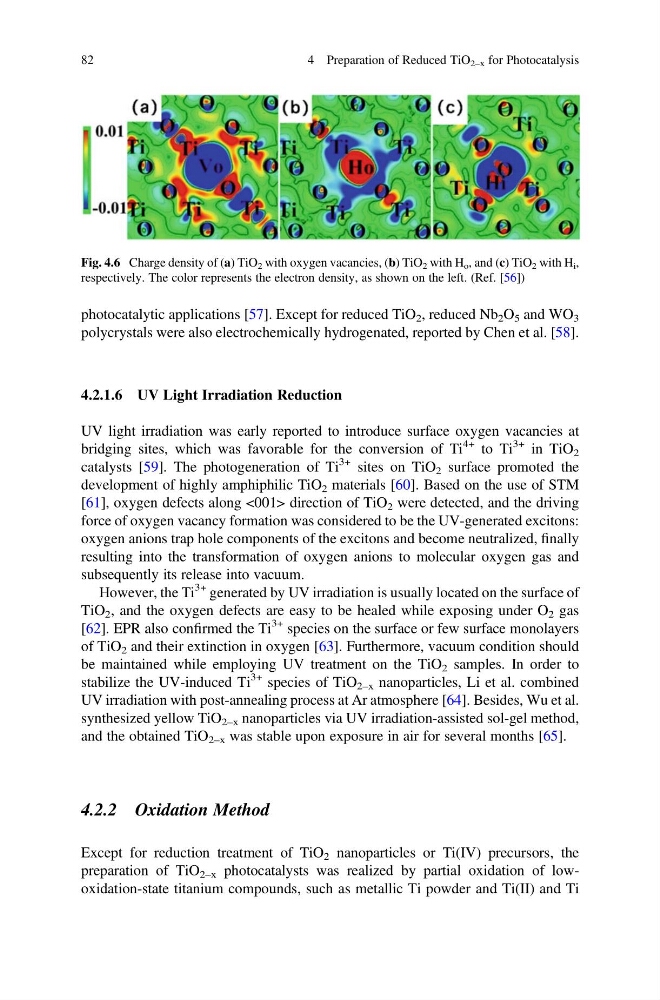
Fig. 4.6 Charge density of (a) TiO 2 with oxygen vacancies, (b) TiO 2 with H o , and (c) TiO 2 with H i ,
respectively. The color represents the electron density, as shown on the left. (Ref. [56])
82
4 Preparation of Reduced TiO 2–x for Photocatalysis
polycrystals were also electrochemically hydrogenated, reported by Chen et al. [58].
4.2.1.6 UV Light Irradiation Reduction
UV light irradiation was early reported to introduce surface oxygen vacancies at
bridging sites, which was favorable for the conversion of Ti
4+ to Ti
3+ in TiO 2
catalysts [59]. The photogeneration of Ti
3+ sites on TiO 2 surface promoted the
development of highly amphiphilic TiO 2 materials [60]. Based on the use of STM
[61], oxygen defects along <001> direction of TiO 2 were detected, and the driving
force of oxygen vacancy formation was considered to be the UV-generated excitons:
oxygen anions trap hole components of the excitons and become neutralized, finally
resulting into the transformation of oxygen anions to molecular oxygen gas and
subsequently its release into vacuum.
However, the Ti
3+ generated by UV irradiation is usually located on the surface of
TiO 2 , and the oxygen defects are easy to be healed while exposing under O 2 gas
[62]. EPR also confirmed the Ti
3+ species on the surface or few surface monolayers
of TiO 2 and their extinction in oxygen [63]. Furthermore, vacuum condition should
be maintained while employing UV treatment on the TiO 2 samples. In order to
stabilize the UV-induced Ti
3+ species of TiO 2–x nanoparticles, Li et al. combined
UV irradiation with post-annealing process at Ar atmosphere [64]. Besides, Wu et al.
synthesized yellow TiO 2–x nanoparticles via UV irradiation-assisted sol-gel method,
and the obtained TiO 2–x was stable upon exposure in air for several months [65].
4.2.2 Oxidation Method
Except for reduction treatment of TiO 2 nanoparticles or Ti(IV) precursors, the
preparation of TiO 2–x photocatalysts was realized by partial oxidation of lowoxidation-state titanium compounds, such as metallic Ti powder and Ti(II) and Ti
Fig. 4.6 Charge density of (a) TiO 2 with oxygen vacancies, (b) TiO 2 with H o , and (c) TiO 2 with H i ,
respectively. The color represents the electron density, as shown on the left. (Ref. [56])
82
4 Preparation of Reduced TiO 2–x for Photocatalysis