

the topological characteristics of a molecular charge distribution resulting from the
continuous change in its nuclear coordinates is given by catastrophe theory [17].
This theory is a branch of bifurcation theory in the study of dynamical systems. In
turn, bifurcation theory is the mathematical study of changes in the qualitative or
topological structure of a family of vector fields. A second branch of topology
called differential topology, which is the field dealing with differentiable functions
on differentiable manifolds and which is closely related to differential geometry,
also applies to QCT. In fact, as early as 1996, a differential geometry study [18]
appeared on the Gaussian curvature of interatomic surfaces. Differential topology
also makes use of the Poincaré-Hopf theorem, and hence the two branches of
topology overlap. Finally, we mention that there are two remaining branches in
topology, called geometric topology and general topology. The first branch, which
includes knot theory, is the study of manifolds and maps between them, particularly
embeddings of one manifold into another. This branch does not appear to have been
applied as of yet in QCT. The second branch (general topology, also known as
point-set topology) establishes the foundational aspects of topology (point-set
topology, compactness and connectedness etc.). It deals with the basic set-theoretic
definitions and constructions used in topology, and thereby underpins the three
other branches (differential, geometric and algebraic topology).
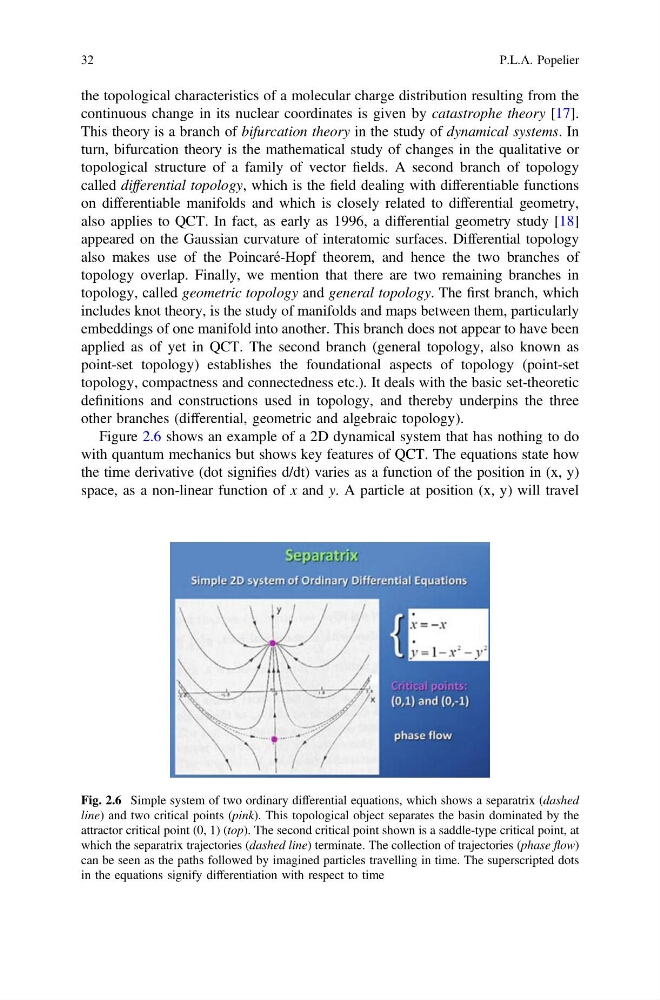
Figure 2.6 shows an example of a 2D dynamical system that has nothing to do
with quantum mechanics but shows key features of QCT. The equations state how
the time derivative (dot signifies d/dt) varies as a function of the position in (x, y)
space, as a non-linear function of x and y. A particle at position (x, y) will travel
Fig. 2.6 Simple system of two ordinary differential equations, which shows a separatrix (dashed
line) and two critical points (pink). This topological object separates the basin dominated by the
attractor critical point (0, 1) (top). The second critical point shown is a saddle-type critical point, at
which the separatrix trajectories (dashed line) terminate. The collection of trajectories (phase flow)
can be seen as the paths followed by imagined particles travelling in time. The superscripted dots
in the equations signify differentiation with respect to time
32
P.L.A. Popelier
continuous change in its nuclear coordinates is given by catastrophe theory [17].
This theory is a branch of bifurcation theory in the study of dynamical systems. In
turn, bifurcation theory is the mathematical study of changes in the qualitative or
topological structure of a family of vector fields. A second branch of topology
called differential topology, which is the field dealing with differentiable functions
on differentiable manifolds and which is closely related to differential geometry,
also applies to QCT. In fact, as early as 1996, a differential geometry study [18]
appeared on the Gaussian curvature of interatomic surfaces. Differential topology
also makes use of the Poincaré-Hopf theorem, and hence the two branches of
topology overlap. Finally, we mention that there are two remaining branches in
topology, called geometric topology and general topology. The first branch, which
includes knot theory, is the study of manifolds and maps between them, particularly
embeddings of one manifold into another. This branch does not appear to have been
applied as of yet in QCT. The second branch (general topology, also known as
point-set topology) establishes the foundational aspects of topology (point-set
topology, compactness and connectedness etc.). It deals with the basic set-theoretic
definitions and constructions used in topology, and thereby underpins the three
other branches (differential, geometric and algebraic topology).
Figure 2.6 shows an example of a 2D dynamical system that has nothing to do
with quantum mechanics but shows key features of QCT. The equations state how
the time derivative (dot signifies d/dt) varies as a function of the position in (x, y)
space, as a non-linear function of x and y. A particle at position (x, y) will travel
Fig. 2.6 Simple system of two ordinary differential equations, which shows a separatrix (dashed
line) and two critical points (pink). This topological object separates the basin dominated by the
attractor critical point (0, 1) (top). The second critical point shown is a saddle-type critical point, at
which the separatrix trajectories (dashed line) terminate. The collection of trajectories (phase flow)
can be seen as the paths followed by imagined particles travelling in time. The superscripted dots
in the equations signify differentiation with respect to time
32
P.L.A. Popelier