

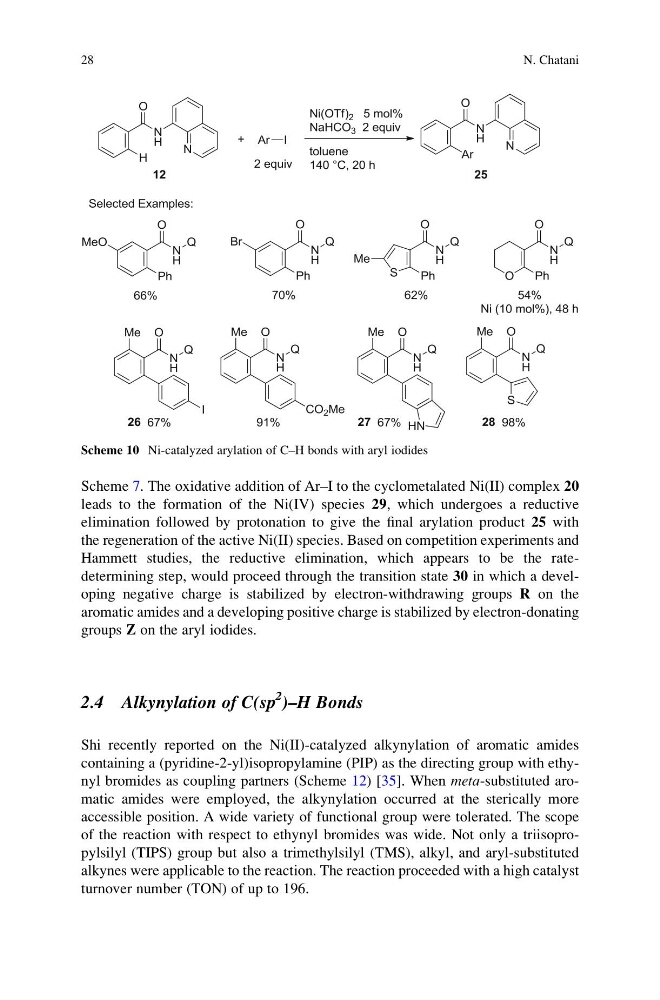
Scheme 7. The oxidative addition of Ar–I to the cyclometalated Ni(II) complex 20
leads to the formation of the Ni(IV) species 29, which undergoes a reductive
elimination followed by protonation to give the final arylation product 25 with
the regeneration of the active Ni(II) species. Based on competition experiments and
Hammett studies, the reductive elimination, which appears to be the ratedetermining step, would proceed through the transition state 30 in which a developing negative charge is stabilized by electron-withdrawing groups R on the
aromatic amides and a developing positive charge is stabilized by electron-donating
groups Z on the aryl iodides.
2.4 Alkynylation of C(sp
2
)–H Bonds
Shi recently reported on the Ni(II)-catalyzed alkynylation of aromatic amides
containing a (pyridine-2-yl)isopropylamine (PIP) as the directing group with ethynyl bromides as coupling partners (Scheme 12) [35]. When meta-substituted aromatic amides were employed, the alkynylation occurred at the sterically more
accessible position. A wide variety of functional group were tolerated. The scope
of the reaction with respect to ethynyl bromides was wide. Not only a triisopropylsilyl (TIPS) group but also a trimethylsilyl (TMS), alkyl, and aryl-substituted
alkynes were applicable to the reaction. The reaction proceeded with a high catalyst
turnover number (TON) of up to 196.
Scheme 10 Ni-catalyzed arylation of C–H bonds with aryl iodides
28
N. Chatani
leads to the formation of the Ni(IV) species 29, which undergoes a reductive
elimination followed by protonation to give the final arylation product 25 with
the regeneration of the active Ni(II) species. Based on competition experiments and
Hammett studies, the reductive elimination, which appears to be the ratedetermining step, would proceed through the transition state 30 in which a developing negative charge is stabilized by electron-withdrawing groups R on the
aromatic amides and a developing positive charge is stabilized by electron-donating
groups Z on the aryl iodides.
2.4 Alkynylation of C(sp
2
)–H Bonds
Shi recently reported on the Ni(II)-catalyzed alkynylation of aromatic amides
containing a (pyridine-2-yl)isopropylamine (PIP) as the directing group with ethynyl bromides as coupling partners (Scheme 12) [35]. When meta-substituted aromatic amides were employed, the alkynylation occurred at the sterically more
accessible position. A wide variety of functional group were tolerated. The scope
of the reaction with respect to ethynyl bromides was wide. Not only a triisopropylsilyl (TIPS) group but also a trimethylsilyl (TMS), alkyl, and aryl-substituted
alkynes were applicable to the reaction. The reaction proceeded with a high catalyst
turnover number (TON) of up to 196.
Scheme 10 Ni-catalyzed arylation of C–H bonds with aryl iodides
28
N. Chatani