

with an additional olefin to release the final metathesis product (Scheme 20, a).
Other olefin formations can be explained through the ethylene insertion and isomerization (Scheme 20, c).
While in alkane metathesis mechanism (Scheme 20, b), the n-decane undergoes
σ-bond metathesis to generate methane and the W-bis-decyl species which, upon
β-H elimination, produces the W–H with a coordinated olefin. Further, the
α-hydrogen transfer from the alkyl to alkylidyne forms the hydrido W-bis-carbene
[55, 76]. This upon [2+2] cycloaddition and cycloreversion gives an internal olefin
and hydrido W-bis-carbene. Successive insertion/elimination steps (by chain walking) [77] give the terminal alkene, which reacts to a new W-alkylidene. The CH
activation of the pendant W-hydride with n-decane followed by β-H elimination
provides 1-decene. A second metathesis between 1-decene and newly formed
W-alkylidene followed by hydrogenolysis produces the alkane.
It is noteworthy that the double-bond isomerization step is faster than the overall
elementary steps of alkane metathesis. Formation of lower alkanes is due to the
tungsten hydride intermediate, favoring chain walking with double-bond migration
followed by fast cross metathesis with coordinated ethylene leading to lower
alkenes in turn giving lower alkanes on hydrogenation. This intramolecular reaction
pathway, without formation of the free olefin, probably is the difference between
alkane and olefin metathesis.
4.3 Metathesis of Cycloalkanes
Metathesis of acyclic alkane produces lower and higher homologues of the corresponding alkanes. With the recent improvements in the catalysis using the precatalyst [(SiO)WMe 5 ] (27), it was interesting for us to apply similar strategy for
acyclic alkanes, e.g., cyclooctane expecting to have easy access to lower and higher
homologues of cyclic alkanes.
30
25
20
15
10
n (%)
1–decene metathesis: products distribution
5
0
c5 c6 c7 c8 c9 1–c10i–c10 c11 c12 c13 c14 c15 c16 c17 c18 c19 cc20
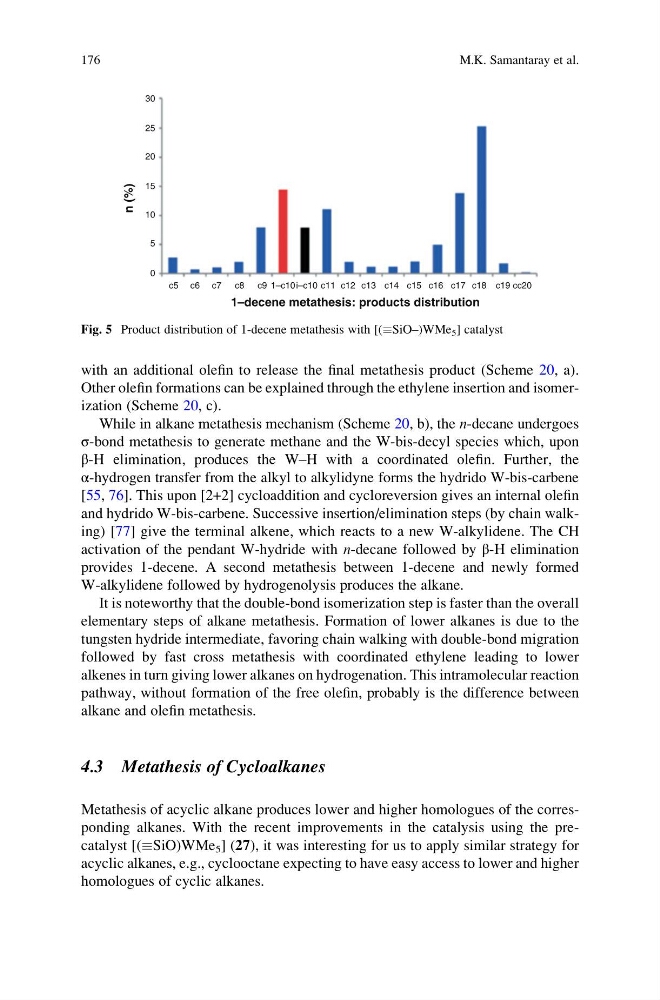
Fig. 5 Product distribution of 1-decene metathesis with [(SiO–)WMe 5 ] catalyst
176
M.K. Samantaray et al.
Other olefin formations can be explained through the ethylene insertion and isomerization (Scheme 20, c).
While in alkane metathesis mechanism (Scheme 20, b), the n-decane undergoes
σ-bond metathesis to generate methane and the W-bis-decyl species which, upon
β-H elimination, produces the W–H with a coordinated olefin. Further, the
α-hydrogen transfer from the alkyl to alkylidyne forms the hydrido W-bis-carbene
[55, 76]. This upon [2+2] cycloaddition and cycloreversion gives an internal olefin
and hydrido W-bis-carbene. Successive insertion/elimination steps (by chain walking) [77] give the terminal alkene, which reacts to a new W-alkylidene. The CH
activation of the pendant W-hydride with n-decane followed by β-H elimination
provides 1-decene. A second metathesis between 1-decene and newly formed
W-alkylidene followed by hydrogenolysis produces the alkane.
It is noteworthy that the double-bond isomerization step is faster than the overall
elementary steps of alkane metathesis. Formation of lower alkanes is due to the
tungsten hydride intermediate, favoring chain walking with double-bond migration
followed by fast cross metathesis with coordinated ethylene leading to lower
alkenes in turn giving lower alkanes on hydrogenation. This intramolecular reaction
pathway, without formation of the free olefin, probably is the difference between
alkane and olefin metathesis.
4.3 Metathesis of Cycloalkanes
Metathesis of acyclic alkane produces lower and higher homologues of the corresponding alkanes. With the recent improvements in the catalysis using the precatalyst [(SiO)WMe 5 ] (27), it was interesting for us to apply similar strategy for
acyclic alkanes, e.g., cyclooctane expecting to have easy access to lower and higher
homologues of cyclic alkanes.
30
25
20
15
10
n (%)
1–decene metathesis: products distribution
5
0
c5 c6 c7 c8 c9 1–c10i–c10 c11 c12 c13 c14 c15 c16 c17 c18 c19 cc20
Fig. 5 Product distribution of 1-decene metathesis with [(SiO–)WMe 5 ] catalyst
176
M.K. Samantaray et al.