

403
12 Consensus Drug Design Using IT Microcosm
[19, 37, 38, 47, 48, 49, 79, 80, 82, 1, 122, 127, 130–134 140] or biological [15–17,
45, 63, 100] activities, making an assessment of the carcinogenic potential of substances [67, 84, 117, 121], developing new effective polymer composite additives
[29, 30, 64, 68] and rubber mixture additives [84, 118, 121], and predicting the
environmental hazards of chemical production plants [67, 108, 115].
The effectiveness of IT Microcosm in the search for novel drugs with high antioxidant, antiarrhythmic and antiplatelet activities among condensed azole derivatives is shown below; the general formulas of these compounds are given in
Fig. 12.2. These compounds satisfy Lipinski’s rules [56] and the order of priority
for cyclic and heterocyclic structures [36, 11]; some of them are so-called privileged
structures [21].
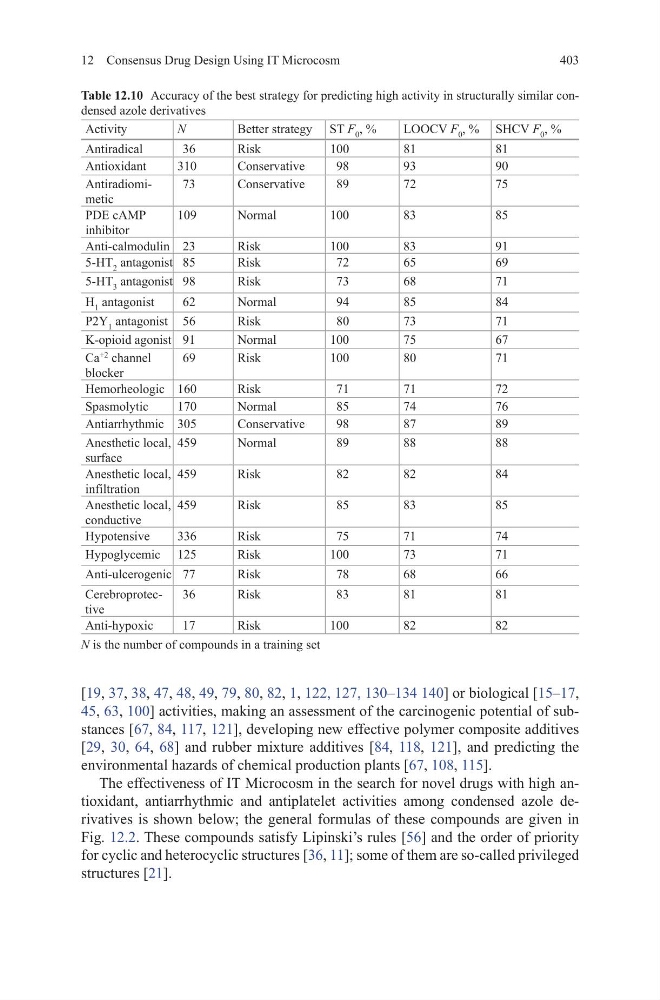
Table 12.10 Accuracy of the best strategy for predicting high activity in structurally similar condensed azole derivatives
Activity
N
Better strategy ST F 0 , %
LOOCV F 0 , % SHCV F 0 , %
Antiradical
36
Risk
100
81
81
Antioxidant
310
Conservative
98
93
90
Antiradiomimetic
73
Conservative
89
72
75
PDE cAMP
inhibitor
109
Normal
100
83
85
Anti-calmodulin 23
Risk
100
83
91
5-HT 2 antagonist 85
Risk
72
65
69
5-HT 3 antagonist 98
Risk
73
68
71
H 1 antagonist
62
Normal
94
85
84
P2Y 1 antagonist 56
Risk
80
73
71
Κ-opioid agonist 91
Normal
100
75
67
Ca
+2
channel
blocker
69
Risk
100
80
71
Hemorheologic 160
Risk
71
71
72
Spasmolytic
170
Normal
85
74
76
Antiarrhythmic 305
Conservative
98
87
89
Anesthetic local,
surface
459
Normal
89
88
88
Anesthetic local,
infiltration
459
Risk
82
82
84
Anesthetic local,
conductive
459
Risk
85
83
85
Hypotensive
336
Risk
75
71
74
Hypoglycemic 125
Risk
100
73
71
Anti-ulcerogenic 77
Risk
78
68
66
Cerebroprotective
36
Risk
83
81
81
Anti-hypoxic
17
Risk
100
82
82
N is the number of compounds in a training set
12 Consensus Drug Design Using IT Microcosm
[19, 37, 38, 47, 48, 49, 79, 80, 82, 1, 122, 127, 130–134 140] or biological [15–17,
45, 63, 100] activities, making an assessment of the carcinogenic potential of substances [67, 84, 117, 121], developing new effective polymer composite additives
[29, 30, 64, 68] and rubber mixture additives [84, 118, 121], and predicting the
environmental hazards of chemical production plants [67, 108, 115].
The effectiveness of IT Microcosm in the search for novel drugs with high antioxidant, antiarrhythmic and antiplatelet activities among condensed azole derivatives is shown below; the general formulas of these compounds are given in
Fig. 12.2. These compounds satisfy Lipinski’s rules [56] and the order of priority
for cyclic and heterocyclic structures [36, 11]; some of them are so-called privileged
structures [21].
Table 12.10 Accuracy of the best strategy for predicting high activity in structurally similar condensed azole derivatives
Activity
N
Better strategy ST F 0 , %
LOOCV F 0 , % SHCV F 0 , %
Antiradical
36
Risk
100
81
81
Antioxidant
310
Conservative
98
93
90
Antiradiomimetic
73
Conservative
89
72
75
PDE cAMP
inhibitor
109
Normal
100
83
85
Anti-calmodulin 23
Risk
100
83
91
5-HT 2 antagonist 85
Risk
72
65
69
5-HT 3 antagonist 98
Risk
73
68
71
H 1 antagonist
62
Normal
94
85
84
P2Y 1 antagonist 56
Risk
80
73
71
Κ-opioid agonist 91
Normal
100
75
67
Ca
+2
channel
blocker
69
Risk
100
80
71
Hemorheologic 160
Risk
71
71
72
Spasmolytic
170
Normal
85
74
76
Antiarrhythmic 305
Conservative
98
87
89
Anesthetic local,
surface
459
Normal
89
88
88
Anesthetic local,
infiltration
459
Risk
82
82
84
Anesthetic local,
conductive
459
Risk
85
83
85
Hypotensive
336
Risk
75
71
74
Hypoglycemic 125
Risk
100
73
71
Anti-ulcerogenic 77
Risk
78
68
66
Cerebroprotective
36
Risk
83
81
81
Anti-hypoxic
17
Risk
100
82
82
N is the number of compounds in a training set