

382
P. M. Vassiliev et al.
Elementary descriptors are simple first-rank descriptors. They generate composite descriptors in QL. Simple composite descriptors of rank 2–4 consist of 2–4 elementary descriptors. Second-rank descriptors are of four types (SD-LD, SD 1 -SD 2 ,
SD-BD and LD-BD), third-rank descriptors are of three types (SD 1 -LD-SD 2 , SD 1 -
LD-BD and SD 1 -SD 2 -BD), and fourth-rank descriptors are of one type (SD 1 -LDSD 2 -BD). In all, 11 types of simple descriptors of rank 1–4 are defined in QL. Upon
translation, a primary QL representation of a structure is constructed as a list of
fourth-rank descriptors where all of the SDs are numbered. Later on, these descriptors generate the descriptors of all other ranks; therefore, the fourth-rank descriptors
are also referred to as basic descriptors. Descriptors of rank 5 and higher consist of
two or more basic descriptors; they are referred to as complex descriptors.
As the rank increases, the dispersion of the compound properties in the descriptors also grows. The simpler the descriptor, the better its extrapolation (prediction)
ability; more complex descriptors show a better interpolation (recognition) ability.
For example, using a CH 3 group permits a prediction of the activity of many organic
compounds. However, for this prediction to be sufficiently accurate, one should
take into consideration more complex structural fragments, too.
In the QL dictionary, all of the elementary descriptors are independent words.
Basic syntax contains two rules only: (1) each simple descriptor of a higher rank
(ranks 2–4) is generated by the combination of a descriptor of a lower rank and one
elementary descriptor, and (2) each complex descriptor of a higher rank at rank 5
and higher is generated by the combination of a descriptor of a lower rank and one
basic descriptor through a common SD of the same numerical order in both descriptors. Because the SDs in the basic descriptors are numbered, the rule governing the
generation of complex descriptors allows the complete reconstruction of the structural formula of a compound. Thus, QL is a one-to-one language.
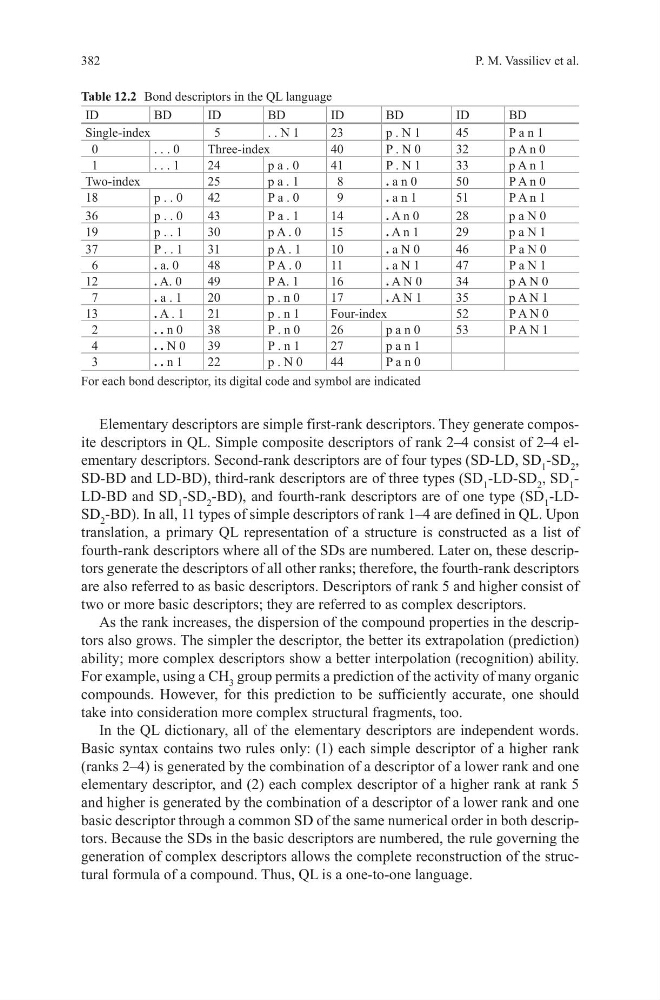
Table 12.2 Bond descriptors in the QL language
ID
BD
ID
BD
ID
BD
ID
BD
Single-index
5
. . N 1
23
p . N 1
45
P a n 1
0
. . . 0
Three-index
40
P . N 0
32
p A n 0
1
. . . 1
24
p a . 0
41
P . N 1
33
p A n 1
Two-index
25
p a . 1
8
. a n 0
50
P A n 0
18
p . . 0
42
P a . 0
9
. a n 1
51
P A n 1
36
p . . 0
43
P a . 1
14
. A n 0
28
p a N 0
19
p . . 1
30
p A . 0
15
. A n 1
29
p a N 1
37
P . . 1
31
p A . 1
10
. a N 0
46
P a N 0
6
. a. 0
48
P A . 0
11
. a N 1
47
P a N 1
12
. A. 0
49
P A. 1
16
. A N 0
34
p A N 0
7
. a . 1
20
p . n 0
17
. A N 1
35
p A N 1
13
. A . 1
21
p . n 1
Four-index
52
P A N 0
2
. . n 0
38
P . n 0
26
p a n 0
53
P A N 1
4
. . N 0
39
P . n 1
27
p a n 1
3
. . n 1
22
p . N 0
44
P a n 0
For each bond descriptor, its digital code and symbol are indicated
P. M. Vassiliev et al.
Elementary descriptors are simple first-rank descriptors. They generate composite descriptors in QL. Simple composite descriptors of rank 2–4 consist of 2–4 elementary descriptors. Second-rank descriptors are of four types (SD-LD, SD 1 -SD 2 ,
SD-BD and LD-BD), third-rank descriptors are of three types (SD 1 -LD-SD 2 , SD 1 -
LD-BD and SD 1 -SD 2 -BD), and fourth-rank descriptors are of one type (SD 1 -LDSD 2 -BD). In all, 11 types of simple descriptors of rank 1–4 are defined in QL. Upon
translation, a primary QL representation of a structure is constructed as a list of
fourth-rank descriptors where all of the SDs are numbered. Later on, these descriptors generate the descriptors of all other ranks; therefore, the fourth-rank descriptors
are also referred to as basic descriptors. Descriptors of rank 5 and higher consist of
two or more basic descriptors; they are referred to as complex descriptors.
As the rank increases, the dispersion of the compound properties in the descriptors also grows. The simpler the descriptor, the better its extrapolation (prediction)
ability; more complex descriptors show a better interpolation (recognition) ability.
For example, using a CH 3 group permits a prediction of the activity of many organic
compounds. However, for this prediction to be sufficiently accurate, one should
take into consideration more complex structural fragments, too.
In the QL dictionary, all of the elementary descriptors are independent words.
Basic syntax contains two rules only: (1) each simple descriptor of a higher rank
(ranks 2–4) is generated by the combination of a descriptor of a lower rank and one
elementary descriptor, and (2) each complex descriptor of a higher rank at rank 5
and higher is generated by the combination of a descriptor of a lower rank and one
basic descriptor through a common SD of the same numerical order in both descriptors. Because the SDs in the basic descriptors are numbered, the rule governing the
generation of complex descriptors allows the complete reconstruction of the structural formula of a compound. Thus, QL is a one-to-one language.
Table 12.2 Bond descriptors in the QL language
ID
BD
ID
BD
ID
BD
ID
BD
Single-index
5
. . N 1
23
p . N 1
45
P a n 1
0
. . . 0
Three-index
40
P . N 0
32
p A n 0
1
. . . 1
24
p a . 0
41
P . N 1
33
p A n 1
Two-index
25
p a . 1
8
. a n 0
50
P A n 0
18
p . . 0
42
P a . 0
9
. a n 1
51
P A n 1
36
p . . 0
43
P a . 1
14
. A n 0
28
p a N 0
19
p . . 1
30
p A . 0
15
. A n 1
29
p a N 1
37
P . . 1
31
p A . 1
10
. a N 0
46
P a N 0
6
. a. 0
48
P A . 0
11
. a N 1
47
P a N 1
12
. A. 0
49
P A. 1
16
. A N 0
34
p A N 0
7
. a . 1
20
p . n 0
17
. A N 1
35
p A N 1
13
. A . 1
21
p . n 1
Four-index
52
P A N 0
2
. . n 0
38
P . n 0
26
p a n 0
53
P A N 1
4
. . N 0
39
P . n 1
27
p a n 1
3
. . n 1
22
p . N 0
44
P a n 0
For each bond descriptor, its digital code and symbol are indicated