

38
A. Palacios et al.
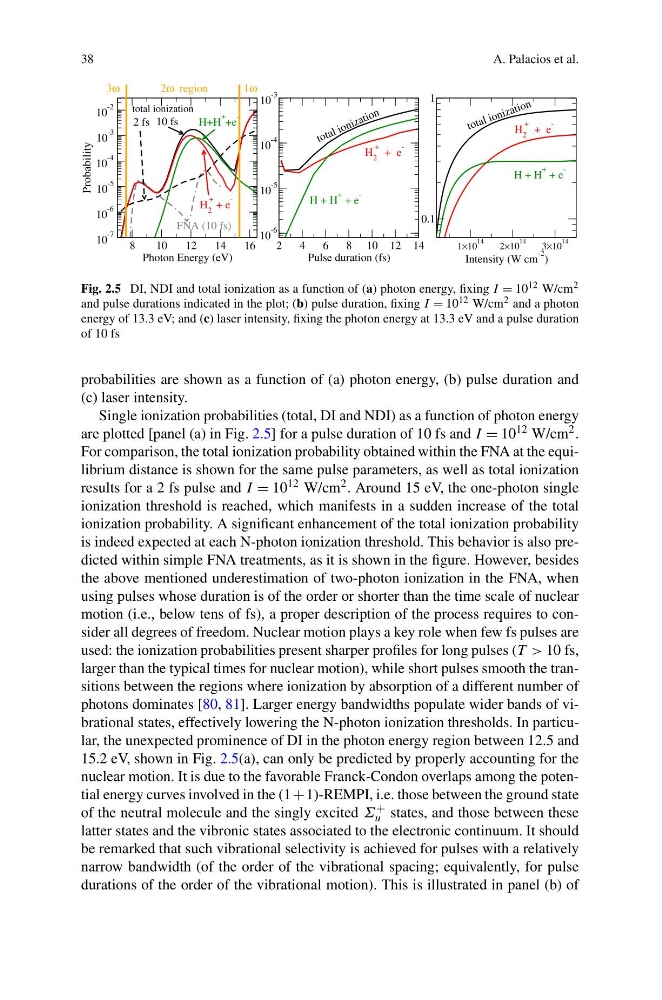
Fig. 2.5 DI, NDI and total ionization as a function of (a) photon energy, fixing I = 10 12 W/cm 2
and pulse durations indicated in the plot; (b) pulse duration, fixing I = 10 12 W/cm 2 and a photon
energy of 13.3 eV; and (c) laser intensity, fixing the photon energy at 13.3 eV and a pulse duration
of 10 fs
probabilities are shown as a function of (a) photon energy, (b) pulse duration and
(c) laser intensity.
Single ionization probabilities (total, DI and NDI) as a function of photon energy
are plotted [panel (a) in Fig. 2.5] for a pulse duration of 10 fs and I = 10 12 W/cm 2 .
For comparison, the total ionization probability obtained within the FNA at the equilibrium distance is shown for the same pulse parameters, as well as total ionization
results for a 2 fs pulse and I = 10 12 W/cm 2 . Around 15 eV, the one-photon single
ionization threshold is reached, which manifests in a sudden increase of the total
ionization probability. A significant enhancement of the total ionization probability
is indeed expected at each N-photon ionization threshold. This behavior is also predicted within simple FNA treatments, as it is shown in the figure. However, besides
the above mentioned underestimation of two-photon ionization in the FNA, when
using pulses whose duration is of the order or shorter than the time scale of nuclear
motion (i.e., below tens of fs), a proper description of the process requires to consider all degrees of freedom. Nuclear motion plays a key role when few fs pulses are
used: the ionization probabilities present sharper profiles for long pulses (T > 10 fs,
larger than the typical times for nuclear motion), while short pulses smooth the transitions between the regions where ionization by absorption of a different number of
photons dominates [80, 81]. Larger energy bandwidths populate wider bands of vibrational states, effectively lowering the N-photon ionization thresholds. In particular, the unexpected prominence of DI in the photon energy region between 12.5 and
15.2 eV, shown in Fig. 2.5(a), can only be predicted by properly accounting for the
nuclear motion. It is due to the favorable Franck-Condon overlaps among the potential energy curves involved in the (1 + 1)-REMPI, i.e. those between the ground state
of the neutral molecule and the singly excited Σ +
u states, and those between these
latter states and the vibronic states associated to the electronic continuum. It should
be remarked that such vibrational selectivity is achieved for pulses with a relatively
narrow bandwidth (of the order of the vibrational spacing; equivalently, for pulse
durations of the order of the vibrational motion). This is illustrated in panel (b) of
A. Palacios et al.
Fig. 2.5 DI, NDI and total ionization as a function of (a) photon energy, fixing I = 10 12 W/cm 2
and pulse durations indicated in the plot; (b) pulse duration, fixing I = 10 12 W/cm 2 and a photon
energy of 13.3 eV; and (c) laser intensity, fixing the photon energy at 13.3 eV and a pulse duration
of 10 fs
probabilities are shown as a function of (a) photon energy, (b) pulse duration and
(c) laser intensity.
Single ionization probabilities (total, DI and NDI) as a function of photon energy
are plotted [panel (a) in Fig. 2.5] for a pulse duration of 10 fs and I = 10 12 W/cm 2 .
For comparison, the total ionization probability obtained within the FNA at the equilibrium distance is shown for the same pulse parameters, as well as total ionization
results for a 2 fs pulse and I = 10 12 W/cm 2 . Around 15 eV, the one-photon single
ionization threshold is reached, which manifests in a sudden increase of the total
ionization probability. A significant enhancement of the total ionization probability
is indeed expected at each N-photon ionization threshold. This behavior is also predicted within simple FNA treatments, as it is shown in the figure. However, besides
the above mentioned underestimation of two-photon ionization in the FNA, when
using pulses whose duration is of the order or shorter than the time scale of nuclear
motion (i.e., below tens of fs), a proper description of the process requires to consider all degrees of freedom. Nuclear motion plays a key role when few fs pulses are
used: the ionization probabilities present sharper profiles for long pulses (T > 10 fs,
larger than the typical times for nuclear motion), while short pulses smooth the transitions between the regions where ionization by absorption of a different number of
photons dominates [80, 81]. Larger energy bandwidths populate wider bands of vibrational states, effectively lowering the N-photon ionization thresholds. In particular, the unexpected prominence of DI in the photon energy region between 12.5 and
15.2 eV, shown in Fig. 2.5(a), can only be predicted by properly accounting for the
nuclear motion. It is due to the favorable Franck-Condon overlaps among the potential energy curves involved in the (1 + 1)-REMPI, i.e. those between the ground state
of the neutral molecule and the singly excited Σ +
u states, and those between these
latter states and the vibronic states associated to the electronic continuum. It should
be remarked that such vibrational selectivity is achieved for pulses with a relatively
narrow bandwidth (of the order of the vibrational spacing; equivalently, for pulse
durations of the order of the vibrational motion). This is illustrated in panel (b) of