

14
A. Rouzée et al.
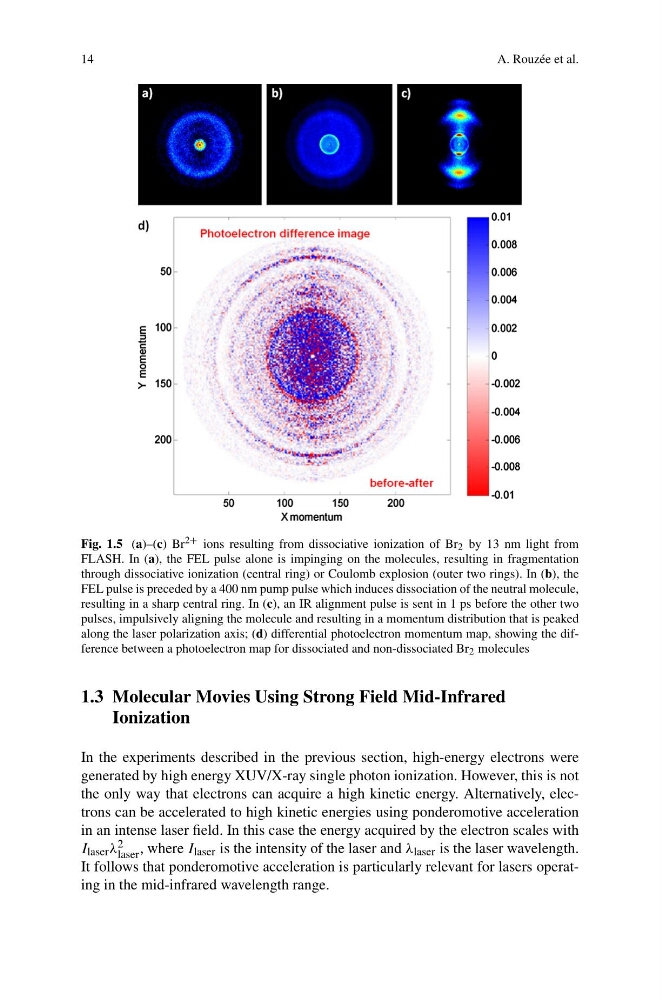
Fig. 1.5 (a)–(c) Br 2+ ions resulting from dissociative ionization of Br 2 by 13 nm light from
FLASH. In (a), the FEL pulse alone is impinging on the molecules, resulting in fragmentation
through dissociative ionization (central ring) or Coulomb explosion (outer two rings). In (b), the
FEL pulse is preceded by a 400 nm pump pulse which induces dissociation of the neutral molecule,
resulting in a sharp central ring. In (c), an IR alignment pulse is sent in 1 ps before the other two
pulses, impulsively aligning the molecule and resulting in a momentum distribution that is peaked
along the laser polarization axis; (d) differential photoelectron momentum map, showing the difference between a photoelectron map for dissociated and non-dissociated Br 2 molecules
1.3 Molecular Movies Using Strong Field Mid-Infrared
Ionization
In the experiments described in the previous section, high-energy electrons were
generated by high energy XUV/X-ray single photon ionization. However, this is not
the only way that electrons can acquire a high kinetic energy. Alternatively, electrons can be accelerated to high kinetic energies using ponderomotive acceleration
in an intense laser field. In this case the energy acquired by the electron scales with
I laser λ 2
laser , where I laser is the intensity of the laser and λ laser is the laser wavelength.
It follows that ponderomotive acceleration is particularly relevant for lasers operating in the mid-infrared wavelength range.
A. Rouzée et al.
Fig. 1.5 (a)–(c) Br 2+ ions resulting from dissociative ionization of Br 2 by 13 nm light from
FLASH. In (a), the FEL pulse alone is impinging on the molecules, resulting in fragmentation
through dissociative ionization (central ring) or Coulomb explosion (outer two rings). In (b), the
FEL pulse is preceded by a 400 nm pump pulse which induces dissociation of the neutral molecule,
resulting in a sharp central ring. In (c), an IR alignment pulse is sent in 1 ps before the other two
pulses, impulsively aligning the molecule and resulting in a momentum distribution that is peaked
along the laser polarization axis; (d) differential photoelectron momentum map, showing the difference between a photoelectron map for dissociated and non-dissociated Br 2 molecules
1.3 Molecular Movies Using Strong Field Mid-Infrared
Ionization
In the experiments described in the previous section, high-energy electrons were
generated by high energy XUV/X-ray single photon ionization. However, this is not
the only way that electrons can acquire a high kinetic energy. Alternatively, electrons can be accelerated to high kinetic energies using ponderomotive acceleration
in an intense laser field. In this case the energy acquired by the electron scales with
I laser λ 2
laser , where I laser is the intensity of the laser and λ laser is the laser wavelength.
It follows that ponderomotive acceleration is particularly relevant for lasers operating in the mid-infrared wavelength range.