

10 Surface-Aligned Femtochemistry: Dynamics on Oxide Surfaces
239
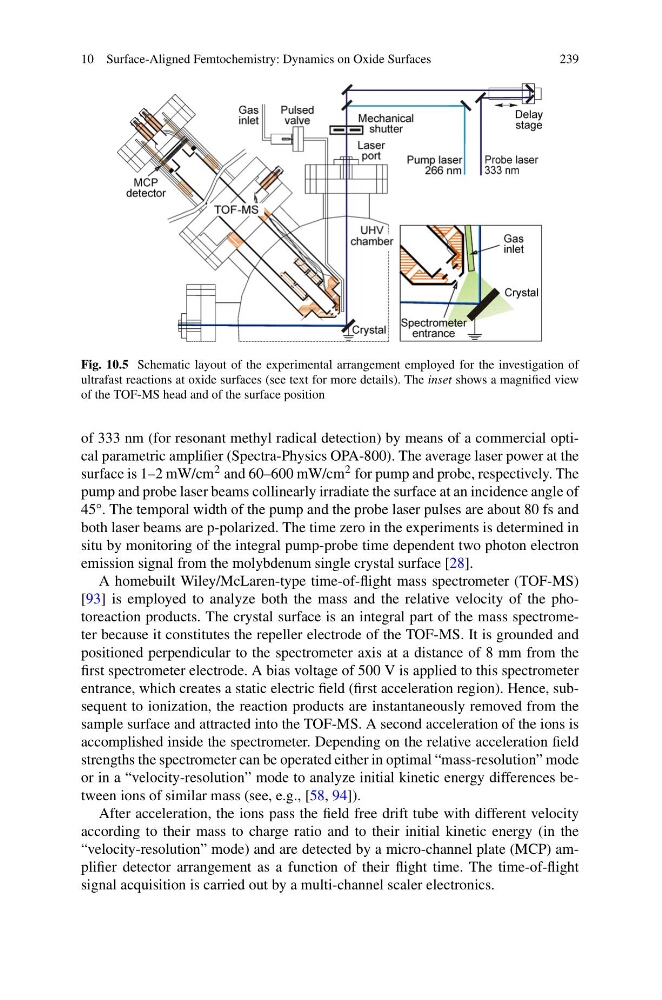
Fig. 10.5 Schematic layout of the experimental arrangement employed for the investigation of
ultrafast reactions at oxide surfaces (see text for more details). The inset shows a magnified view
of the TOF-MS head and of the surface position
of 333 nm (for resonant methyl radical detection) by means of a commercial optical parametric amplifier (Spectra-Physics OPA-800). The average laser power at the
surface is 1–2 mW/cm 2 and 60–600 mW/cm 2 for pump and probe, respectively. The
pump and probe laser beams collinearly irradiate the surface at an incidence angle of
45°. The temporal width of the pump and the probe laser pulses are about 80 fs and
both laser beams are p-polarized. The time zero in the experiments is determined in
situ by monitoring of the integral pump-probe time dependent two photon electron
emission signal from the molybdenum single crystal surface [28].
A homebuilt Wiley/McLaren-type time-of-flight mass spectrometer (TOF-MS)
[93] is employed to analyze both the mass and the relative velocity of the photoreaction products. The crystal surface is an integral part of the mass spectrometer because it constitutes the repeller electrode of the TOF-MS. It is grounded and
positioned perpendicular to the spectrometer axis at a distance of 8 mm from the
first spectrometer electrode. A bias voltage of 500 V is applied to this spectrometer
entrance, which creates a static electric field (first acceleration region). Hence, subsequent to ionization, the reaction products are instantaneously removed from the
sample surface and attracted into the TOF-MS. A second acceleration of the ions is
accomplished inside the spectrometer. Depending on the relative acceleration field
strengths the spectrometer can be operated either in optimal “mass-resolution” mode
or in a “velocity-resolution” mode to analyze initial kinetic energy differences between ions of similar mass (see, e.g., [58, 94]).
After acceleration, the ions pass the field free drift tube with different velocity
according to their mass to charge ratio and to their initial kinetic energy (in the
“velocity-resolution” mode) and are detected by a micro-channel plate (MCP) amplifier detector arrangement as a function of their flight time. The time-of-flight
signal acquisition is carried out by a multi-channel scaler electronics.
239
Fig. 10.5 Schematic layout of the experimental arrangement employed for the investigation of
ultrafast reactions at oxide surfaces (see text for more details). The inset shows a magnified view
of the TOF-MS head and of the surface position
of 333 nm (for resonant methyl radical detection) by means of a commercial optical parametric amplifier (Spectra-Physics OPA-800). The average laser power at the
surface is 1–2 mW/cm 2 and 60–600 mW/cm 2 for pump and probe, respectively. The
pump and probe laser beams collinearly irradiate the surface at an incidence angle of
45°. The temporal width of the pump and the probe laser pulses are about 80 fs and
both laser beams are p-polarized. The time zero in the experiments is determined in
situ by monitoring of the integral pump-probe time dependent two photon electron
emission signal from the molybdenum single crystal surface [28].
A homebuilt Wiley/McLaren-type time-of-flight mass spectrometer (TOF-MS)
[93] is employed to analyze both the mass and the relative velocity of the photoreaction products. The crystal surface is an integral part of the mass spectrometer because it constitutes the repeller electrode of the TOF-MS. It is grounded and
positioned perpendicular to the spectrometer axis at a distance of 8 mm from the
first spectrometer electrode. A bias voltage of 500 V is applied to this spectrometer
entrance, which creates a static electric field (first acceleration region). Hence, subsequent to ionization, the reaction products are instantaneously removed from the
sample surface and attracted into the TOF-MS. A second acceleration of the ions is
accomplished inside the spectrometer. Depending on the relative acceleration field
strengths the spectrometer can be operated either in optimal “mass-resolution” mode
or in a “velocity-resolution” mode to analyze initial kinetic energy differences between ions of similar mass (see, e.g., [58, 94]).
After acceleration, the ions pass the field free drift tube with different velocity
according to their mass to charge ratio and to their initial kinetic energy (in the
“velocity-resolution” mode) and are detected by a micro-channel plate (MCP) amplifier detector arrangement as a function of their flight time. The time-of-flight
signal acquisition is carried out by a multi-channel scaler electronics.