

1 Molecular Movies from Molecular Frame Photoelectron Angular
7
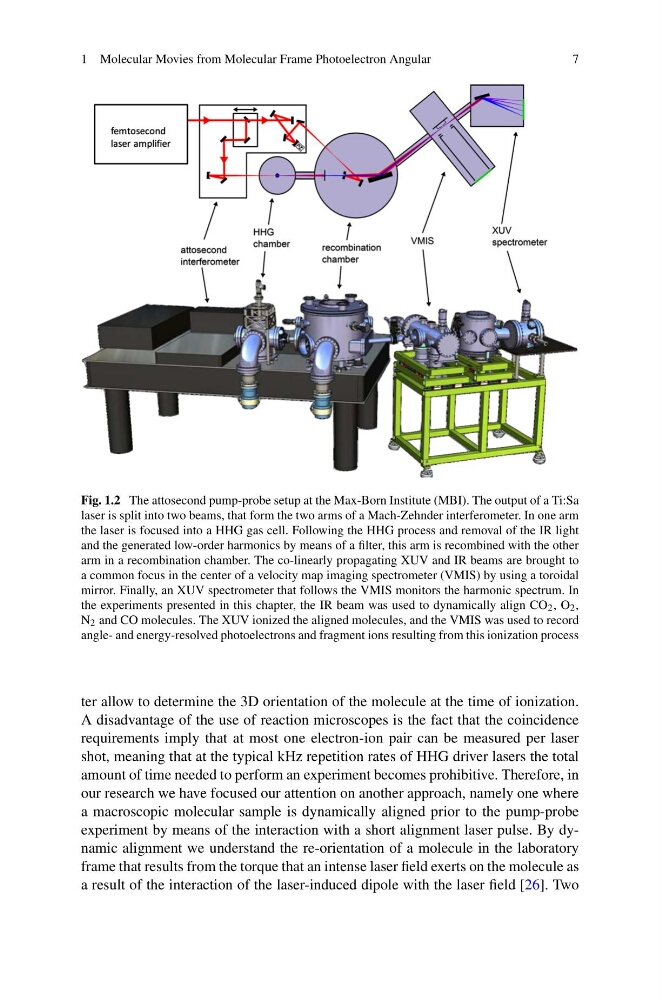
Fig. 1.2 The attosecond pump-probe setup at the Max-Born Institute (MBI). The output of a Ti:Sa
laser is split into two beams, that form the two arms of a Mach-Zehnder interferometer. In one arm
the laser is focused into a HHG gas cell. Following the HHG process and removal of the IR light
and the generated low-order harmonics by means of a filter, this arm is recombined with the other
arm in a recombination chamber. The co-linearly propagating XUV and IR beams are brought to
a common focus in the center of a velocity map imaging spectrometer (VMIS) by using a toroidal
mirror. Finally, an XUV spectrometer that follows the VMIS monitors the harmonic spectrum. In
the experiments presented in this chapter, the IR beam was used to dynamically align CO 2 , O 2 ,
N 2 and CO molecules. The XUV ionized the aligned molecules, and the VMIS was used to record
angle- and energy-resolved photoelectrons and fragment ions resulting from this ionization process
ter allow to determine the 3D orientation of the molecule at the time of ionization.
A disadvantage of the use of reaction microscopes is the fact that the coincidence
requirements imply that at most one electron-ion pair can be measured per laser
shot, meaning that at the typical kHz repetition rates of HHG driver lasers the total
amount of time needed to perform an experiment becomes prohibitive. Therefore, in
our research we have focused our attention on another approach, namely one where
a macroscopic molecular sample is dynamically aligned prior to the pump-probe
experiment by means of the interaction with a short alignment laser pulse. By dynamic alignment we understand the re-orientation of a molecule in the laboratory
frame that results from the torque that an intense laser field exerts on the molecule as
a result of the interaction of the laser-induced dipole with the laser field [26]. Two
7
Fig. 1.2 The attosecond pump-probe setup at the Max-Born Institute (MBI). The output of a Ti:Sa
laser is split into two beams, that form the two arms of a Mach-Zehnder interferometer. In one arm
the laser is focused into a HHG gas cell. Following the HHG process and removal of the IR light
and the generated low-order harmonics by means of a filter, this arm is recombined with the other
arm in a recombination chamber. The co-linearly propagating XUV and IR beams are brought to
a common focus in the center of a velocity map imaging spectrometer (VMIS) by using a toroidal
mirror. Finally, an XUV spectrometer that follows the VMIS monitors the harmonic spectrum. In
the experiments presented in this chapter, the IR beam was used to dynamically align CO 2 , O 2 ,
N 2 and CO molecules. The XUV ionized the aligned molecules, and the VMIS was used to record
angle- and energy-resolved photoelectrons and fragment ions resulting from this ionization process
ter allow to determine the 3D orientation of the molecule at the time of ionization.
A disadvantage of the use of reaction microscopes is the fact that the coincidence
requirements imply that at most one electron-ion pair can be measured per laser
shot, meaning that at the typical kHz repetition rates of HHG driver lasers the total
amount of time needed to perform an experiment becomes prohibitive. Therefore, in
our research we have focused our attention on another approach, namely one where
a macroscopic molecular sample is dynamically aligned prior to the pump-probe
experiment by means of the interaction with a short alignment laser pulse. By dynamic alignment we understand the re-orientation of a molecule in the laboratory
frame that results from the torque that an intense laser field exerts on the molecule as
a result of the interaction of the laser-induced dipole with the laser field [26]. Two