

1 Molecular Movies from Molecular Frame Photoelectron Angular
3
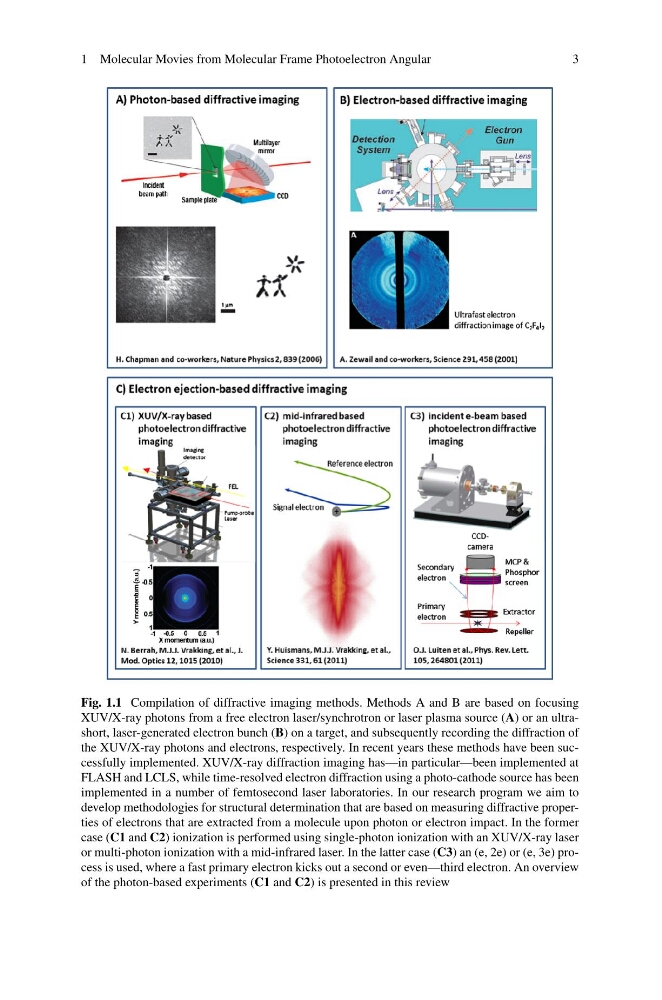
Fig. 1.1 Compilation of diffractive imaging methods. Methods A and B are based on focusing
XUV/X-ray photons from a free electron laser/synchrotron or laser plasma source (A) or an ultrashort, laser-generated electron bunch (B) on a target, and subsequently recording the diffraction of
the XUV/X-ray photons and electrons, respectively. In recent years these methods have been successfully implemented. XUV/X-ray diffraction imaging has—in particular—been implemented at
FLASH and LCLS, while time-resolved electron diffraction using a photo-cathode source has been
implemented in a number of femtosecond laser laboratories. In our research program we aim to
develop methodologies for structural determination that are based on measuring diffractive properties of electrons that are extracted from a molecule upon photon or electron impact. In the former
case (C1 and C2) ionization is performed using single-photon ionization with an XUV/X-ray laser
or multi-photon ionization with a mid-infrared laser. In the latter case (C3) an (e, 2e) or (e, 3e) process is used, where a fast primary electron kicks out a second or even—third electron. An overview
of the photon-based experiments (C1 and C2) is presented in this review
3
Fig. 1.1 Compilation of diffractive imaging methods. Methods A and B are based on focusing
XUV/X-ray photons from a free electron laser/synchrotron or laser plasma source (A) or an ultrashort, laser-generated electron bunch (B) on a target, and subsequently recording the diffraction of
the XUV/X-ray photons and electrons, respectively. In recent years these methods have been successfully implemented. XUV/X-ray diffraction imaging has—in particular—been implemented at
FLASH and LCLS, while time-resolved electron diffraction using a photo-cathode source has been
implemented in a number of femtosecond laser laboratories. In our research program we aim to
develop methodologies for structural determination that are based on measuring diffractive properties of electrons that are extracted from a molecule upon photon or electron impact. In the former
case (C1 and C2) ionization is performed using single-photon ionization with an XUV/X-ray laser
or multi-photon ionization with a mid-infrared laser. In the latter case (C3) an (e, 2e) or (e, 3e) process is used, where a fast primary electron kicks out a second or even—third electron. An overview
of the photon-based experiments (C1 and C2) is presented in this review