

8 Ultrafast Ionization and Fragmentation: From Small Molecules
183
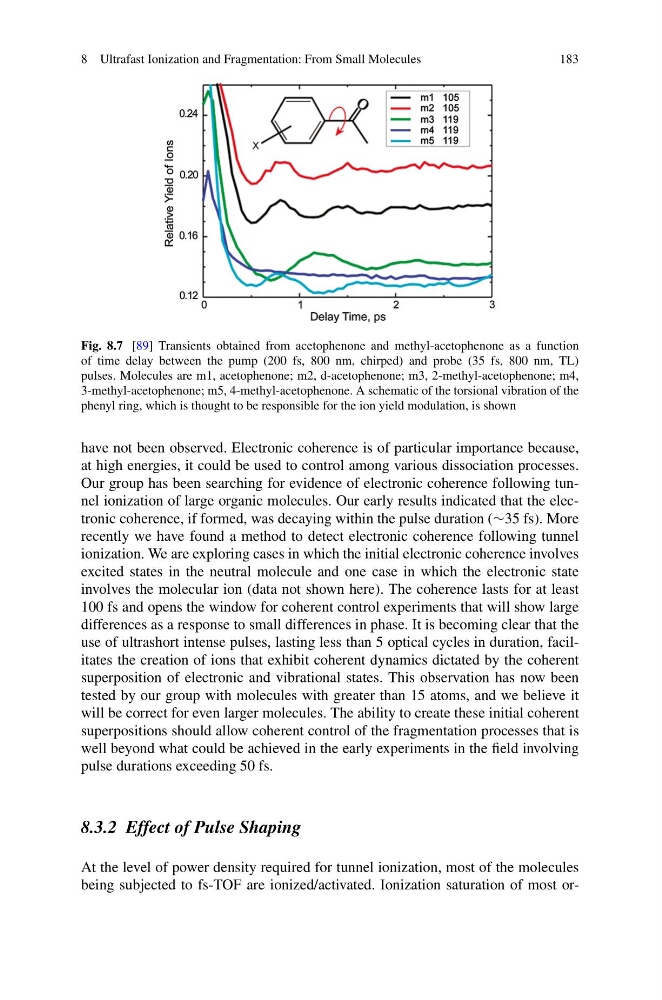
Fig. 8.7 [89] Transients obtained from acetophenone and methyl-acetophenone as a function
of time delay between the pump (200 fs, 800 nm, chirped) and probe (35 fs, 800 nm, TL)
pulses. Molecules are m1, acetophenone; m2, d-acetophenone; m3, 2-methyl-acetophenone; m4,
3-methyl-acetophenone; m5, 4-methyl-acetophenone. A schematic of the torsional vibration of the
phenyl ring, which is thought to be responsible for the ion yield modulation, is shown
have not been observed. Electronic coherence is of particular importance because,
at high energies, it could be used to control among various dissociation processes.
Our group has been searching for evidence of electronic coherence following tunnel ionization of large organic molecules. Our early results indicated that the electronic coherence, if formed, was decaying within the pulse duration (∼35 fs). More
recently we have found a method to detect electronic coherence following tunnel
ionization. We are exploring cases in which the initial electronic coherence involves
excited states in the neutral molecule and one case in which the electronic state
involves the molecular ion (data not shown here). The coherence lasts for at least
100 fs and opens the window for coherent control experiments that will show large
differences as a response to small differences in phase. It is becoming clear that the
use of ultrashort intense pulses, lasting less than 5 optical cycles in duration, facilitates the creation of ions that exhibit coherent dynamics dictated by the coherent
superposition of electronic and vibrational states. This observation has now been
tested by our group with molecules with greater than 15 atoms, and we believe it
will be correct for even larger molecules. The ability to create these initial coherent
superpositions should allow coherent control of the fragmentation processes that is
well beyond what could be achieved in the early experiments in the field involving
pulse durations exceeding 50 fs.
8.3.2 Effect of Pulse Shaping
At the level of power density required for tunnel ionization, most of the molecules
being subjected to fs-TOF are ionized/activated. Ionization saturation of most or-
183
Fig. 8.7 [89] Transients obtained from acetophenone and methyl-acetophenone as a function
of time delay between the pump (200 fs, 800 nm, chirped) and probe (35 fs, 800 nm, TL)
pulses. Molecules are m1, acetophenone; m2, d-acetophenone; m3, 2-methyl-acetophenone; m4,
3-methyl-acetophenone; m5, 4-methyl-acetophenone. A schematic of the torsional vibration of the
phenyl ring, which is thought to be responsible for the ion yield modulation, is shown
have not been observed. Electronic coherence is of particular importance because,
at high energies, it could be used to control among various dissociation processes.
Our group has been searching for evidence of electronic coherence following tunnel ionization of large organic molecules. Our early results indicated that the electronic coherence, if formed, was decaying within the pulse duration (∼35 fs). More
recently we have found a method to detect electronic coherence following tunnel
ionization. We are exploring cases in which the initial electronic coherence involves
excited states in the neutral molecule and one case in which the electronic state
involves the molecular ion (data not shown here). The coherence lasts for at least
100 fs and opens the window for coherent control experiments that will show large
differences as a response to small differences in phase. It is becoming clear that the
use of ultrashort intense pulses, lasting less than 5 optical cycles in duration, facilitates the creation of ions that exhibit coherent dynamics dictated by the coherent
superposition of electronic and vibrational states. This observation has now been
tested by our group with molecules with greater than 15 atoms, and we believe it
will be correct for even larger molecules. The ability to create these initial coherent
superpositions should allow coherent control of the fragmentation processes that is
well beyond what could be achieved in the early experiments in the field involving
pulse durations exceeding 50 fs.
8.3.2 Effect of Pulse Shaping
At the level of power density required for tunnel ionization, most of the molecules
being subjected to fs-TOF are ionized/activated. Ionization saturation of most or-