

164
L. González et al.
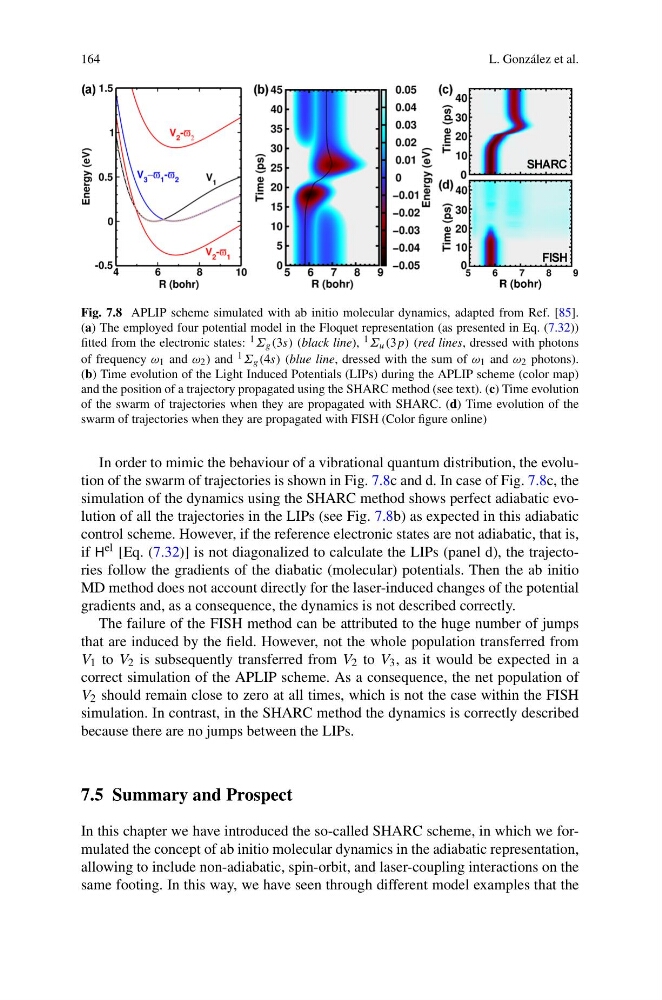
Fig. 7.8 APLIP scheme simulated with ab initio molecular dynamics, adapted from Ref. [85].
(a) The employed four potential model in the Floquet representation (as presented in Eq. (7.32))
fitted from the electronic states: 1 Σ g (3s) (black line), 1 Σ u (3p) (red lines, dressed with photons
of frequency ω 1 and ω 2 ) and 1 Σ g (4s) (blue line, dressed with the sum of ω 1 and ω 2 photons).
(b) Time evolution of the Light Induced Potentials (LIPs) during the APLIP scheme (color map)
and the position of a trajectory propagated using the SHARC method (see text). (c) Time evolution
of the swarm of trajectories when they are propagated with SHARC. (d) Time evolution of the
swarm of trajectories when they are propagated with FISH (Color figure online)
In order to mimic the behaviour of a vibrational quantum distribution, the evolution of the swarm of trajectories is shown in Fig. 7.8c and d. In case of Fig. 7.8c, the
simulation of the dynamics using the SHARC method shows perfect adiabatic evolution of all the trajectories in the LIPs (see Fig. 7.8b) as expected in this adiabatic
control scheme. However, if the reference electronic states are not adiabatic, that is,
if H el [Eq. (7.32)] is not diagonalized to calculate the LIPs (panel d), the trajectories follow the gradients of the diabatic (molecular) potentials. Then the ab initio
MD method does not account directly for the laser-induced changes of the potential
gradients and, as a consequence, the dynamics is not described correctly.
The failure of the FISH method can be attributed to the huge number of jumps
that are induced by the field. However, not the whole population transferred from
V 1 to V 2 is subsequently transferred from V 2 to V 3 , as it would be expected in a
correct simulation of the APLIP scheme. As a consequence, the net population of
V 2 should remain close to zero at all times, which is not the case within the FISH
simulation. In contrast, in the SHARC method the dynamics is correctly described
because there are no jumps between the LIPs.
7.5 Summary and Prospect
In this chapter we have introduced the so-called SHARC scheme, in which we formulated the concept of ab initio molecular dynamics in the adiabatic representation,
allowing to include non-adiabatic, spin-orbit, and laser-coupling interactions on the
same footing. In this way, we have seen through different model examples that the
L. González et al.
Fig. 7.8 APLIP scheme simulated with ab initio molecular dynamics, adapted from Ref. [85].
(a) The employed four potential model in the Floquet representation (as presented in Eq. (7.32))
fitted from the electronic states: 1 Σ g (3s) (black line), 1 Σ u (3p) (red lines, dressed with photons
of frequency ω 1 and ω 2 ) and 1 Σ g (4s) (blue line, dressed with the sum of ω 1 and ω 2 photons).
(b) Time evolution of the Light Induced Potentials (LIPs) during the APLIP scheme (color map)
and the position of a trajectory propagated using the SHARC method (see text). (c) Time evolution
of the swarm of trajectories when they are propagated with SHARC. (d) Time evolution of the
swarm of trajectories when they are propagated with FISH (Color figure online)
In order to mimic the behaviour of a vibrational quantum distribution, the evolution of the swarm of trajectories is shown in Fig. 7.8c and d. In case of Fig. 7.8c, the
simulation of the dynamics using the SHARC method shows perfect adiabatic evolution of all the trajectories in the LIPs (see Fig. 7.8b) as expected in this adiabatic
control scheme. However, if the reference electronic states are not adiabatic, that is,
if H el [Eq. (7.32)] is not diagonalized to calculate the LIPs (panel d), the trajectories follow the gradients of the diabatic (molecular) potentials. Then the ab initio
MD method does not account directly for the laser-induced changes of the potential
gradients and, as a consequence, the dynamics is not described correctly.
The failure of the FISH method can be attributed to the huge number of jumps
that are induced by the field. However, not the whole population transferred from
V 1 to V 2 is subsequently transferred from V 2 to V 3 , as it would be expected in a
correct simulation of the APLIP scheme. As a consequence, the net population of
V 2 should remain close to zero at all times, which is not the case within the FISH
simulation. In contrast, in the SHARC method the dynamics is correctly described
because there are no jumps between the LIPs.
7.5 Summary and Prospect
In this chapter we have introduced the so-called SHARC scheme, in which we formulated the concept of ab initio molecular dynamics in the adiabatic representation,
allowing to include non-adiabatic, spin-orbit, and laser-coupling interactions on the
same footing. In this way, we have seen through different model examples that the