

5.3 Supercomputing and Distributed Computing Infrastructures
179
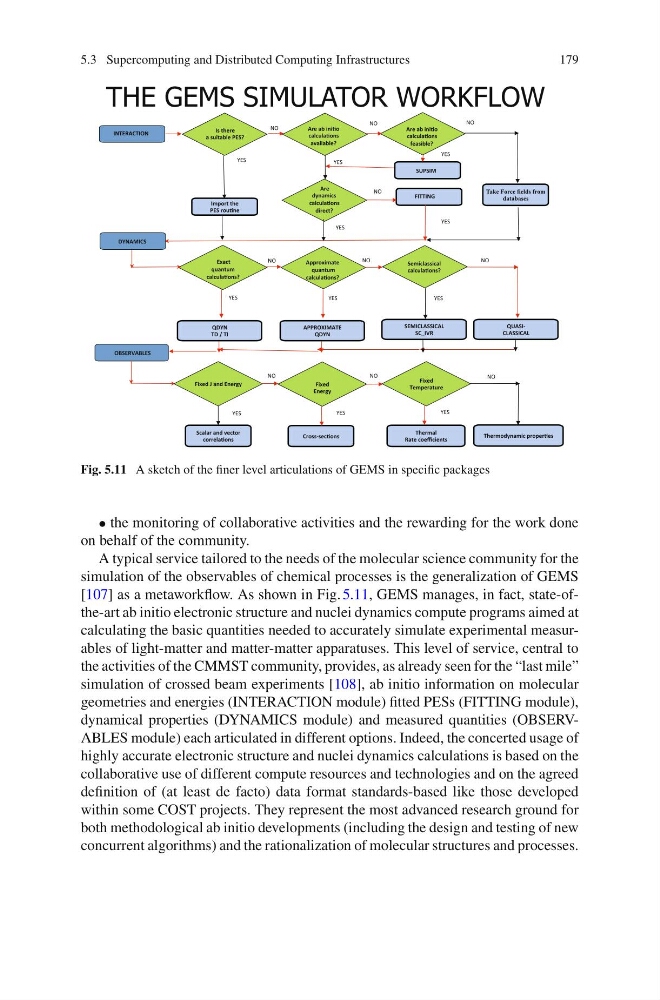
Fig. 5.11 A sketch of the finer level articulations of GEMS in specific packages
• the monitoring of collaborative activities and the rewarding for the work done
on behalf of the community.
A typical service tailored to the needs of the molecular science community for the
simulation of the observables of chemical processes is the generalization of GEMS
[107] as a metaworkflow. As shown in Fig. 5.11, GEMS manages, in fact, state-ofthe-art ab initio electronic structure and nuclei dynamics compute programs aimed at
calculating the basic quantities needed to accurately simulate experimental measurables of light-matter and matter-matter apparatuses. This level of service, central to
the activities of the CMMST community, provides, as already seen for the “last mile”
simulation of crossed beam experiments [108], ab initio information on molecular
geometries and energies (INTERACTION module) fitted PESs (FITTING module),
dynamical properties (DYNAMICS module) and measured quantities (OBSERVABLES module) each articulated in different options. Indeed, the concerted usage of
highly accurate electronic structure and nuclei dynamics calculations is based on the
collaborative use of different compute resources and technologies and on the agreed
definition of (at least de facto) data format standards-based like those developed
within some COST projects. They represent the most advanced research ground for
both methodological ab initio developments (including the design and testing of new
concurrent algorithms) and the rationalization of molecular structures and processes.
179
Fig. 5.11 A sketch of the finer level articulations of GEMS in specific packages
• the monitoring of collaborative activities and the rewarding for the work done
on behalf of the community.
A typical service tailored to the needs of the molecular science community for the
simulation of the observables of chemical processes is the generalization of GEMS
[107] as a metaworkflow. As shown in Fig. 5.11, GEMS manages, in fact, state-ofthe-art ab initio electronic structure and nuclei dynamics compute programs aimed at
calculating the basic quantities needed to accurately simulate experimental measurables of light-matter and matter-matter apparatuses. This level of service, central to
the activities of the CMMST community, provides, as already seen for the “last mile”
simulation of crossed beam experiments [108], ab initio information on molecular
geometries and energies (INTERACTION module) fitted PESs (FITTING module),
dynamical properties (DYNAMICS module) and measured quantities (OBSERVABLES module) each articulated in different options. Indeed, the concerted usage of
highly accurate electronic structure and nuclei dynamics calculations is based on the
collaborative use of different compute resources and technologies and on the agreed
definition of (at least de facto) data format standards-based like those developed
within some COST projects. They represent the most advanced research ground for
both methodological ab initio developments (including the design and testing of new
concurrent algorithms) and the rationalization of molecular structures and processes.