

160
5 Towards a Quantitative Understanding
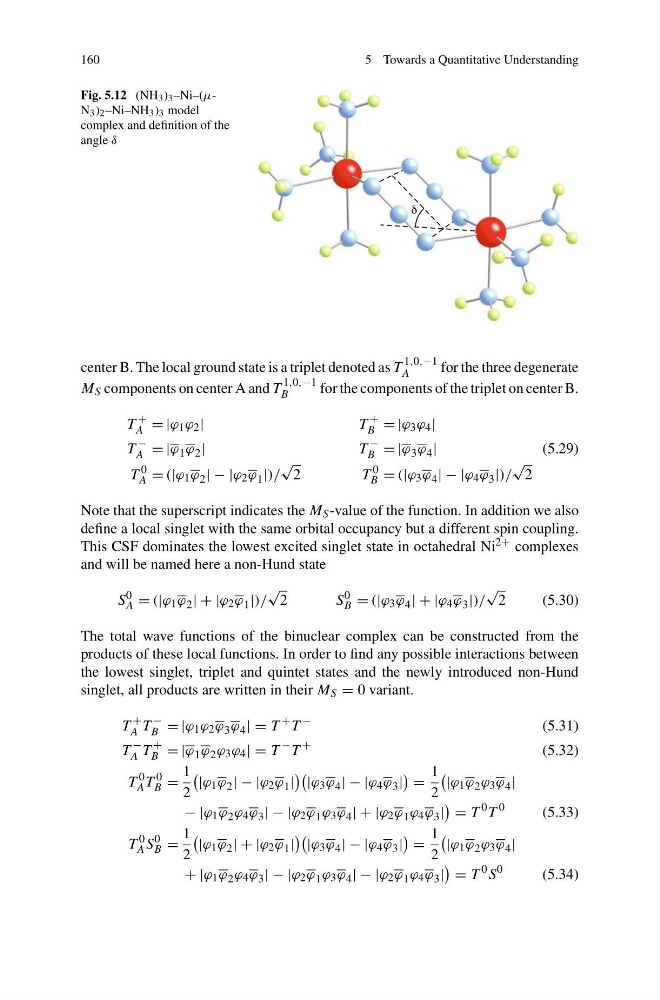
Fig. 5.12 (NH 3 ) 3 –Ni–(µN 3 ) 2 –Ni–NH 3 ) 3 model
complex and definition of the
angle δ
center B. The local ground state is a triplet denoted as T
1,0,−1
A
for the three degenerate
M S components on center A and T
1,0,−1
B
for the components of the triplet on center B.
T
+
A =|ϕ 1 ϕ 2 |
T
+
B =|ϕ 3 ϕ 4 |
T
−
A =|ϕ 1 ϕ 2 |
T
−
B =|ϕ 3 ϕ 4 |
(5.29)
T
0
A = (|ϕ 1 ϕ 2 |−|ϕ 2 ϕ 1 |)/
√
2
T
0
B = (|ϕ 3 ϕ 4 |−|ϕ 4 ϕ 3 |)/
√
2
Note that the superscript indicates the M S -value of the function. In addition we also
define a local singlet with the same orbital occupancy but a different spin coupling.
This CSF dominates the lowest excited singlet state in octahedral Ni 2+ complexes
and will be named here a non-Hund state
S
0
A = (|ϕ 1 ϕ 2 |+|ϕ 2 ϕ 1 |)/
√
2
S
0
B = (|ϕ 3 ϕ 4 |+|ϕ 4 ϕ 3 |)/
√
2
(5.30)
The total wave functions of the binuclear complex can be constructed from the
products of these local functions. In order to find any possible interactions between
the lowest singlet, triplet and quintet states and the newly introduced non-Hund
singlet, all products are written in their M S = 0 variant.
T
+
A T
−
B =|ϕ 1 ϕ 2 ϕ 3 ϕ 4 |=T
+ T
−
(5.31)
T
−
A T
+
B =|ϕ 1 ϕ 2 ϕ 3 ϕ 4 |=T
− T
+
(5.32)
T
0
A T
0
B =
1
2
|ϕ 1 ϕ 2 |−|ϕ 2 ϕ 1 |
|ϕ 3 ϕ 4 |−|ϕ 4 ϕ 3 |
=
1
2
|ϕ 1 ϕ 2 ϕ 3 ϕ 4 |
−|ϕ 1 ϕ 2 ϕ 4 ϕ 3 |−|ϕ 2 ϕ 1 ϕ 3 ϕ 4 |+|ϕ 2 ϕ 1 ϕ 4 ϕ 3 |
= T
0 T
0
(5.33)
T
0
A S
0
B =
1
2
|ϕ 1 ϕ 2 |+|ϕ 2 ϕ 1 |
|ϕ 3 ϕ 4 |−|ϕ 4 ϕ 3 |
=
1
2
|ϕ 1 ϕ 2 ϕ 3 ϕ 4 |
+|ϕ 1 ϕ 2 ϕ 4 ϕ 3 |−|ϕ 2 ϕ 1 ϕ 3 ϕ 4 |−|ϕ 2 ϕ 1 ϕ 4 ϕ 3 |
= T
0 S
0
(5.34)
5 Towards a Quantitative Understanding
Fig. 5.12 (NH 3 ) 3 –Ni–(µN 3 ) 2 –Ni–NH 3 ) 3 model
complex and definition of the
angle δ
center B. The local ground state is a triplet denoted as T
1,0,−1
A
for the three degenerate
M S components on center A and T
1,0,−1
B
for the components of the triplet on center B.
T
+
A =|ϕ 1 ϕ 2 |
T
+
B =|ϕ 3 ϕ 4 |
T
−
A =|ϕ 1 ϕ 2 |
T
−
B =|ϕ 3 ϕ 4 |
(5.29)
T
0
A = (|ϕ 1 ϕ 2 |−|ϕ 2 ϕ 1 |)/
√
2
T
0
B = (|ϕ 3 ϕ 4 |−|ϕ 4 ϕ 3 |)/
√
2
Note that the superscript indicates the M S -value of the function. In addition we also
define a local singlet with the same orbital occupancy but a different spin coupling.
This CSF dominates the lowest excited singlet state in octahedral Ni 2+ complexes
and will be named here a non-Hund state
S
0
A = (|ϕ 1 ϕ 2 |+|ϕ 2 ϕ 1 |)/
√
2
S
0
B = (|ϕ 3 ϕ 4 |+|ϕ 4 ϕ 3 |)/
√
2
(5.30)
The total wave functions of the binuclear complex can be constructed from the
products of these local functions. In order to find any possible interactions between
the lowest singlet, triplet and quintet states and the newly introduced non-Hund
singlet, all products are written in their M S = 0 variant.
T
+
A T
−
B =|ϕ 1 ϕ 2 ϕ 3 ϕ 4 |=T
+ T
−
(5.31)
T
−
A T
+
B =|ϕ 1 ϕ 2 ϕ 3 ϕ 4 |=T
− T
+
(5.32)
T
0
A T
0
B =
1
2
|ϕ 1 ϕ 2 |−|ϕ 2 ϕ 1 |
|ϕ 3 ϕ 4 |−|ϕ 4 ϕ 3 |
=
1
2
|ϕ 1 ϕ 2 ϕ 3 ϕ 4 |
−|ϕ 1 ϕ 2 ϕ 4 ϕ 3 |−|ϕ 2 ϕ 1 ϕ 3 ϕ 4 |+|ϕ 2 ϕ 1 ϕ 4 ϕ 3 |
= T
0 T
0
(5.33)
T
0
A S
0
B =
1
2
|ϕ 1 ϕ 2 |+|ϕ 2 ϕ 1 |
|ϕ 3 ϕ 4 |−|ϕ 4 ϕ 3 |
=
1
2
|ϕ 1 ϕ 2 ϕ 3 ϕ 4 |
+|ϕ 1 ϕ 2 ϕ 4 ϕ 3 |−|ϕ 2 ϕ 1 ϕ 3 ϕ 4 |−|ϕ 2 ϕ 1 ϕ 4 ϕ 3 |
= T
0 S
0
(5.34)