

catalyst, and slightly higher SCBs in the highest MW part than those of the S-2
catalyst. In contrast, it had the least relative SCB content in the lowest MW part.
Therefore, the SCB distribution for the copolymers from Cat-C2 should be much
more beneficial for improvement of the long-term mechanical properties and gives
these copolymers great potential for application as high grade HDPE pipe materials.
In summary, it has been demonstrated that various novel Cr-based polyethylene
catalysts with better performance and with improved structures and properties of
the PE products can be expected through successive surface modifications of either
the chromate species or the silica support through the reaction with the surface
residual hydroxyl groups on the traditional Phillips catalyst. Furthermore, by
combination of the performance of two metal active sites in the ethylene polymerization, silica-supported bimetallic catalysts are expected to be able to yield PE
products with bimodal MWD, which would attract more and more attention from
the polyolefin field. One kind of catalyst utilized group 4 metals supporting
Cp 2 ZrCl 2 or (n-BuCp) 2 HfCl 2 metallocene catalysts on Cr-montmorillonite and
was studied as a binuclear catalyst system to produce HDPEs with bimodal molecular weight distribution [168]. Chromium oxide and (n-BuCp) 2 ZrCl 2 /MAO species
supported onto several inorganic supports could produce PE with bimodal MWD
[169]. Another group of catalysts based on chromium and vanadium would be more
promising catalysts for commercial application in the near future. Examples are the
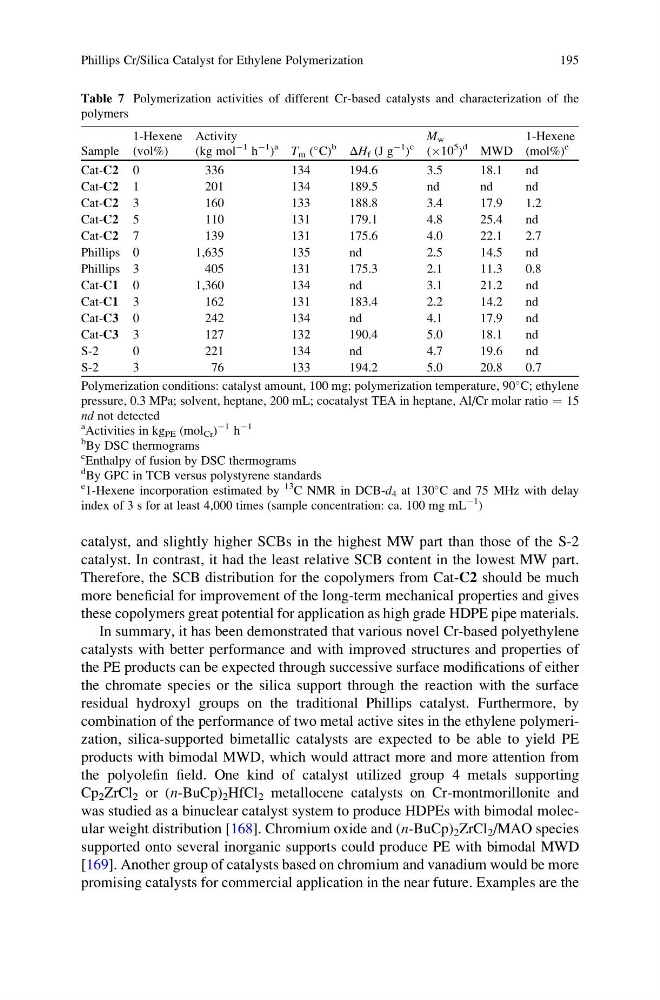
Table 7 Polymerization activities of different Cr-based catalysts and characterization of the
polymers
Sample
1-Hexene
(vol%)
Activity
(kg mol
À1 h
À1
)
a
T m (
C)
b
ΔH f (J g
À1
)
c
M w
(Â10
5
)
d
MWD
1-Hexene
(mol%)
e
Cat-C2 0
336
134
194.6
3.5
18.1
nd
Cat-C2 1
201
134
189.5
nd
nd
nd
Cat-C2 3
160
133
188.8
3.4
17.9
1.2
Cat-C2 5
110
131
179.1
4.8
25.4
nd
Cat-C2 7
139
131
175.6
4.0
22.1
2.7
Phillips 0
1,635
135
nd
2.5
14.5
nd
Phillips 3
405
131
175.3
2.1
11.3
0.8
Cat-C1 0
1,360
134
nd
3.1
21.2
nd
Cat-C1 3
162
131
183.4
2.2
14.2
nd
Cat-C3 0
242
134
nd
4.1
17.9
nd
Cat-C3 3
127
132
190.4
5.0
18.1
nd
S-2
0
221
134
nd
4.7
19.6
nd
S-2
3
76
133
194.2
5.0
20.8
0.7
Polymerization conditions: catalyst amount, 100 mg; polymerization temperature, 90
C; ethylene
pressure, 0.3 MPa; solvent, heptane, 200 mL; cocatalyst TEA in heptane, Al/Cr molar ratio ¼ 15
nd not detected
a
Activities in kg PE (mol Cr )
À1 h
À1
b
By DSC thermograms
c
Enthalpy of fusion by DSC thermograms
d
By GPC in TCB versus polystyrene standards
e
1-Hexene incorporation estimated by
13
C NMR in DCB-d 4 at 130
C and 75 MHz with delay
index of 3 s for at least 4,000 times (sample concentration: ca. 100 mg mL
À1
)
Phillips Cr/Silica Catalyst for Ethylene Polymerization
195
catalyst. In contrast, it had the least relative SCB content in the lowest MW part.
Therefore, the SCB distribution for the copolymers from Cat-C2 should be much
more beneficial for improvement of the long-term mechanical properties and gives
these copolymers great potential for application as high grade HDPE pipe materials.
In summary, it has been demonstrated that various novel Cr-based polyethylene
catalysts with better performance and with improved structures and properties of
the PE products can be expected through successive surface modifications of either
the chromate species or the silica support through the reaction with the surface
residual hydroxyl groups on the traditional Phillips catalyst. Furthermore, by
combination of the performance of two metal active sites in the ethylene polymerization, silica-supported bimetallic catalysts are expected to be able to yield PE
products with bimodal MWD, which would attract more and more attention from
the polyolefin field. One kind of catalyst utilized group 4 metals supporting
Cp 2 ZrCl 2 or (n-BuCp) 2 HfCl 2 metallocene catalysts on Cr-montmorillonite and
was studied as a binuclear catalyst system to produce HDPEs with bimodal molecular weight distribution [168]. Chromium oxide and (n-BuCp) 2 ZrCl 2 /MAO species
supported onto several inorganic supports could produce PE with bimodal MWD
[169]. Another group of catalysts based on chromium and vanadium would be more
promising catalysts for commercial application in the near future. Examples are the
Table 7 Polymerization activities of different Cr-based catalysts and characterization of the
polymers
Sample
1-Hexene
(vol%)
Activity
(kg mol
À1 h
À1
)
a
T m (
C)
b
ΔH f (J g
À1
)
c
M w
(Â10
5
)
d
MWD
1-Hexene
(mol%)
e
Cat-C2 0
336
134
194.6
3.5
18.1
nd
Cat-C2 1
201
134
189.5
nd
nd
nd
Cat-C2 3
160
133
188.8
3.4
17.9
1.2
Cat-C2 5
110
131
179.1
4.8
25.4
nd
Cat-C2 7
139
131
175.6
4.0
22.1
2.7
Phillips 0
1,635
135
nd
2.5
14.5
nd
Phillips 3
405
131
175.3
2.1
11.3
0.8
Cat-C1 0
1,360
134
nd
3.1
21.2
nd
Cat-C1 3
162
131
183.4
2.2
14.2
nd
Cat-C3 0
242
134
nd
4.1
17.9
nd
Cat-C3 3
127
132
190.4
5.0
18.1
nd
S-2
0
221
134
nd
4.7
19.6
nd
S-2
3
76
133
194.2
5.0
20.8
0.7
Polymerization conditions: catalyst amount, 100 mg; polymerization temperature, 90
C; ethylene
pressure, 0.3 MPa; solvent, heptane, 200 mL; cocatalyst TEA in heptane, Al/Cr molar ratio ¼ 15
nd not detected
a
Activities in kg PE (mol Cr )
À1 h
À1
b
By DSC thermograms
c
Enthalpy of fusion by DSC thermograms
d
By GPC in TCB versus polystyrene standards
e
1-Hexene incorporation estimated by
13
C NMR in DCB-d 4 at 130
C and 75 MHz with delay
index of 3 s for at least 4,000 times (sample concentration: ca. 100 mg mL
À1
)
Phillips Cr/Silica Catalyst for Ethylene Polymerization
195