

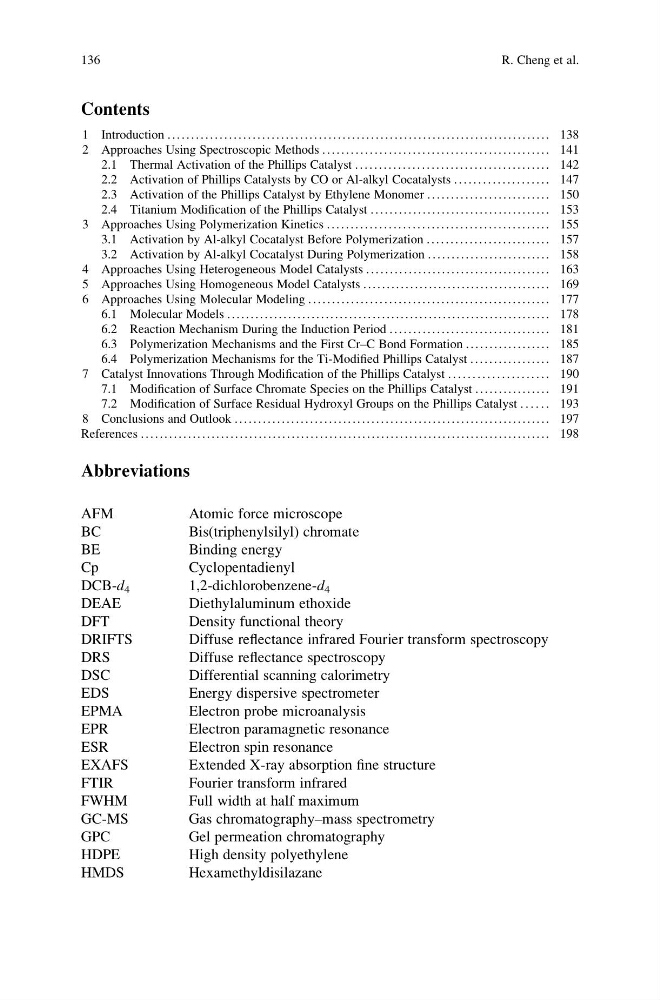
Contents
1 Introduction . . . . . . . . . . . . . . . . . . . . . . . . . . . . . . . . . . . . . . . . . . . . . . . . . . . . . . . . . . . . . . . . . . . . . . . . . . . . . . . . . 138
2 Approaches Using Spectroscopic Methods . . . . . . . . . . . . . . . . . . . . . . . . . . . . . . . . . . . . . . . . . . . . . . . . 141
2.1 Thermal Activation of the Phillips Catalyst . . . . . . . . . . . . . . . . . . . . . . . . . . . . . . . . . . . . . . . . . 142
2.2 Activation of Phillips Catalysts by CO or Al-alkyl Cocatalysts . . . . . . . . . . . . . . . . . . . . 147
2.3 Activation of the Phillips Catalyst by Ethylene Monomer . . . . . . . . . . . . . . . . . . . . . . . . . . 150
2.4 Titanium Modification of the Phillips Catalyst . . . . . . . . . . . . . . . . . . . . . . . . . . . . . . . . . . . . . . 153
3 Approaches Using Polymerization Kinetics . . . . . . . . . . . . . . . . . . . . . . . . . . . . . . . . . . . . . . . . . . . . . . . 155
3.1 Activation by Al-alkyl Cocatalyst Before Polymerization . . . . . . . . . . . . . . . . . . . . . . . . . . 157
3.2 Activation by Al-alkyl Cocatalyst During Polymerization . . . . . . . . . . . . . . . . . . . . . . . . . . 158
4 Approaches Using Heterogeneous Model Catalysts . . . . . . . . . . . . . . . . . . . . . . . . . . . . . . . . . . . . . . . 163
5 Approaches Using Homogeneous Model Catalysts . . . . . . . . . . . . . . . . . . . . . . . . . . . . . . . . . . . . . . . . 169
6 Approaches Using Molecular Modeling . . . . . . . . . . . . . . . . . . . . . . . . . . . . . . . . . . . . . . . . . . . . . . . . . . . 177
6.1 Molecular Models . . . . . . . . . . . . . . . . . . . . . . . . . . . . . . . . . . . . . . . . . . . . . . . . . . . . . . . . . . . . . . . . . . . . . 178
6.2 Reaction Mechanism During the Induction Period . . . . . . . . . . . . . . . . . . . . . . . . . . . . . . . . . . 181
6.3 Polymerization Mechanisms and the First Cr–C Bond Formation . . . . . . . . . . . . . . . . . . 185
6.4 Polymerization Mechanisms for the Ti-Modified Phillips Catalyst . . . . . . . . . . . . . . . . . 187
7 Catalyst Innovations Through Modification of the Phillips Catalyst . . . . . . . . . . . . . . . . . . . . . 190
7.1 Modification of Surface Chromate Species on the Phillips Catalyst . . . . . . . . . . . . . . . . 191
7.2 Modification of Surface Residual Hydroxyl Groups on the Phillips Catalyst . . . . . . 193
8 Conclusions and Outlook . . . . . . . . . . . . . . . . . . . . . . . . . . . . . . . . . . . . . . . . . . . . . . . . . . . . . . . . . . . . . . . . . . . 197
References . . . . . . . . . . . . . . . . . . . . . . . . . . . . . . . . . . . . . . . . . . . . . . . . . . . . . . . . . . . . . . . . . . . . . . . . . . . . . . . . . . . . . . . 198
Abbreviations
AFM
Atomic force microscope
BC
Bis(triphenylsilyl) chromate
BE
Binding energy
Cp
Cyclopentadienyl
DCB-d 4
1,2-dichlorobenzene-d 4
DEAE
Diethylaluminum ethoxide
DFT
Density functional theory
DRIFTS
Diffuse reflectance infrared Fourier transform spectroscopy
DRS
Diffuse reflectance spectroscopy
DSC
Differential scanning calorimetry
EDS
Energy dispersive spectrometer
EPMA
Electron probe microanalysis
EPR
Electron paramagnetic resonance
ESR
Electron spin resonance
EXAFS
Extended X-ray absorption fine structure
FTIR
Fourier transform infrared
FWHM
Full width at half maximum
GC-MS
Gas chromatography–mass spectrometry
GPC
Gel permeation chromatography
HDPE
High density polyethylene
HMDS
Hexamethyldisilazane
136
R. Cheng et al.
1 Introduction . . . . . . . . . . . . . . . . . . . . . . . . . . . . . . . . . . . . . . . . . . . . . . . . . . . . . . . . . . . . . . . . . . . . . . . . . . . . . . . . . 138
2 Approaches Using Spectroscopic Methods . . . . . . . . . . . . . . . . . . . . . . . . . . . . . . . . . . . . . . . . . . . . . . . . 141
2.1 Thermal Activation of the Phillips Catalyst . . . . . . . . . . . . . . . . . . . . . . . . . . . . . . . . . . . . . . . . . 142
2.2 Activation of Phillips Catalysts by CO or Al-alkyl Cocatalysts . . . . . . . . . . . . . . . . . . . . 147
2.3 Activation of the Phillips Catalyst by Ethylene Monomer . . . . . . . . . . . . . . . . . . . . . . . . . . 150
2.4 Titanium Modification of the Phillips Catalyst . . . . . . . . . . . . . . . . . . . . . . . . . . . . . . . . . . . . . . 153
3 Approaches Using Polymerization Kinetics . . . . . . . . . . . . . . . . . . . . . . . . . . . . . . . . . . . . . . . . . . . . . . . 155
3.1 Activation by Al-alkyl Cocatalyst Before Polymerization . . . . . . . . . . . . . . . . . . . . . . . . . . 157
3.2 Activation by Al-alkyl Cocatalyst During Polymerization . . . . . . . . . . . . . . . . . . . . . . . . . . 158
4 Approaches Using Heterogeneous Model Catalysts . . . . . . . . . . . . . . . . . . . . . . . . . . . . . . . . . . . . . . . 163
5 Approaches Using Homogeneous Model Catalysts . . . . . . . . . . . . . . . . . . . . . . . . . . . . . . . . . . . . . . . . 169
6 Approaches Using Molecular Modeling . . . . . . . . . . . . . . . . . . . . . . . . . . . . . . . . . . . . . . . . . . . . . . . . . . . 177
6.1 Molecular Models . . . . . . . . . . . . . . . . . . . . . . . . . . . . . . . . . . . . . . . . . . . . . . . . . . . . . . . . . . . . . . . . . . . . . 178
6.2 Reaction Mechanism During the Induction Period . . . . . . . . . . . . . . . . . . . . . . . . . . . . . . . . . . 181
6.3 Polymerization Mechanisms and the First Cr–C Bond Formation . . . . . . . . . . . . . . . . . . 185
6.4 Polymerization Mechanisms for the Ti-Modified Phillips Catalyst . . . . . . . . . . . . . . . . . 187
7 Catalyst Innovations Through Modification of the Phillips Catalyst . . . . . . . . . . . . . . . . . . . . . 190
7.1 Modification of Surface Chromate Species on the Phillips Catalyst . . . . . . . . . . . . . . . . 191
7.2 Modification of Surface Residual Hydroxyl Groups on the Phillips Catalyst . . . . . . 193
8 Conclusions and Outlook . . . . . . . . . . . . . . . . . . . . . . . . . . . . . . . . . . . . . . . . . . . . . . . . . . . . . . . . . . . . . . . . . . . 197
References . . . . . . . . . . . . . . . . . . . . . . . . . . . . . . . . . . . . . . . . . . . . . . . . . . . . . . . . . . . . . . . . . . . . . . . . . . . . . . . . . . . . . . . 198
Abbreviations
AFM
Atomic force microscope
BC
Bis(triphenylsilyl) chromate
BE
Binding energy
Cp
Cyclopentadienyl
DCB-d 4
1,2-dichlorobenzene-d 4
DEAE
Diethylaluminum ethoxide
DFT
Density functional theory
DRIFTS
Diffuse reflectance infrared Fourier transform spectroscopy
DRS
Diffuse reflectance spectroscopy
DSC
Differential scanning calorimetry
EDS
Energy dispersive spectrometer
EPMA
Electron probe microanalysis
EPR
Electron paramagnetic resonance
ESR
Electron spin resonance
EXAFS
Extended X-ray absorption fine structure
FTIR
Fourier transform infrared
FWHM
Full width at half maximum
GC-MS
Gas chromatography–mass spectrometry
GPC
Gel permeation chromatography
HDPE
High density polyethylene
HMDS
Hexamethyldisilazane
136
R. Cheng et al.