

94
L. Fang and S. Li
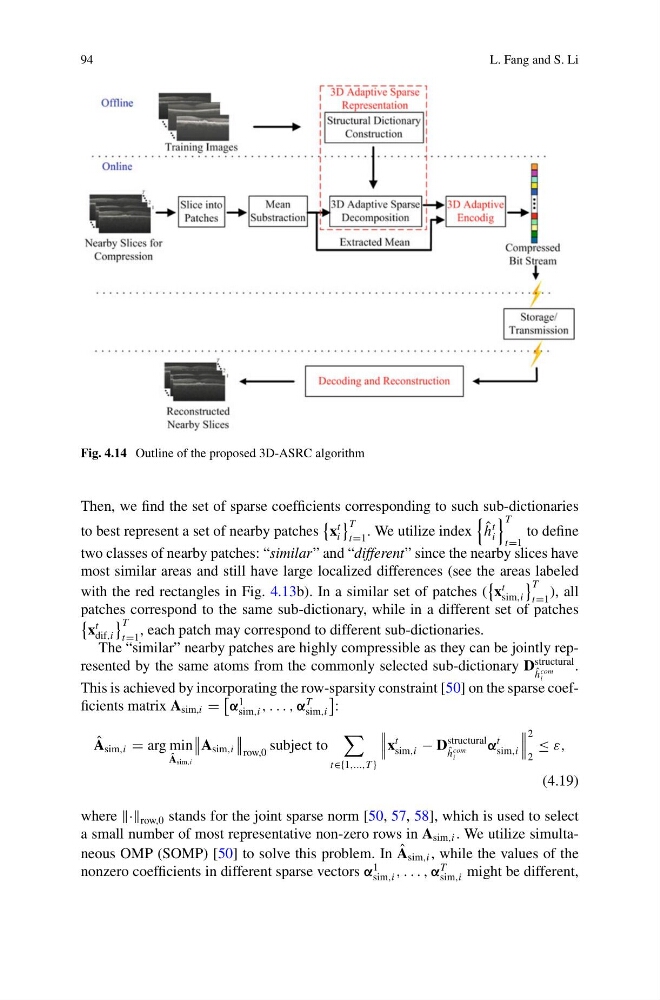
Fig. 4.14 Outline of the proposed 3D-ASRC algorithm
Then, we find the set of sparse coefficients corresponding to such sub-dictionaries
to best represent a set of nearby patches
x
t
i
T
t1
. We utilize index
ˆ
h
t
i
T
t1
to define
two classes of nearby patches: “similar” and “different” since the nearby slices have
most similar areas and still have large localized differences (see the areas labeled
with the red rectangles in Fig. 4.13b). In a similar set of patches (
x
t
sim,i
T
t1
), all
patches correspond to the same sub-dictionary, while in a different set of patches
x
t
dif,i
T
t1
, each patch may correspond to different sub-dictionaries.
The “similar” nearby patches are highly compressible as they can be jointly represented by the same atoms from the commonly selected sub-dictionary D
structural
ˆ
h
com
i
.
This is achieved by incorporating the row-sparsity constraint [50] on the sparse coefficients matrix A sim,i
α
1
sim,i , . . . , α
T
sim,i
:
ˆ
A sim,i arg min
ˆ
A sim,i
A sim,i
row,0
subject to
t∈{1,...,T }
x
t
sim,i − D
structural
ˆ
h
com
i
α
t
sim,i
2
2
≤ ε,
(4.19)
where · row,0 stands for the joint sparse norm [50, 57, 58], which is used to select
a small number of most representative non-zero rows in A sim,i . We utilize simultaneous OMP (SOMP) [50] to solve this problem. In ˆ
A sim,i , while the values of the
nonzero coefficients in different sparse vectors α
1
sim,i , . . . , α
T
sim,i might be different,
L. Fang and S. Li
Fig. 4.14 Outline of the proposed 3D-ASRC algorithm
Then, we find the set of sparse coefficients corresponding to such sub-dictionaries
to best represent a set of nearby patches
x
t
i
T
t1
. We utilize index
ˆ
h
t
i
T
t1
to define
two classes of nearby patches: “similar” and “different” since the nearby slices have
most similar areas and still have large localized differences (see the areas labeled
with the red rectangles in Fig. 4.13b). In a similar set of patches (
x
t
sim,i
T
t1
), all
patches correspond to the same sub-dictionary, while in a different set of patches
x
t
dif,i
T
t1
, each patch may correspond to different sub-dictionaries.
The “similar” nearby patches are highly compressible as they can be jointly represented by the same atoms from the commonly selected sub-dictionary D
structural
ˆ
h
com
i
.
This is achieved by incorporating the row-sparsity constraint [50] on the sparse coefficients matrix A sim,i
α
1
sim,i , . . . , α
T
sim,i
:
ˆ
A sim,i arg min
ˆ
A sim,i
A sim,i
row,0
subject to
t∈{1,...,T }
x
t
sim,i − D
structural
ˆ
h
com
i
α
t
sim,i
2
2
≤ ε,
(4.19)
where · row,0 stands for the joint sparse norm [50, 57, 58], which is used to select
a small number of most representative non-zero rows in A sim,i . We utilize simultaneous OMP (SOMP) [50] to solve this problem. In ˆ
A sim,i , while the values of the
nonzero coefficients in different sparse vectors α
1
sim,i , . . . , α
T
sim,i might be different,