

Figure 19.20: Schematic on a vanadium redox flow battery that employs vanadium ions.
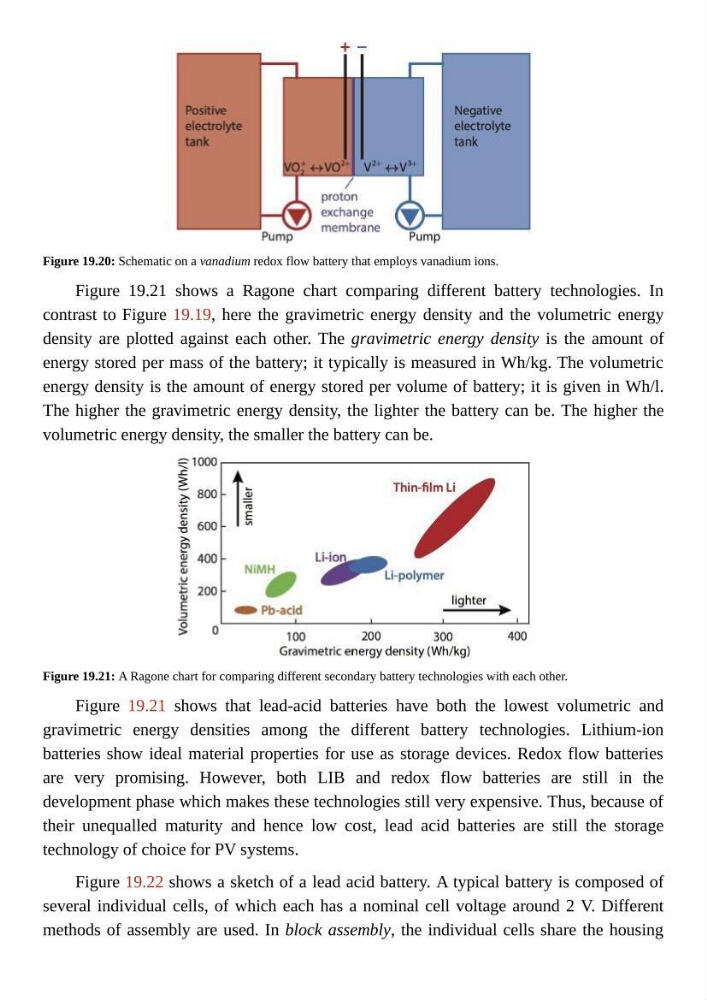
Figure 19.21 shows a Ragone chart comparing different battery technologies. In
contrast to Figure 19.19, here the gravimetric energy density and the volumetric energy
density are plotted against each other. The gravimetric energy density is the amount of
energy stored per mass of the battery; it typically is measured in Wh/kg. The volumetric
energy density is the amount of energy stored per volume of battery; it is given in Wh/l.
The higher the gravimetric energy density, the lighter the battery can be. The higher the
volumetric energy density, the smaller the battery can be.
Figure 19.21: A Ragone chart for comparing different secondary battery technologies with each other.
Figure 19.21 shows that lead-acid batteries have both the lowest volumetric and
gravimetric energy densities among the different battery technologies. Lithium-ion
batteries show ideal material properties for use as storage devices. Redox flow batteries
are very promising. However, both LIB and redox flow batteries are still in the
development phase which makes these technologies still very expensive. Thus, because of
their unequalled maturity and hence low cost, lead acid batteries are still the storage
technology of choice for PV systems.
Figure 19.22 shows a sketch of a lead acid battery. A typical battery is composed of
several individual cells, of which each has a nominal cell voltage around 2 V. Different
methods of assembly are used. In block assembly, the individual cells share the housing
Figure 19.21 shows a Ragone chart comparing different battery technologies. In
contrast to Figure 19.19, here the gravimetric energy density and the volumetric energy
density are plotted against each other. The gravimetric energy density is the amount of
energy stored per mass of the battery; it typically is measured in Wh/kg. The volumetric
energy density is the amount of energy stored per volume of battery; it is given in Wh/l.
The higher the gravimetric energy density, the lighter the battery can be. The higher the
volumetric energy density, the smaller the battery can be.
Figure 19.21: A Ragone chart for comparing different secondary battery technologies with each other.
Figure 19.21 shows that lead-acid batteries have both the lowest volumetric and
gravimetric energy densities among the different battery technologies. Lithium-ion
batteries show ideal material properties for use as storage devices. Redox flow batteries
are very promising. However, both LIB and redox flow batteries are still in the
development phase which makes these technologies still very expensive. Thus, because of
their unequalled maturity and hence low cost, lead acid batteries are still the storage
technology of choice for PV systems.
Figure 19.22 shows a sketch of a lead acid battery. A typical battery is composed of
several individual cells, of which each has a nominal cell voltage around 2 V. Different
methods of assembly are used. In block assembly, the individual cells share the housing