

unprecedented in at least the last 800,000 years. Carbon dioxide concentrations have increased by 40%
since pre-industrial times, primarily from fossil fuel emissions and secondarily from net land use change
emissions. The ocean has absorbed about 30% of the emitted anthropogenic carbon dioxide, causing
ocean acidification [11].
Further, in the AR5 it is stated that:
Human influence on the climate system is clear. This is evident from the increasing greenhouse gas
concentrations in the atmosphere, positive radiative forcing, observed warming, and understanding of the
climate system [11].
and
Human influence has been detected in warming of the atmosphere and the ocean, in changes in the global
water cycle, in reductions in snow and ice, in global mean sea level rise, and in changes in some climate
extremes. This evidence for human influence has grown since AR4. It is extremely likely that human
influence has been the dominant cause of the observed warming since the mid-20th century [11].
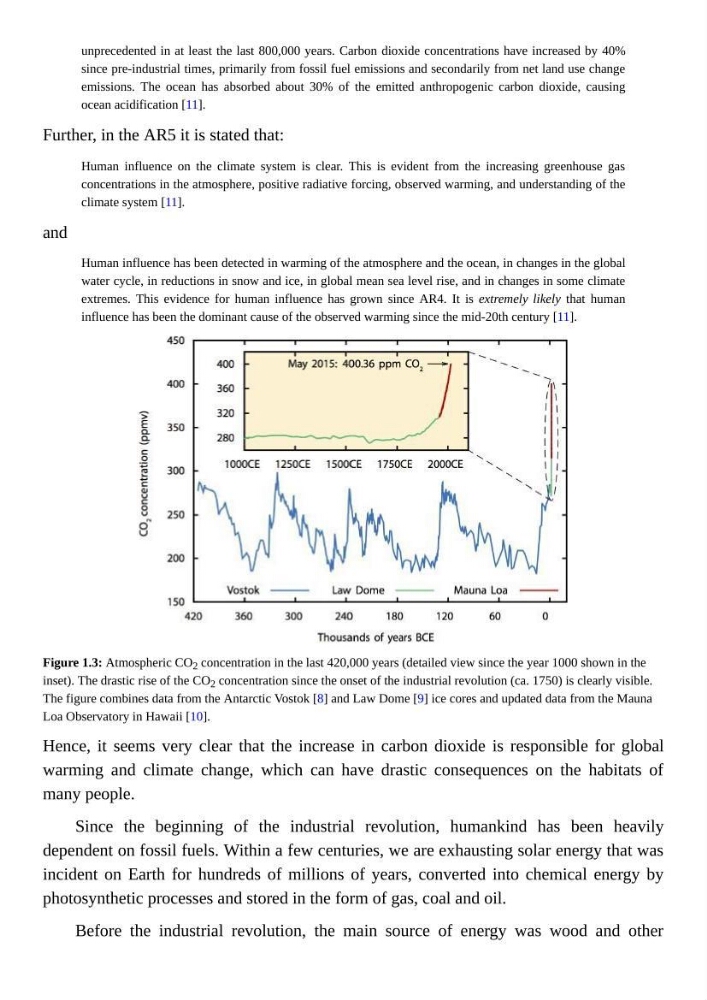
Figure 1.3: Atmospheric CO 2 concentration in the last 420,000 years (detailed view since the year 1000 shown in the
inset). The drastic rise of the CO 2 concentration since the onset of the industrial revolution (ca. 1750) is clearly visible.
The figure combines data from the Antarctic Vostok [8] and Law Dome [9] ice cores and updated data from the Mauna
Loa Observatory in Hawaii [10].
Hence, it seems very clear that the increase in carbon dioxide is responsible for global
warming and climate change, which can have drastic consequences on the habitats of
many people.
Since the beginning of the industrial revolution, humankind has been heavily
dependent on fossil fuels. Within a few centuries, we are exhausting solar energy that was
incident on Earth for hundreds of millions of years, converted into chemical energy by
photosynthetic processes and stored in the form of gas, coal and oil.
Before the industrial revolution, the main source of energy was wood and other
since pre-industrial times, primarily from fossil fuel emissions and secondarily from net land use change
emissions. The ocean has absorbed about 30% of the emitted anthropogenic carbon dioxide, causing
ocean acidification [11].
Further, in the AR5 it is stated that:
Human influence on the climate system is clear. This is evident from the increasing greenhouse gas
concentrations in the atmosphere, positive radiative forcing, observed warming, and understanding of the
climate system [11].
and
Human influence has been detected in warming of the atmosphere and the ocean, in changes in the global
water cycle, in reductions in snow and ice, in global mean sea level rise, and in changes in some climate
extremes. This evidence for human influence has grown since AR4. It is extremely likely that human
influence has been the dominant cause of the observed warming since the mid-20th century [11].
Figure 1.3: Atmospheric CO 2 concentration in the last 420,000 years (detailed view since the year 1000 shown in the
inset). The drastic rise of the CO 2 concentration since the onset of the industrial revolution (ca. 1750) is clearly visible.
The figure combines data from the Antarctic Vostok [8] and Law Dome [9] ice cores and updated data from the Mauna
Loa Observatory in Hawaii [10].
Hence, it seems very clear that the increase in carbon dioxide is responsible for global
warming and climate change, which can have drastic consequences on the habitats of
many people.
Since the beginning of the industrial revolution, humankind has been heavily
dependent on fossil fuels. Within a few centuries, we are exhausting solar energy that was
incident on Earth for hundreds of millions of years, converted into chemical energy by
photosynthetic processes and stored in the form of gas, coal and oil.
Before the industrial revolution, the main source of energy was wood and other