

17.2.2
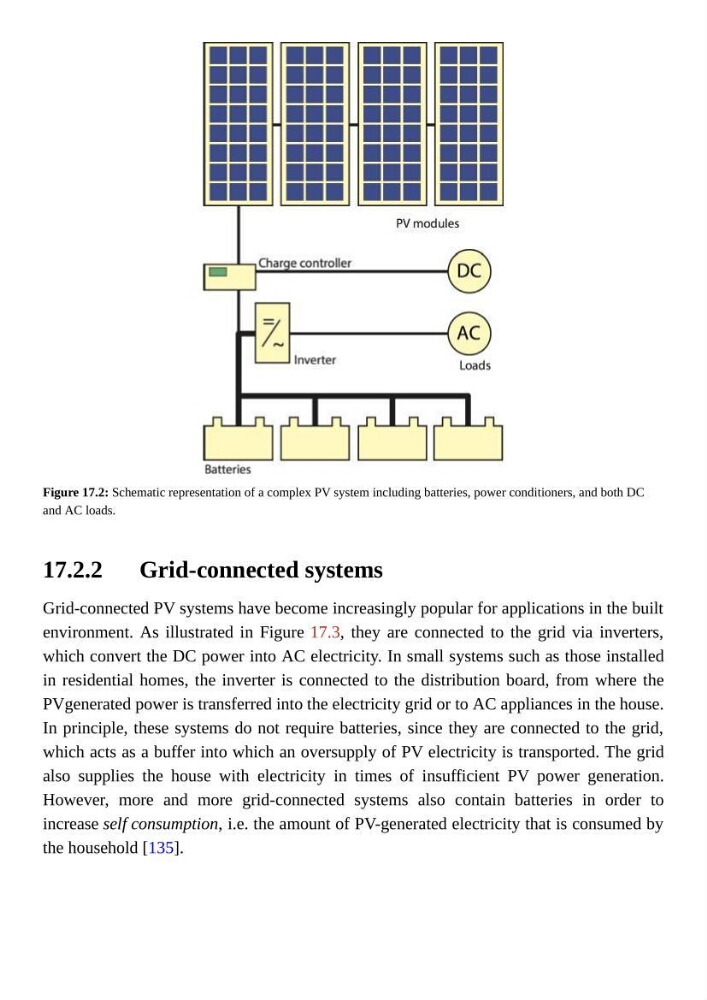
Figure 17.2: Schematic representation of a complex PV system including batteries, power conditioners, and both DC
and AC loads.
Grid-connected systems
Grid-connected PV systems have become increasingly popular for applications in the built
environment. As illustrated in Figure 17.3, they are connected to the grid via inverters,
which convert the DC power into AC electricity. In small systems such as those installed
in residential homes, the inverter is connected to the distribution board, from where the
PVgenerated power is transferred into the electricity grid or to AC appliances in the house.
In principle, these systems do not require batteries, since they are connected to the grid,
which acts as a buffer into which an oversupply of PV electricity is transported. The grid
also supplies the house with electricity in times of insufficient PV power generation.
However, more and more grid-connected systems also contain batteries in order to
increase self consumption, i.e. the amount of PV-generated electricity that is consumed by
the household [135].
Figure 17.2: Schematic representation of a complex PV system including batteries, power conditioners, and both DC
and AC loads.
Grid-connected systems
Grid-connected PV systems have become increasingly popular for applications in the built
environment. As illustrated in Figure 17.3, they are connected to the grid via inverters,
which convert the DC power into AC electricity. In small systems such as those installed
in residential homes, the inverter is connected to the distribution board, from where the
PVgenerated power is transferred into the electricity grid or to AC appliances in the house.
In principle, these systems do not require batteries, since they are connected to the grid,
which acts as a buffer into which an oversupply of PV electricity is transported. The grid
also supplies the house with electricity in times of insufficient PV power generation.
However, more and more grid-connected systems also contain batteries in order to
increase self consumption, i.e. the amount of PV-generated electricity that is consumed by
the household [135].