

122
Remanufacturing and Advanced Machining
Ion plating, ion implantation, sputtering, and laser surface alloying are among the
primary PVD methods (Shang and Zeng, 2013). Ion implantation of various elements
on cutting tool surfaces improves wear resistance (Morozow et al., 2018) and significantly extends their life cycle (Morozow et al., 2021). Ceramic coatings can be deposited with PVD techniques at relatively low temperatures, avoiding microstructural
defects within the substrate material, such as embrittlement effects, non-uniform density, micro cracks and porosity, and weakened adhesive strength (Miorin et al., 2019).
Working pressure of PVD processes can vary from 5 to 0.1 Pa, enabling fabrication of coatings with characteristics not yet achievable with any of the existing thermal spray processes. Obtained PVD coatings are very homogeneous, dense, hard,
thin, gas tight, and can have specially designed microstructures (von Niessen and
Gindrat, 2011). High investment costs and low deposition rates are among the disadvantages of conventional PVD processes.
Another method of hard coating deposition is associated primarily with restoration of car parts, namely the technology of electrodeposition of composite galvanic
coatings (CGC) (Semenikhin et al., 2020). The essence of the CGC method is precipitation of a metal from the galvanic bath, together with various powders deposited
on a part, such as metals, oxides, carbides, borides, and sulfides, as well as polymers.
Inclusion of dispersed materials in the metal substrate significantly changes their
properties, increasing anti-friction characteristics, wear resistance, thermal and corrosion resistance, and widening application of the CGC to restoration of car parts.
Among advantages of the method, comparative ease of coating disposal directly on
the part surface, the low cost, the possibility of the process automation, and only
slight influence of coatings on material properties of parts can be mentioned.
Semenikhin et al. (2020) emphasize that CGC can be realized in various ways,
most often from a galvanic bath. The simplest version comprises an electrolyte
poured into the bath and mixed with powder, a detail fixed on the cathode, and
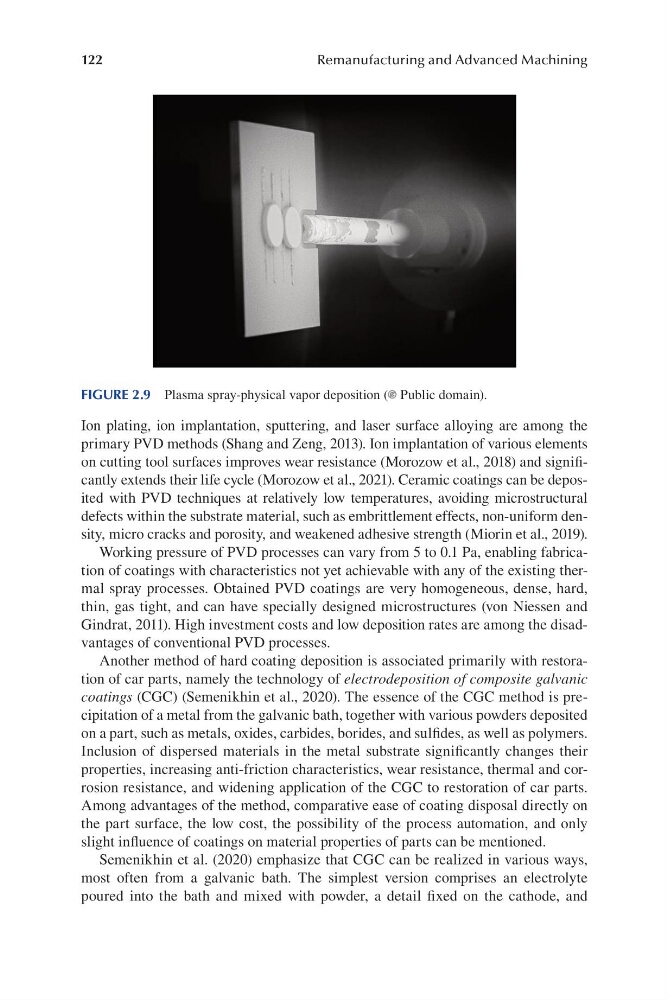
FIGURE 2.9 Plasma spray-physical vapor deposition ( Public domain).
Remanufacturing and Advanced Machining
Ion plating, ion implantation, sputtering, and laser surface alloying are among the
primary PVD methods (Shang and Zeng, 2013). Ion implantation of various elements
on cutting tool surfaces improves wear resistance (Morozow et al., 2018) and significantly extends their life cycle (Morozow et al., 2021). Ceramic coatings can be deposited with PVD techniques at relatively low temperatures, avoiding microstructural
defects within the substrate material, such as embrittlement effects, non-uniform density, micro cracks and porosity, and weakened adhesive strength (Miorin et al., 2019).
Working pressure of PVD processes can vary from 5 to 0.1 Pa, enabling fabrication of coatings with characteristics not yet achievable with any of the existing thermal spray processes. Obtained PVD coatings are very homogeneous, dense, hard,
thin, gas tight, and can have specially designed microstructures (von Niessen and
Gindrat, 2011). High investment costs and low deposition rates are among the disadvantages of conventional PVD processes.
Another method of hard coating deposition is associated primarily with restoration of car parts, namely the technology of electrodeposition of composite galvanic
coatings (CGC) (Semenikhin et al., 2020). The essence of the CGC method is precipitation of a metal from the galvanic bath, together with various powders deposited
on a part, such as metals, oxides, carbides, borides, and sulfides, as well as polymers.
Inclusion of dispersed materials in the metal substrate significantly changes their
properties, increasing anti-friction characteristics, wear resistance, thermal and corrosion resistance, and widening application of the CGC to restoration of car parts.
Among advantages of the method, comparative ease of coating disposal directly on
the part surface, the low cost, the possibility of the process automation, and only
slight influence of coatings on material properties of parts can be mentioned.
Semenikhin et al. (2020) emphasize that CGC can be realized in various ways,
most often from a galvanic bath. The simplest version comprises an electrolyte
poured into the bath and mixed with powder, a detail fixed on the cathode, and
FIGURE 2.9 Plasma spray-physical vapor deposition ( Public domain).