

82
formed between erythritol and zinc chloride (Lim et al. 2018). The complex was
able to interfere with intra- and intermolecular bonds in the exopolysaccharide.
Wang et al. also used a deep eutectic solvent-based approach to dental treatment
(Wang et al. 2017). A mixture of benzalkonium chloride and acrylic acid could be
incorporated into dental resins without altering their mechanical properties, while
benzalkonium chloride alone compromised the strength of the resin during storage.
The antibacterial activity of these materials was tested by placing discs in agar
plates inoculated with Streptococcus mutans or Staphylococcus aureus. The deep
eutectic solvent was as effective as benzalkonium chloride alone in controlling bacterial growth. The toxicity toward host cells was tested using the osteoblast line
MC3T3-E1 and the 3-(4,5-dimethylthiazol-2-yl)-2,5-diphenyltetrazolium bromide
(MTT) assay. Cells cultivated with the composite containing the solvent did not
show any decrease in viability compared with control cells, while the composite
containing benzalkonium chloride alone reduced their viability by about 50%.
Formulation of Conventional Antibiotics in Deep Eutectic Solvents
Santos et al. formulated two molecules that are potentially active in tuberculosis,
L-arginine and ethambutol, as deep eutectic solvents with citric acid but did not
study the antimicrobial activity (Santos et al. 2019). On the other hand, Aroso et al.
showed that the activity of benzoic acid and phenylacetic acid against both Gramnegative and Gram-positive bacteria was comparable to that of the free drug when
they were prepared as deep eutectic solvents with menthol (Aroso et al. 2016).
The stability of two β-lactam antibiotics, clavulanic acid and imipenem, was
improved by dissolution in a deep eutectic solvent composed of betaine and urea
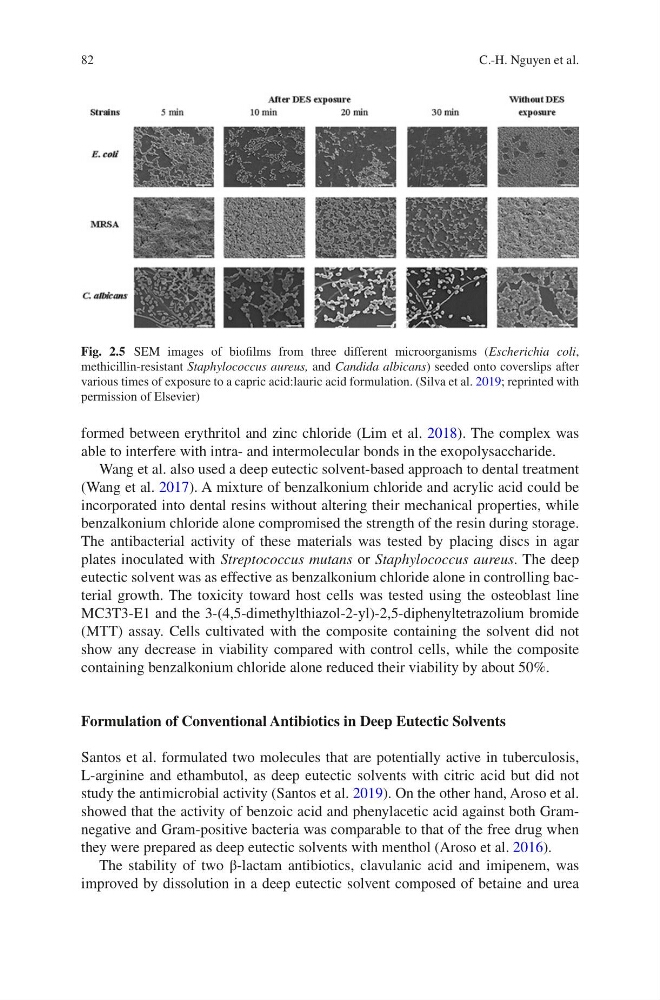
Fig. 2.5 SEM images of biofilms from three different microorganisms (Escherichia coli,
methicillin- resistant Staphylococcus aureus, and Candida albicans) seeded onto coverslips after
various times of exposure to a capric acid:lauric acid formulation. (Silva et al. 2019; reprinted with
permission of Elsevier)
C.-H. Nguyen et al.
formed between erythritol and zinc chloride (Lim et al. 2018). The complex was
able to interfere with intra- and intermolecular bonds in the exopolysaccharide.
Wang et al. also used a deep eutectic solvent-based approach to dental treatment
(Wang et al. 2017). A mixture of benzalkonium chloride and acrylic acid could be
incorporated into dental resins without altering their mechanical properties, while
benzalkonium chloride alone compromised the strength of the resin during storage.
The antibacterial activity of these materials was tested by placing discs in agar
plates inoculated with Streptococcus mutans or Staphylococcus aureus. The deep
eutectic solvent was as effective as benzalkonium chloride alone in controlling bacterial growth. The toxicity toward host cells was tested using the osteoblast line
MC3T3-E1 and the 3-(4,5-dimethylthiazol-2-yl)-2,5-diphenyltetrazolium bromide
(MTT) assay. Cells cultivated with the composite containing the solvent did not
show any decrease in viability compared with control cells, while the composite
containing benzalkonium chloride alone reduced their viability by about 50%.
Formulation of Conventional Antibiotics in Deep Eutectic Solvents
Santos et al. formulated two molecules that are potentially active in tuberculosis,
L-arginine and ethambutol, as deep eutectic solvents with citric acid but did not
study the antimicrobial activity (Santos et al. 2019). On the other hand, Aroso et al.
showed that the activity of benzoic acid and phenylacetic acid against both Gramnegative and Gram-positive bacteria was comparable to that of the free drug when
they were prepared as deep eutectic solvents with menthol (Aroso et al. 2016).
The stability of two β-lactam antibiotics, clavulanic acid and imipenem, was
improved by dissolution in a deep eutectic solvent composed of betaine and urea
Fig. 2.5 SEM images of biofilms from three different microorganisms (Escherichia coli,
methicillin- resistant Staphylococcus aureus, and Candida albicans) seeded onto coverslips after
various times of exposure to a capric acid:lauric acid formulation. (Silva et al. 2019; reprinted with
permission of Elsevier)
C.-H. Nguyen et al.