

258
hydrophilic mixtures, containing various water contents (Table 7.2). Taking into
account that many polyphenols are poorly soluble or even insoluble in water, this
point is worth to mention.
7.4.2 Extraction
Figure 7.6 shows the general principle of polyphenol extraction processes, whatever
the extractive methods applied and the kind of deep eutectic solvents used
(Benvenutti et al. 2019). Four major stages are involved as follows: (1) the sample
preparation, (2) the extraction itself, (3) the purification (separation of the residual
matrix with the elimination or not of the deep eutectic solvent), and finally (4) the
analytical part for the characterization and quantification of extracted compounds.
In this section, we will focus on the three first stages; the last one will be developed
in Sect. 7.5.
Sampling and Sample Preparation
Sampling and sample preparation are generally a key aspect in extraction processes,
whatever the solvents or technologies used, but generally regarded as trivial.
However, worth is outlining some critical points for extraction of polyphenols.
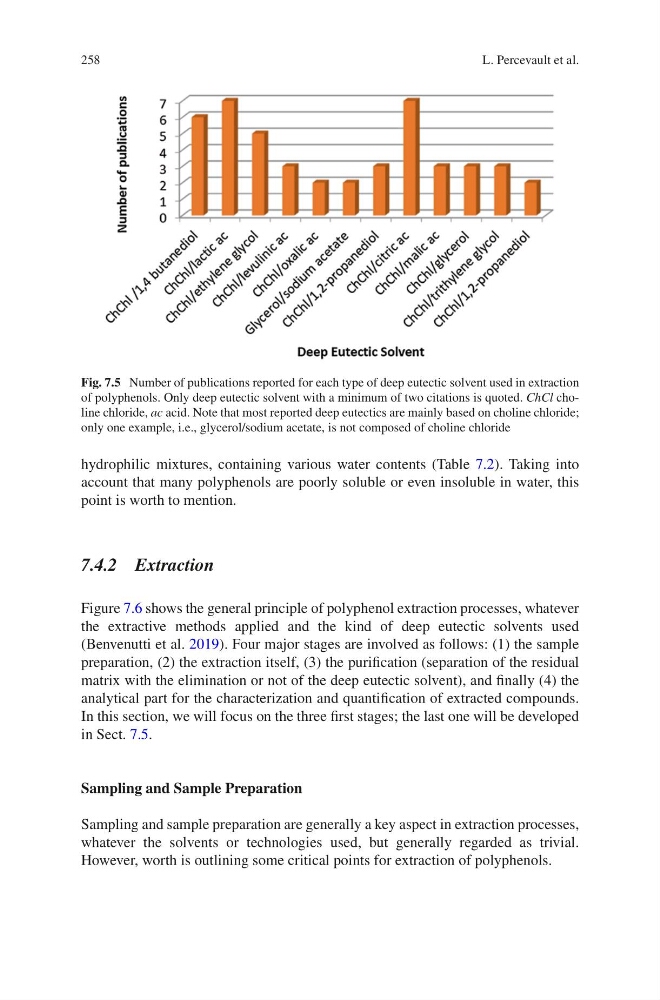
Fig. 7.5 Number of publications reported for each type of deep eutectic solvent used in extraction
of polyphenols. Only deep eutectic solvent with a minimum of two citations is quoted. ChCl choline chloride, ac acid. Note that most reported deep eutectics are mainly based on choline chloride;
only one example, i.e., glycerol/sodium acetate, is not composed of choline chloride
L. Percevault et al.
hydrophilic mixtures, containing various water contents (Table 7.2). Taking into
account that many polyphenols are poorly soluble or even insoluble in water, this
point is worth to mention.
7.4.2 Extraction
Figure 7.6 shows the general principle of polyphenol extraction processes, whatever
the extractive methods applied and the kind of deep eutectic solvents used
(Benvenutti et al. 2019). Four major stages are involved as follows: (1) the sample
preparation, (2) the extraction itself, (3) the purification (separation of the residual
matrix with the elimination or not of the deep eutectic solvent), and finally (4) the
analytical part for the characterization and quantification of extracted compounds.
In this section, we will focus on the three first stages; the last one will be developed
in Sect. 7.5.
Sampling and Sample Preparation
Sampling and sample preparation are generally a key aspect in extraction processes,
whatever the solvents or technologies used, but generally regarded as trivial.
However, worth is outlining some critical points for extraction of polyphenols.
Fig. 7.5 Number of publications reported for each type of deep eutectic solvent used in extraction
of polyphenols. Only deep eutectic solvent with a minimum of two citations is quoted. ChCl choline chloride, ac acid. Note that most reported deep eutectics are mainly based on choline chloride;
only one example, i.e., glycerol/sodium acetate, is not composed of choline chloride
L. Percevault et al.