

215
Mini-Solid-Phase Microextraction or Pipette-Tip Solid-Phase
Extraction Method
The needle of the syringe system is suitable to be used as a meticulous mini-solidphase microextraction cartridge because of its special miniconical shape with different diameters in the two ends where a certain amount of adsorbent can be packed,
for example, molecular-imprinted polymer adsorbent. Compared to the conventional solid-phase extraction cartridges, extraction, using this technique, can be carried out faster and with facilitated sample-loading procedure (Li and Row 2018).
Molecular-imprinted polymers are used as sorbents for purifying complex samples
with numerous advantages such as high-recognition ability, mechanical stability,
and resistance to a wide range of pH (Hu et al. 2012; Tang et al. 2017).
This technique was also applied by Li and Row in 2018 for the extraction of
3,4-dihydroxybenzoic acid from Ilex chinensis Sims leaves as shown in Fig. 6.12.
Ternary deep eutectic solvent was used by mixing choline chloride, ethylene glycol,
and 3, 4-dihydroxybenzoic acid. Compared to deep eutectic solvent-modified nonimprinted polymers (without template), a molecular-imprinted polymer (without
deep eutectic solvent), and NIP (without deep eutectic solvent and without template), ternary deep eutectic solvent molecularly imprinted polymer demonstrated
the best extraction efficiency. This technique presents an additional advantage than
the other solid-phase extraction techniques since lower amounts of sorbent mass are
used (Li and Row 2018).
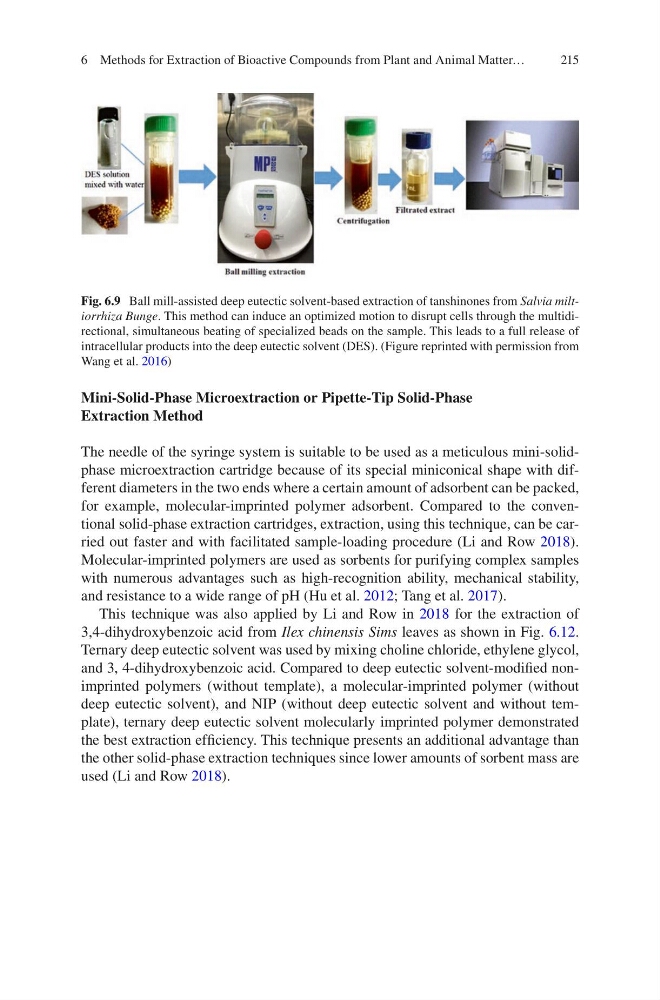
Fig. 6.9 Ball mill-assisted deep eutectic solvent-based extraction of tanshinones from Salvia miltiorrhiza Bunge. This method can induce an optimized motion to disrupt cells through the multidirectional, simultaneous beating of specialized beads on the sample. This leads to a full release of
intracellular products into the deep eutectic solvent (DES). (Figure reprinted with permission from
Wang et al. 2016)
6 Methods for Extraction of Bioactive Compounds from Plant and Animal Matter…
Mini-Solid-Phase Microextraction or Pipette-Tip Solid-Phase
Extraction Method
The needle of the syringe system is suitable to be used as a meticulous mini-solidphase microextraction cartridge because of its special miniconical shape with different diameters in the two ends where a certain amount of adsorbent can be packed,
for example, molecular-imprinted polymer adsorbent. Compared to the conventional solid-phase extraction cartridges, extraction, using this technique, can be carried out faster and with facilitated sample-loading procedure (Li and Row 2018).
Molecular-imprinted polymers are used as sorbents for purifying complex samples
with numerous advantages such as high-recognition ability, mechanical stability,
and resistance to a wide range of pH (Hu et al. 2012; Tang et al. 2017).
This technique was also applied by Li and Row in 2018 for the extraction of
3,4-dihydroxybenzoic acid from Ilex chinensis Sims leaves as shown in Fig. 6.12.
Ternary deep eutectic solvent was used by mixing choline chloride, ethylene glycol,
and 3, 4-dihydroxybenzoic acid. Compared to deep eutectic solvent-modified nonimprinted polymers (without template), a molecular-imprinted polymer (without
deep eutectic solvent), and NIP (without deep eutectic solvent and without template), ternary deep eutectic solvent molecularly imprinted polymer demonstrated
the best extraction efficiency. This technique presents an additional advantage than
the other solid-phase extraction techniques since lower amounts of sorbent mass are
used (Li and Row 2018).
Fig. 6.9 Ball mill-assisted deep eutectic solvent-based extraction of tanshinones from Salvia miltiorrhiza Bunge. This method can induce an optimized motion to disrupt cells through the multidirectional, simultaneous beating of specialized beads on the sample. This leads to a full release of
intracellular products into the deep eutectic solvent (DES). (Figure reprinted with permission from
Wang et al. 2016)
6 Methods for Extraction of Bioactive Compounds from Plant and Animal Matter…