

Complexes of Furonewguinone B with a Cu 2+ Ion. A DFT Study
173
Table 4 Ranges of the distance of the Cu ion from the atoms to which it is bonded, in the complexes
of furonewguinone B with a Cu 2+ cation. For the cases when the Cu ion binds to a C=C π bond,
the distances from the two C atoms are reported
Binding site/s
Distance
considered
Distance
range (Å)
Binding
site/s
Distance
considered
Distance
range (Å)
O25–O30–O12 Cu···O25
2.328–2.429
O18–O10
Cu···O18
2.030–2.061
Cu···O30
2.009–2.018
Cu···O10
2.073–2.099
Cu···O12
2.009–2.028
O14
Cu···O14
1.942–1.949
O8–O18
Cu···O8
2.039–2.072
O30
Cu···O30
1.941–1.948
Cu···O18
2.091–2.132
O12
Cu···O12
1.922–1.948
O25–O12
Cu···O25
2.314–2.493
π1
Cu···C21
2.100, 2.106
Cu···O12
1.977–2.020
Cu···C22
2.317, 2.274
O25–O30
Cu···O25
2.080–2.113
–
–
–
Cu···O30
2.029–2.049
–
–
–
are among the highest; in most cases, inputs in which the ion binds to π1, or simultaneously to π1 and O12, optimise to situations in which the C26–C27 bond cleavages
completely; the phenomenon is discussed more in detail in the last paragraph of this
section.
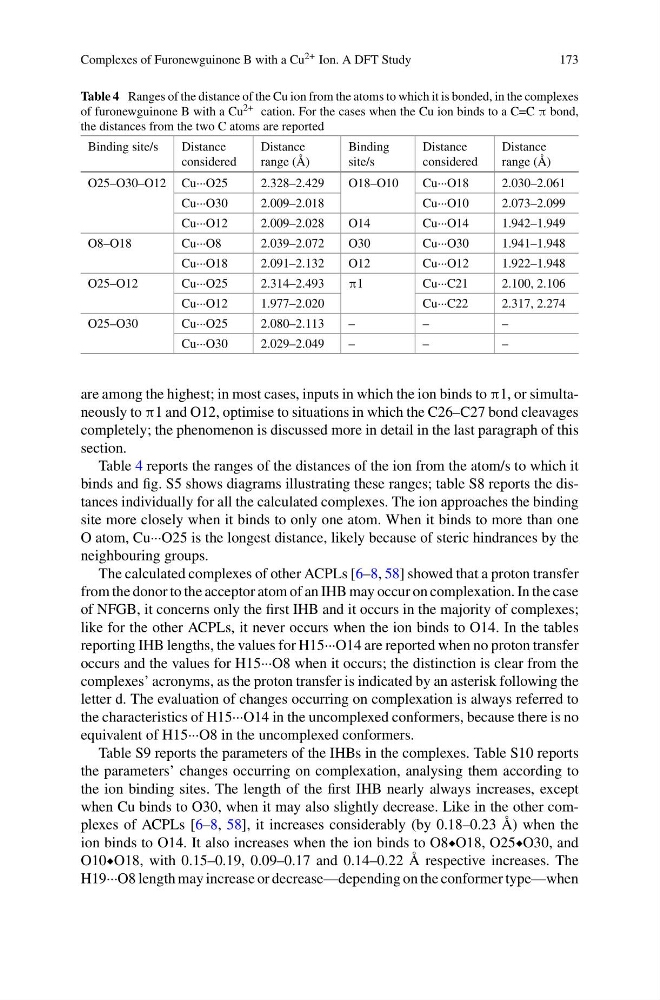
Table 4 reports the ranges of the distances of the ion from the atom/s to which it
binds and fig. S5 shows diagrams illustrating these ranges; table S8 reports the distances individually for all the calculated complexes. The ion approaches the binding
site more closely when it binds to only one atom. When it binds to more than one
O atom, Cu···O25 is the longest distance, likely because of steric hindrances by the
neighbouring groups.
The calculated complexes of other ACPLs [6–8, 58] showed that a proton transfer
from the donor to the acceptor atom of an IHB may occur on complexation. In the case
of NFGB, it concerns only the first IHB and it occurs in the majority of complexes;
like for the other ACPLs, it never occurs when the ion binds to O14. In the tables
reporting IHB lengths, the values for H15···O14 are reported when no proton transfer
occurs and the values for H15···O8 when it occurs; the distinction is clear from the
complexes’ acronyms, as the proton transfer is indicated by an asterisk following the
letter d. The evaluation of changes occurring on complexation is always referred to
the characteristics of H15···O14 in the uncomplexed conformers, because there is no
equivalent of H15···O8 in the uncomplexed conformers.
Table S9 reports the parameters of the IHBs in the complexes. Table S10 reports
the parameters’ changes occurring on complexation, analysing them according to
the ion binding sites. The length of the first IHB nearly always increases, except
when Cu binds to O30, when it may also slightly decrease. Like in the other complexes of ACPLs [6–8, 58], it increases considerably (by 0.18–0.23 Å) when the
ion binds to O14. It also increases when the ion binds to O8˛O18, O25˛O30, and
O10˛O18, with 0.15–0.19, 0.09–0.17 and 0.14–0.22 Å respective increases. The
H19···O8 length may increase or decrease—depending on the conformer type—when
173
Table 4 Ranges of the distance of the Cu ion from the atoms to which it is bonded, in the complexes
of furonewguinone B with a Cu 2+ cation. For the cases when the Cu ion binds to a C=C π bond,
the distances from the two C atoms are reported
Binding site/s
Distance
considered
Distance
range (Å)
Binding
site/s
Distance
considered
Distance
range (Å)
O25–O30–O12 Cu···O25
2.328–2.429
O18–O10
Cu···O18
2.030–2.061
Cu···O30
2.009–2.018
Cu···O10
2.073–2.099
Cu···O12
2.009–2.028
O14
Cu···O14
1.942–1.949
O8–O18
Cu···O8
2.039–2.072
O30
Cu···O30
1.941–1.948
Cu···O18
2.091–2.132
O12
Cu···O12
1.922–1.948
O25–O12
Cu···O25
2.314–2.493
π1
Cu···C21
2.100, 2.106
Cu···O12
1.977–2.020
Cu···C22
2.317, 2.274
O25–O30
Cu···O25
2.080–2.113
–
–
–
Cu···O30
2.029–2.049
–
–
–
are among the highest; in most cases, inputs in which the ion binds to π1, or simultaneously to π1 and O12, optimise to situations in which the C26–C27 bond cleavages
completely; the phenomenon is discussed more in detail in the last paragraph of this
section.
Table 4 reports the ranges of the distances of the ion from the atom/s to which it
binds and fig. S5 shows diagrams illustrating these ranges; table S8 reports the distances individually for all the calculated complexes. The ion approaches the binding
site more closely when it binds to only one atom. When it binds to more than one
O atom, Cu···O25 is the longest distance, likely because of steric hindrances by the
neighbouring groups.
The calculated complexes of other ACPLs [6–8, 58] showed that a proton transfer
from the donor to the acceptor atom of an IHB may occur on complexation. In the case
of NFGB, it concerns only the first IHB and it occurs in the majority of complexes;
like for the other ACPLs, it never occurs when the ion binds to O14. In the tables
reporting IHB lengths, the values for H15···O14 are reported when no proton transfer
occurs and the values for H15···O8 when it occurs; the distinction is clear from the
complexes’ acronyms, as the proton transfer is indicated by an asterisk following the
letter d. The evaluation of changes occurring on complexation is always referred to
the characteristics of H15···O14 in the uncomplexed conformers, because there is no
equivalent of H15···O8 in the uncomplexed conformers.
Table S9 reports the parameters of the IHBs in the complexes. Table S10 reports
the parameters’ changes occurring on complexation, analysing them according to
the ion binding sites. The length of the first IHB nearly always increases, except
when Cu binds to O30, when it may also slightly decrease. Like in the other complexes of ACPLs [6–8, 58], it increases considerably (by 0.18–0.23 Å) when the
ion binds to O14. It also increases when the ion binds to O8˛O18, O25˛O30, and
O10˛O18, with 0.15–0.19, 0.09–0.17 and 0.14–0.22 Å respective increases. The
H19···O8 length may increase or decrease—depending on the conformer type—when