

A Theoretical Study of the Preferred Reaction Mechanism …
121
O
O
H
Cl
6
1
2
3
4
5
S
N
N
H
H
H
H
7
8
10
9
12
11
14
13
S
N
N
H
H
H
7
8
10
9
12
11
14
H
13
Chloroacetic acid (caa)
Thiourea (thione form)
Thiourea (iminothiol form)
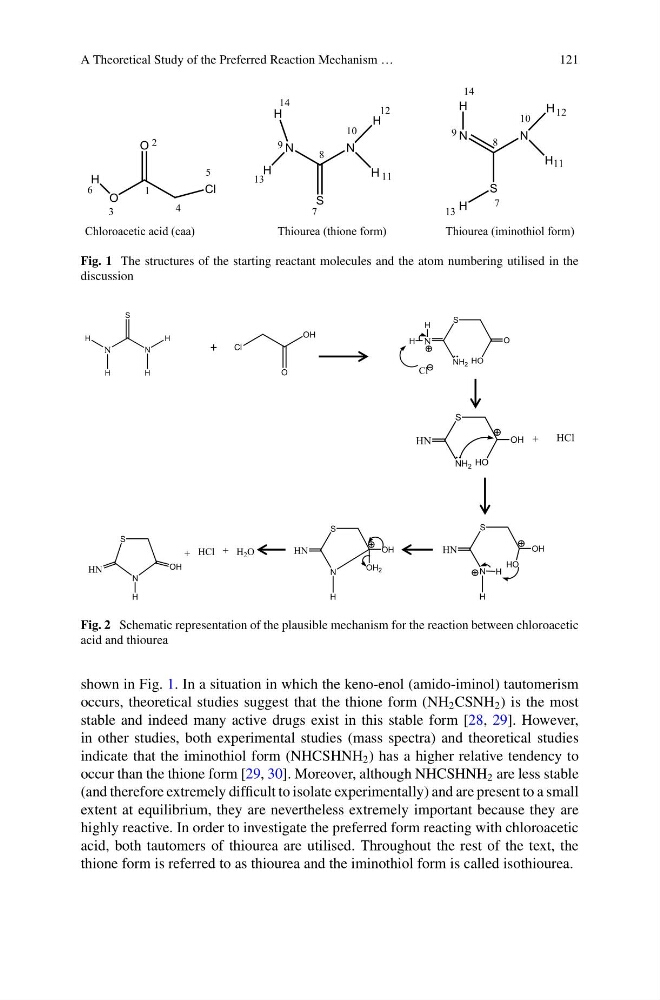
Fig. 1 The structures of the starting reactant molecules and the atom numbering utilised in the
discussion
N
N
S
H
H
H
H
Cl
OH
O
N
S
HO
O
NH 2
Cl
H
H
HN
S
HO
OH
NH 2
+
HCl
HN
S
OH
N
H
HCl + H 2 O
+
HN
S
OH 2
OH
N
H
HN
S
HO
OH
N
H
H
+
Fig. 2 Schematic representation of the plausible mechanism for the reaction between chloroacetic
acid and thiourea
shown in Fig. 1. In a situation in which the keno-enol (amido-iminol) tautomerism
occurs, theoretical studies suggest that the thione form (NH 2 CSNH 2 ) is the most
stable and indeed many active drugs exist in this stable form [28, 29]. However,
in other studies, both experimental studies (mass spectra) and theoretical studies
indicate that the iminothiol form (NHCSHNH 2 ) has a higher relative tendency to
occur than the thione form [29, 30]. Moreover, although NHCSHNH 2 are less stable
(and therefore extremely difficult to isolate experimentally) and are present to a small
extent at equilibrium, they are nevertheless extremely important because they are
highly reactive. In order to investigate the preferred form reacting with chloroacetic
acid, both tautomers of thiourea are utilised. Throughout the rest of the text, the
thione form is referred to as thiourea and the iminothiol form is called isothiourea.
121
O
O
H
Cl
6
1
2
3
4
5
S
N
N
H
H
H
H
7
8
10
9
12
11
14
13
S
N
N
H
H
H
7
8
10
9
12
11
14
H
13
Chloroacetic acid (caa)
Thiourea (thione form)
Thiourea (iminothiol form)
Fig. 1 The structures of the starting reactant molecules and the atom numbering utilised in the
discussion
N
N
S
H
H
H
H
Cl
OH
O
N
S
HO
O
NH 2
Cl
H
H
HN
S
HO
OH
NH 2
+
HCl
HN
S
OH
N
H
HCl + H 2 O
+
HN
S
OH 2
OH
N
H
HN
S
HO
OH
N
H
H
+
Fig. 2 Schematic representation of the plausible mechanism for the reaction between chloroacetic
acid and thiourea
shown in Fig. 1. In a situation in which the keno-enol (amido-iminol) tautomerism
occurs, theoretical studies suggest that the thione form (NH 2 CSNH 2 ) is the most
stable and indeed many active drugs exist in this stable form [28, 29]. However,
in other studies, both experimental studies (mass spectra) and theoretical studies
indicate that the iminothiol form (NHCSHNH 2 ) has a higher relative tendency to
occur than the thione form [29, 30]. Moreover, although NHCSHNH 2 are less stable
(and therefore extremely difficult to isolate experimentally) and are present to a small
extent at equilibrium, they are nevertheless extremely important because they are
highly reactive. In order to investigate the preferred form reacting with chloroacetic
acid, both tautomers of thiourea are utilised. Throughout the rest of the text, the
thione form is referred to as thiourea and the iminothiol form is called isothiourea.